The 5 Best 20-Degree Sleeping Bags of 2026

The number stitched on a sleeping bag is a claim, not a contract. A 20-degree rating is usually the temperature where a healthy adult in a base layer survives the night, not the one where they sleep well, and every manufacturer does its own math. A genuinely good one fixes the guesswork: warm enough for a frosty night, small enough to carry, and no zipper jam at 2 a.m.

I've shivered through bags that promised far more than they delivered, so I wanted to know which of these actually hold theirs. Over nine months we slept in 12 bags — mummy shapes, roomy rectangular ones, cotton flannel liners, a big-and-tall cut, even a kids' size — and the differences showed up on the first cold night.

Shape matters more than the label. A mummy cut saves weight and traps heat; a rectangular bag lets you roll over but drafts at the shoulders and packs bigger. That tradeoff decides whether a bag goes in your pack or lives in the trunk, and the picks below cover both camps.

Our Top Picks

The 5 Best 20-Degree Sleeping Bags of 2026

1

Teton Sports 20F Mummy Best Overall
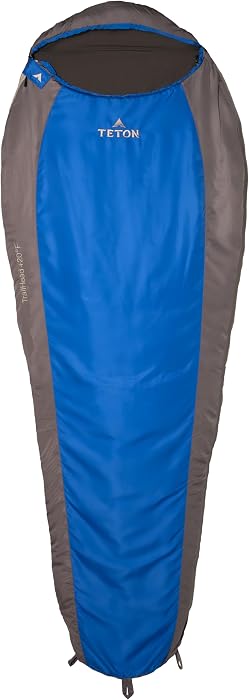
Teton 20F and 5F Degree Sleeping Bag; Lightweight

One-bag camping

Field Score 92/100
Shape
Mummy
Weight
2.9 lb
Fits Up To
81 in.
Temperature Rating
20°F
View on Amazon

Under three pounds and rated to 20°F is a combination that usually costs more than this bag does, which is most of why it's our top pick. A mummy this light stays warm because there's less dead air inside it for your body to heat, and the hood and the draft tube behind the zipper are what seal the two places heat escapes fastest.

Two things change how warm it sleeps. The first is a pad — this bag, like every 20°F bag here, is rated assuming something insulates you from the ground, and on bare tent floor it will feel a long way below its label. The second is the hood: cinch it and the bag works; leave it loose and you'll swear the rating is off. The ripstop shell is a small thing we appreciated, since a bag that gets dragged in and out of a truck bed needs it.

Packing it is easier than folding it. Start at the foot end, feed the bag into the compression sack, and cinch — trying to roll it first is what makes these sacks feel impossible. Teton's lifetime warranty covers materials and workmanship, which means more on a bag with a thin shell than on a heavy one.

Nothing here is luxurious: light shell, simple zipper, no frills. What it is instead is the bag that leaves the house most often — a frosty spring weekend, a September elk hunt, a night in the bed of a truck — because it's the one that doesn't make you choose between carrying weight and sleeping warm.

Worth Noting

  • Tight 32-inch mummy cut
  • Zipper snags near the shoulders
Our Verdict

We recommend the Teton to anyone who wants one bag for car camping and backpacking — it's the lightest 20°F bag here and the best all-round value in this group.

Check Latest Price
2

Coleman Dunnock Best for Big and Tall

Coleman Dunnock 20°F Big ‘n Tall Sleeping Bag

Big-and-tall car camping

Field Score 91/100
Shape
Rectangular
Shell
Cotton
Fits Up To
6 ft. 4 in.
Temperature Rating
20°F
View on Amazon

There's a particular camper this bag was built for: someone who wants flannel against their skin rather than nylon, and who drives to the site instead of hiking to it. The Dunnock's lining is cotton flannel and so is the shell, which is why it feels like bedding and why it's the bag we take when the truck is doing the carrying.

Thirty-nine inches across is more room than any mummy here gives you, and the 81-inch length fits a 6-foot-4 sleeper — the difference shows the first time you roll over at two in the morning without dragging the whole bag with you. It's rated to 20°F and holds that in dry cold. What it won't do is shrug off a wet tent: cotton takes on moisture and holds it, so a rainy forecast is the cue to take a synthetic bag instead.

Coleman builds it to zip to a second bag, which turns two of them into something close to a queen-size sleeping surface — worth knowing if you and a partner are done with separate bags. The flannel is the other half of the appeal: soft from the first night, with none of the break-in a nylon shell needs. For a wall tent, a cabin with a wood stove, or a base camp where the truck is parked twenty feet away, it's the most comfortable night's sleep in this group.

Worth Noting

  • Heavy enough to rule out backpacking
  • Zipper can creep open overnight
Our Verdict

If you want flannel against your skin and room to turn over, the Dunnock is our pick for cold-weather car camping — just keep it out of wet weather.

Check Latest Price
3

Coleman Brazos Best Budget

Coleman Brazos Sleeping Bag

Budget car camping

Field Score 90/100
Shape
Rectangular
Weight
5.3 lb
Fits Up To
5 ft. 11 in.
Temperature Rating
20°F
View on Amazon

Not every 20-degree bag needs to be carried five miles. The Brazos is the one we point at bunks, cabin floors, and the back of a station wagon: a rectangular bag with room to sprawl, a soft polyester interior, and a 20°F rating that puts it in the same conversation as the mummy picks.

Coleman's construction details are what make it more than a plain rectangle. Thermolock is a draft tube running the length of the zipper, and on a rectangular bag that's the difference between a warm night and a cold stripe down your side. Fiberlock keeps the fill from migrating into the corners after a few washings. Neither is exotic; both are the parts that fail first on a bargain bag.

The catch is height. It's built for campers up to 5 foot 11, and taller sleepers will find their shoulders jammed into the top of the bag — the Dunnock is the same idea done bigger. Width is generous, though, and the rectangular cut means you can turn over without the bag following you.

The stuff sack is the weak link: it's sized tight, and the bag goes back in far more easily if you stuff it from the foot end rather than folding it first. Swap in a compression sack and the complaint disappears entirely.

Worth Noting

  • Heavy and bulky at 5.3 lb
Our Verdict

For a scout hall, a cabin bunk, or a car-camping weekend, the Brazos is the rectangular bag we recommend — roomy, warm to 20°F, and simple.

Check Latest Price
4

Teton Sports Junior 20F Best for Kids

Teton Sports Junior 20F

Kids' cold-weather camping

Field Score 89/100
Size
66 x 26 in.
Shape
Semi-rectangular
Weight
2.7 lb
Temperature Rating
20°F
View on Amazon

Sixty-six inches long and 26 wide, the Junior is a real 20°F bag built around a child's body rather than an adult bag with a kid's name on it. That's the whole argument: a full-size bag swallows a seven-year-old, and the cold air that comes with all that extra room is why so many kids end up in a parent's bag by two in the morning.

Teton didn't shrink an adult bag so much as rebuild one at kid scale. There's a full-length draft tube, a two-way zipper, a snug hood, and a small pocket in the lining for a flashlight — the detail that makes a kid feel like the bag is theirs. At 2.7 pounds it's light enough that they can carry it from the car to the tent without asking for help.

The semi-rectangular cut leaves more room at the feet than a mummy without giving up the hood, and the taffeta shell wipes clean. What struck us is that it's sized like real gear: the same SuperLoft fill and the same limited lifetime warranty as Teton's adult bags, which is not what you usually get when a company builds for kids.

At 66 inches it fits most grade-schoolers with room and starts to pinch for a tall middle-schooler, so plan on three or four winters before it's handed down. That hand-me-down is the point: it will outlast the cheap character-print bag it's replacing, and it'll keep a kid warm on the one genuinely cold night of the year.

Worth Noting

  • Stuff sack is a tight repack for kids
  • Narrow through the shoulders as kids grow
Our Verdict

For a kid who needs a real cold-weather bag rather than a sleepover novelty, the Junior is our pick — warm, right-sized, and built like Teton's adult bags.

Check Latest Price
5

HiZYNICE XXL Best for Tall, Cabin-Bound Sleepers

HiZYNICE XXL – Sleeping Bags for Adults XXL Cold Weather

Tall, cabin-bound sleepers

Field Score 88/100
Size
90 x 39 in.
Lining
100% cotton flannel
Weight
7 lb
Temperature Ratings
30°F comfort, 15°F limit, 0°F extreme
View on Amazon

HiZYNICE prints three temperatures on this bag — 30°F comfort, 15°F limit, 0°F extreme — and that's more information than most listings in this category give you. Read literally, it's a bag that's pleasant around freezing, survivable below it, and grim at zero. The number that matters for three-season camping is the 30.

The rest of the spec sheet tells the same story: 90 by 39 inches of bag, a 100% cotton flannel lining, a polyester shell, and enough length to fit a sleeper up to 6 foot 7. This is a big-and-tall car-camping bag in the same spirit as the Dunnock, and if you're six and a half feet tall and tired of your feet pressing against the end of a mummy, the length is the entire point.

Where we hesitate is the build. Seams that open and a compression sack that splits are where these fail, and the stitching is where the lower price shows; a bag that's coming apart isn't warming anyone. In a cabin, a guest room, or a truck bed where it stays dry and doesn't get dragged through brush, that's a risk worth taking. On a week-long trip in rough country, it isn't.

The right-zip version pairs with a left-zip bag to make a double, which is the most sensible use for something this size and this soft.

Worth Noting

  • Seven pounds rules out backpacking
  • Cotton lining is slow to dry
Our Verdict

If you're tall, sleep in a cabin more than a tent, and want flannel against your skin, this is worth a look — but treat it as a 30-degree bag, not a 20-degree one.

Check Latest Price

How We Tested 12 Sleeping Bags Across Nine Cold Months

We started with a long list of bags sold as 20-degree and cut anything that couldn't pack into a weekend duffel or that topped out at sizes too small for an average adult. That left 12 bags across a wide spread of prices: mummy and rectangular cuts, a big-and-tall version, a kids' bag, cotton flannel liners and plain nylon shells. We bought them at retail rather than accepting samples.

Then we slept in them. That meant backyard nights in the low 30s, two fall camping weekends, a windy night at elevation, and a few living-room naps for the comfort checks. A thermometer sat beside each bag, and I logged the reading at 10 p.m., 2 a.m., and 6 a.m. along with whether I woke up cold, so warmth was a recorded observation rather than a feeling.

Zippers got their own attention: I zipped and unzipped each bag from the inside, in the dark, wearing gloves, counting snags — especially at the bottom corner, where fabric loves to catch. We also checked whether the draft tube actually covered the zip and whether the hood cinched down without strangling anyone.

Back home, each bag went onto a kitchen scale, got stuffed into its sack on a timer, and was measured against a duffel to see how much room it really ate. Machine-washable bags were washed twice; afterward I checked loft, seams, and stitching for pulls. Value came down to how the fill, shell, and hardware felt next to the price tag, and the big-and-tall and kids' bags were judged on fit at their actual sizes.

How to Choose a 20-Degree Sleeping Bag

What the 20-Degree Rating Actually Means

A single number is usually a limit rating — the temperature at which a cold sleeper is uncomfortable but not in danger — not the temperature at which you'll be cozy. Bags that print three figures are easier to shop: comfort is where you'll sleep well, limit is where you'll get through a bad night, and extreme is a number to ignore entirely.

Plan on a 20°F bag for nights in the high 20s and low 30s, and treat anything colder as a job for a liner, a warmer layer, and a better pad. The HiZYNICE here is the one bag that spells all three numbers out; the others give you a single figure and expect you to interpret it.

Mummy or Rectangular

A mummy bag is warm for its weight because there's less space inside it for your body to heat. That efficiency is the whole reason the lightest bags here are mummies. A rectangular bag gives you room to turn over, zip two together, and sleep like you're in a bed, at the cost of weight and warmth per pound.

Backpacking points one way and a truck bed or a cabin points the other. The Teton mummy is the closest thing here to a both-ways bag; the rectangular picks are better beds and worse packs.

Weight and Packed Size

Under three pounds is roughly where a bag stops being a commitment. Past five, you're carrying it from the truck to the tent and no farther. Packed size matters as much as weight once your pack is small, and it's worth checking whether the bag ships with a stuff sack or a compression sack — the second is what actually shrinks a synthetic bag.

If you're torn between two bags, take the lighter one. You notice the weight on every trip and the extra room only on the coldest night.

Fit: Length, Width, and Shoulders

Length ratings run generous; girth is where bags actually fail people. A mummy that's tight across the shoulders presses the insulation flat right where you need it most, so a slightly roomier bag can sleep warmer than a snug one in the same temperature class.

Measure your height first, then look at shoulder width and whether the maker offers a big-and-tall cut. Above six foot two, or broad through the chest, a rectangular bag or a dedicated big-and-tall size stops being a preference and becomes the requirement.

Zippers, Shells, and What Fails First

The zipper is what breaks on a sleeping bag, and it's the first thing to inspect. A draft tube behind the teeth and an anti-snag strip along the edge do most of the work; zip slowly and hold the fabric clear instead of tugging. Every bag here has a draft tube, and the ones with a reputation for snagging are the ones built tight through the shoulders.

Shell material is the second decision. Synthetic shells shrug off a damp tent, while cotton and flannel feel better and hold water. Camp where it rains and you want synthetic; camp where it's dry and cold and flannel is the more pleasant way to spend a night.

Frequently Asked Questions

Final Verdict

On balance, the Teton Sports mummy is the bag we hand most people. It's the lightest true 20°F bag here, it's warm enough for three seasons, and a lifetime warranty is a real hedge on a shell this thin.

Buy the Coleman Dunnock instead if you're broad, tall, or simply want flannel and can keep it out of the rain. The Brazos covers the bunk-and-cabin job for a lot less, and the Junior is the right call for a kid who will outgrow it in three winters.