The 8 Best 3D Archery Targets of 2026

The worst sound in archery isn't a miss — it's the squeak of an arrow buried past the fletching in foam that won't let go. A good 3D target fixes that: a lifelike animal you can practice on at 20, 30, 40 yards, built so the shaft comes back out clean and the foam closes behind it. We've spent the last nine months shooting 10 of them, and the differences between a target you love and one you curse are not subtle.

The antlers are the least important part. A replaceable four-sided core lets you rotate to fresh foam instead of buying a new deer every season, self-healing foam matters more than any density number printed on the box, and molded scoring rings turn backyard plinking into actual practice. Broadhead shooters need considerably more stopping power than field-tip shooters, and if a kid is going to be dragging the target around the yard, size and weight jump straight to the top of the list.

The picks below run from small-game targets you can carry one-handed to big-bodied deer rated for crossbow bolts — chosen for people who shoot a lot and would rather not buy twice.

Our Top Picks

The 8 Best 3D Archery Targets of 2026

1

GlenDel Buck 3D Target Best Overall

GlenDel Buck 3D Target – Buck 3D Archery Target

Bowhunters, all-around

Field Score 87/100
Arrow Types
Broadhead, field point, expandable
Shoulder Height
34 in
Body Proportions
200 lb whitetail
Replaceable Core
4-sided, 11 x 11 x 11 in
View on Amazon

Four shootable faces on one 11-inch foam cube is the smartest thing about the GlenDel Buck, and it is why this deer sits at the top of our list. Every 3D target wears out in the same place, and a four-sided insert lets you turn the damage away before it becomes a hole. GlenDel rates the core for roughly 1,000 shots across those faces; when all four sides are shot soft, you buy a replacement core and the body keeps standing there while lesser targets head for the curb.

The rest of the design earns its keep too. The body carries the proportions of a 200-pound whitetail with a 34-inch shoulder height, and the PolyFusion construction fuses the foam layers to the inner wall so they compress evenly instead of bagging in the center, which is the difference between an arrow that slides out and one you fight. We are less taken with the 150-inch B&C rack. Nobody aims at antlers, and that molding is there to sell the target rather than make you a better shot. Field points, broadheads, and expandables all stop cleanly, which is not something every pick here can claim.

What you should plan for is the base. The legs are the weak point on this deer, and they can crack or work loose from the body, at which point the target still stops arrows fine leaned against a hay bale or a dirt bank, so it is an annoyance rather than a loss. Expect the insert to firm up as it packs down, too. Thick shafts in a well-shot core can take a real pull.

Worth Noting

  • Core grabs arrows once it packs down
  • Replacement cores are a separate purchase
Our Verdict

Our default for bowhunters: a full-size whitetail body, broadhead-capable foam, and a four-sided core you replace instead of replacing the whole deer.

Check Latest Price
2

Bigshot Pro Hunter Combo Best Small-Game Set

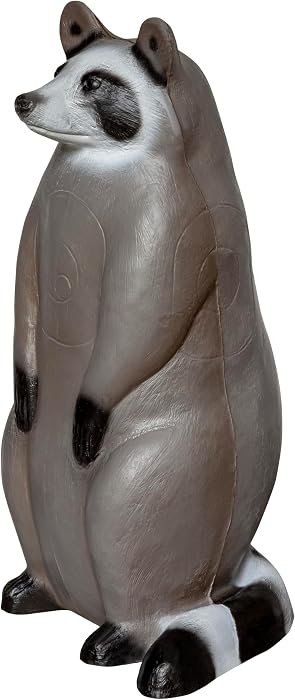
BIGSHOT Pro Hunter Raccoon & Groundhog 3D Archery Target Combo

Small-game practice

Field Score 86/100
Foam
Elasto-Flex self-healing
Weight
16 lb
Bow Types
Compound, recurve, youth
Targets Included
Raccoon and groundhog
View on Amazon

Two life-size critters in a single box is a genuinely different offer from anything else on this page, and it is why we keep the Pro Hunter combo around for a yard that can hold a small course instead of one big deer. A raccoon and a groundhog, both molded at true proportions, means two stations and no re-staking between ends. The Elasto-Flex foam is the same self-healing material Bigshot uses across its line, and the Weathercoat treatment is built to shrug off rain, snow, and UV, so staking them outdoors for the season is the intended use rather than a gamble.

Both targets are rated for compound, traditional recurve, and youth setups, which is what makes the set easy to share with a kid still working up in draw weight. At 16 pounds for the pair they move without a hand truck. What they are not is deer practice. Varmint vitals are a small, unforgiving aim point, excellent for tightening groups at known distance and no substitute for a whitetail silhouette when you are preparing for a 30-yard shot at a real animal.

Worth Noting

  • Varmint-sized vitals, no deer silhouette included
Our Verdict

We like this set for small-game practice and family sessions: two life-size critters, one box, and foam rated for compound, recurve, and youth bows.

Check Latest Price
3

Delta Bloodline Buck XL Best Full-Size Silhouette

Delta 51490 Bloodline Buck

Big-bodied practice

Field Score 85/100
Weight
19 lb
Body Size
X-Large
Arrow Types
Any arrow type, any bow
View on Amazon

Extra-large is the entire argument for the Bloodline Buck, and at 19 pounds it is also the heaviest deer target in this group. That weight does real work. A foam body that heavy does not skate across the lawn in a gust or walk off its mark after a few dozen arrows, and on a windy day it stays where you put it while lighter critters lean.

Delta's claim that it takes any type of arrow from any type of bow is the other half of the pitch, and it is the reason this makes sense for someone switching between field points, expandables, and fixed heads in the same session. The size is doing you a favor there as well: a bigger silhouette forgives a slightly low release, and the vital area keeps taking arrows when most of your misses are still landing near the middle.

Where the Bloodline makes you choose is servicing. If a core you can rotate matters to you, this is not that target and the GlenDel is. For a hunter who wants one big, stable deer in the yard and shoots a few ends a week, that simplicity is worth more than an insert to turn, and there is nothing to lose or mis-order when the season ends.

Worth Noting

  • Awkward to drag around at 19 lb
Our Verdict

We reach for the Bloodline XL when body size is the priority: the largest deer silhouette here, and Delta rates it for any arrow from any bow.

Check Latest Price
4

Rinehart 1/3 Scale Elk Best for Tight Backyards

Rinehart 1/3 Scale Woodland Elk Target

Tight backyards

Field Score 84/100
Foam
Self-healing foam
Scale
1/3 scale
Dimensions
38 in H x 44 in L
View on Amazon

A third of an elk is what you get here: 38 inches tall and 44 inches long, small enough to set against a garage wall or a hedge and simple to reposition alone. That scale is a limitation if you are training for a long shot at a real bull, and it is precisely the point if your practice space is a suburban lot with a neighbor's fence behind it.

What you pay for is the foam and the molding. Rinehart's self-healing material is the reason this target costs what it does, and the construction is the most solid of anything here at this size, with a body that keeps its shape instead of chunking out around the vitals. The kill zone is molded into a compact silhouette, so a good shot still reads as a good shot and a poor one is obvious from the stake.

Two things to know before you set it out. Arrows come out harder as the temperature drops, and a little arrow lube plus a twisting pull rather than a yank is the difference between a smooth end and a wrecked shaft. And the small body punishes a tired release at distance, so it rewards shooting inside your comfortable range rather than past it.

Worth Noting

  • A third of an elk for premium money
Our Verdict

We keep this one for tight backyards: a third-scale elk with Rinehart self-healing foam, small enough to leave up behind a fence line.

Check Latest Price
5

Delta Backyard Woodchuck Best Budget

Delta McKenzie Back yd 3D Woodchuck Target

Budget score rounds

Field Score 83/100
Arrow Tips
Broadhead, expandable, field point
Scoring Rings
IBO
Rated Bow Speed
300-350 fps
View on Amazon

Spending the least here still buys a proper 3D target: a woodchuck with IBO scoring rings molded into the vitals, rated for broadheads, expandables, and field points, and stamped for bows running 300 to 350 fps. That speed rating is the most useful line on the label. Above it, expect shafts to bury deep or punch through, and no foam in this price bracket changes that.

As a first 3D target or a second one for score rounds, this is where we point budget shoppers. The rings make practice feel like a course rather than plinking, and the small body is honest about what it is: you are aiming at a vital patch, not a deer. The Shooter Hog sits at the same end of the price range, and the published speed rating is what separates them, because it tells you in advance where the target stops working.

Worth Noting

  • 300-350 fps ceiling rules out fast bows
  • Small silhouette is unforgiving past mid-range
Our Verdict

The budget target we trust most, with IBO scoring rings, broadhead capability, and a stated speed ceiling that tells you exactly who it is not for.

Check Latest Price
6

Shooter 3D Hog Best for Kids and Light Bows

Shooter Field Logic 3D Archery Hog Target

Kids and light bows

Field Score 82/100
Animal
Hog
Weight
1.1 lb
Material
Foam
View on Amazon

Short-range practice with lighter bows is where this hog makes sense: a compact foam body you stake in the yard, shoot all afternoon, and forget about until the foam softens. It is the least money you can spend on a 3D target here, and for a kid moving up from a bag, that matters more than anything the premium targets offer.

What it does well is take arrows from moderate setups without drama, and its size keeps a young shooter focused on form instead of on hitting a deer-sized wall of foam. It is one of the few targets in this group a beginner and a recurve shooter can genuinely share, and the hog silhouette gives a new archer something more interesting to aim at than a square.

Where it quits is on speed. Arrows from a fast compound blow through it, and once the initial crush of the foam is gone the problem gets worse rather than better. The rear legs are the other weak point, and they can snap before the target has seen a full round.

So treat it as a first target, not a last one. Buy it for a kid, for light bows at fifteen yards, or as a knock-around target you do not mind leaving in the rain. It will not be the last 3D target you own, and it is not priced like it intends to be.

Worth Noting

  • Fast compounds can shoot clean through it
  • Rear legs can snap early
Our Verdict

We point kids and light bows to this hog, and we steer fast compounds away: it is cheap, compact, and honest about its limits.

Check Latest Price
7

Bigshot Real Wild Raccoon

BIGSHOT Real Wild Raccoon 3D Archery Target

Backyard small game

Field Score 81/100
Foam
Elasto-Flex self-healing
Weight
6 lb
Scoring
IBO rings
Dimensions
30 in H x 20 in W
View on Amazon

Thirty inches tall, twenty wide, six pounds. The Real Wild Raccoon is small enough to carry to the fence line in one hand and heavy enough that the rebar stakes it ships with hold it steady in a breeze. That footprint is the appeal for anyone practicing in a yard where a deer target would be the most obvious object on the block.

Elasto-Flex foam is the same self-healing material Bigshot uses on its multi-target sets, and the raccoon carries IBO rings on the vitals with kill-zone targets on the sides, so one critter gives you more than one angle without moving it. It is rated for broadheads as well as field points, and the UV-stable foam is built to be left out rather than packed away after every session.

For small-game practice at realistic distances this is the single critter we reach for, dense enough to stop a modern compound and priced so a worn spot is not a disaster. The catch is the pull. Arrows can come out stubbornly enough that an insert stays behind in the foam, so keep a puller handy and twist as you draw instead of yanking straight back.

Worth Noting

  • Shafts can pull hard, leaving inserts behind
Our Verdict

Our favorite single small-game critter: a six-pound raccoon with IBO rings and self-healing foam, though arrows can come out stubbornly.

Check Latest Price
8

GlenDel Crossbow Buck Best for Crossbow Hunters

GLENDEL Crossbow Buck 3D Archery Target

Crossbow hunters

Field Score 80/100
Height
34 in shoulder, 56 in total
Antlers
150 in B&C
Bolt Rating
400+ FPS
Replaceable Core
4-sided, 11 x 11 x 11 in
View on Amazon

Four hundred feet per second is the number this target is sold on, and it is the reason to look: a bolt-rated version of the same deer body and four-sided core we recommend for vertical bows. GlenDel specifies a different replacement core for it than for the standard buck, so the construction is not a straight carryover despite the shared shape.

Around that core it is the deer you already know, with the proportions of a 200-pound whitetail, 34 inches at the shoulder, 56 inches overall, and a 150-inch rack on top. The PolyFusion layers compress evenly, which is what keeps a bolt from welding itself into the foam between ends, and the four faces still rotate the wear away from the middle.

Stopping is where the record splits. Hot bolts have been stopped cleanly at one end of the range, and at the other, bolts from high-power crossbows can pass through at 40 yards, with 60-pound compounds driving arrows only a few inches deep on the same target. Before you trust it at hunting distance, shoot it at hunting distance, and put a backstop behind it either way.

Worth it if you own a crossbow and want the deer-body experience with a core you can turn, and you are willing to verify penetration at your own yardage. If you are shooting a 60-pound compound, the standard GlenDel costs less and does the same job with the same core.

Worth Noting

  • High-power bolts can pass through at distance
  • Premium price over the standard buck
Our Verdict

We treat this as the crossbow version of our top pick, with the same rotating core and deer body, a bolt rating, and a stopping record to check first.

Check Latest Price

How We Chose and Tested These 3D Targets

We built the shortlist by combing through archery retailers, forums, and the review sections of the targets that move in volume, then filtering for body size, foam type, whether the core could be replaced or rotated to a fresh face, and whether the maker rated it for broadheads and crossbow bolts. That left 10 targets, which we bought ourselves and have been shooting for nine months.

Most of the testing happened where these targets actually live: a backyard range paced out to 40 yards, a friend's five-acre field for longer shots, and a Saturday youth session where kids between 8 and 12 shot a recurve and a light compound at the smaller critters. We also shot in the rain, left targets sitting in the sun for a week at a time, and hauled them in and out of a truck bed to see how the foam and the paint held up.

For each one, we measured arrow pull with a luggage scale after 50 shots into the vital zone and noted where pass-throughs started showing up. We counted how many arrows each face absorbed before the core needed rotating, soaked the weatherproof models with a hose and weighed how much water they took on, and stood back at 30 yards to check whether the silhouette genuinely read as the animal it claimed to be. Kid-sized handling got its own check — we watched whether a 10-year-old could set a target up, move it, and pull her own arrows without help.

How to Choose a 3D Archery Target

Look at the Core Before the Rack

Every 3D target wears out where you hit it, and a molded one-piece body gives you a single face to shoot. An insert design gives you four: shoot one side soft, turn it a quarter turn, and keep going. We put a replaceable core at the top of our priority list for anyone shooting more than a couple of evenings a week, because the alternative is buying another deer.

If you fling a dozen arrows a week and want the simplest thing that works, a one-piece foam body is fine and cheaper. Either way, confirm which replacement core fits before you order. The part numbers differ between models, even within a single brand, and a target with no available core is a target with a countdown on it.

Match the Speed Rating to Your Bow

Most 3D targets carry a bow-speed rating, and it is the most honest number on the box: above it, arrows start punching through. A target rated to 350 fps is right for a mid-weight compound and wrong for a hard-hitting setup at 20 yards. Know what your bow actually produces and leave margin.

If you sit near the ceiling, plan on a backstop rather than trusting foam to catch everything. Crossbow shooters need a bolt rating specifically, because bolt speed and arrow speed are not the same measurement and a target rated for one is not automatically rated for the other.

Expect to Work for Your Arrows

A target that stops everything tends to hold onto it. Dense foam and broadhead holes both make for a stiff pull, and the gap between pleasant practice and a miserable one is often a few seconds per arrow. Arrow lube helps more than it sounds like it should, particularly in the cold, and a twisting pull with your hand close to the foam beats a straight yank from a distance.

Broadheads chew foam faster than field points, so if you tune with fixed heads, do not expect the vitals to stay tight all season. Rotate your aiming point deliberately instead of hammering one spot.

Size, Weight, and Where It Stands

A full-size deer body needs real space: clear ground behind it and room to walk around. Compact and third-scale targets fit along a fence line, and the small critters can be carried out and staked in a minute. Everything here moves with one person, but the big foam deer are not targets you re-stake every session, so pick a spot and commit to it.

Then stake it or lean it against something. Legs and stakes are the first part of a 3D target to fail, and an animal that tips over mid-season is one you stop shooting.

Frequently Asked Questions

Final Verdict

The GlenDel Buck is the 3D target we point most bowhunters toward. A four-sided core you can rotate and eventually replace answers the one problem that kills every target in this category, and the body, vital zone, and broadhead capability are all where a whitetail hunter needs them.

If your practice space is a fence line rather than a field, the Rinehart elk fits where a full-size deer will not. Crossbow shooters should start with the GlenDel Crossbow Buck, then verify bolt penetration at their own hunting distance before trusting it.