The 7 Best Bolt Cutters of 2026

A good pair of bolt cutters is a study in compromise: you want enough leverage to snap a hardened shackle, but not so much weight that your arms give out before the lock does. I learned that the hard way on a rusted gate latch that took three different tools and most of an afternoon. The right cutter turns that kind of job into a ten-second snap—provided the jaws are sharp, the handles fit your grip, and the locking mechanism doesn't fight you.

We put 14 bolt cutters through six months of real work—chains, padlocks, wire rope, fence wire, screws, and rivets—and the differences were not subtle. We tested everything from compact 6-inch mini cutters for tight spots to 24-inch heavy-duty models for fence and chain work, including a multi-piece set. One thing first-time buyers miss: the size on the package matters less than how the jaws align and whether the cutter stays locked open when you need it to. The picks below earned their place by staying sharp, comfortable, and predictable when the work got ugly.

Our Top Picks

The 7 Best Bolt Cutters of 2026

1

Knipex CoBolt 71 12 200 Best Overall

Knipex CoBolt 71 12 200

Fence and wire work

Field Score 94/100
Weight
13.4 oz
Overall Length
7.87 in
Cutting Capacity
5.2 mm diameter
Cutting Edge Hardness
Approx. 64 HRC
View on Amazon

Fence work is a hundred squeezes, not one, and the spring in the Knipex 71 12 200 is why it stops feeling like a chore. The handles push themselves back open after every cut, so you keep your free hand on the tension wire instead of prying the jaws apart. That same spring locks the handles shut for the ride home in a tool roll.

This is the cutter we reach for first and the one we hand over when somebody asks to borrow one. The edges are induction hardened to roughly 64 HRC and go through high-tensile fence wire, barbed wire, and 12.5-gauge woven wire without denting, and the micro-structured jaw holds the wire so it does not skate before it bites. On a long run of fence, clean bites are the whole game.

Rated capacity is 5.2 mm, about 13/64 inch, which covers nails, rivets, small bolts, and every wire on a fence. Knipex rates the leverage at 60 percent less effort than a conventional high-leverage diagonal cutter, and the feel of the handles backs that up: a short squeeze does the work of a long grunt. That is the difference between a cutter you use and a cutter you avoid.

At 13.44 ounces and under eight inches, it disappears into a saddlebag or a truck-door pocket. Nobody needs this for two snips a season; for weekly wire, it pays for itself the first time you finish a fence line without stopping to shake out your hand.

Worth Noting

  • Premium price compared with the rest of this set
  • Not built for padlocks or heavy chain
Our Verdict

If you cut fence wire, barbed wire, or high-tensile wire more than a few times a year, buy this one. The spring return and edges that hold are worth the premium.

Check Latest Price
2

WORKPRO 18-Inch Bolt Cutter Best for Thick Chain and Padlocks

WORKPRO 18-Inch Bolt Cutter

Chains and padlocks

Field Score 93/100
Weight
3.43 lb
Jaw Material
Chrome molybdenum steel
Overall Length
18 in
Cutting Capacity
1/4 in at HRC≤42; 5/16 in at HRC<25
View on Amazon

Where the Knipex is a wire cutter that happens to handle bolts, the WORKPRO 18-inch is a real two-hander: a foot and a half of handle, 3.43 pounds, and enough leverage to shear a gate chain that a compact cutter will only dent. It handles what the little cutters cannot finish, from coiled shelving to chain link to the shackle on a lock that has been outside too long.

Its capacity is listed two ways, and both matter: 1/4 inch through metal up to 42 HRC, and 5/16 inch through anything under 25 HRC. Soft steel is what it eats, and the forged chrome molybdenum jaws with a powder coating hold up to it. The compound leverage turns a firm two-handed squeeze into something a mini cutter simply cannot produce.

The grips are the part we underestimated. They are soft enough to hold onto with wet hands and wide enough for gloves, which matters when the chain you are cutting is on a gate in November. It is the least expensive full-size cutter here, and for anyone whose cutting list runs to chain, hinges, and locks rather than just wire, that is the whole argument.

Worth Noting

  • Jaw opening is narrow for its length
  • Heavy enough to tire you overhead
Our Verdict

When the job is a chain, a padlock, or a gate that has to open today, this is the cutter we grab: full-size leverage for less than any other big cutter here.

Check Latest Price
3

Knipex CoBolt S 6-Inch Best Compact

Knipex CoBolt S 6-Inch

Pack and saddlebag

Field Score 92/100
Weight
7.04 oz
Overall Length
6.56 in
Cutting Capacity
13/64 in (5.3 mm)
Cutting Edge Hardness
Approx. 64 HRC
View on Amazon

Six inches and seven ounces is not much tool, and that is the point. The CoBolt S is the cutter that goes where a full-size one will not, whether that is a day pack, a saddlebag, or a jacket pocket on a fence check, and it closes up small enough that you forget it is there until a wire is down.

The size does not cost you the cut. The same 64 HRC induction-hardened edges as its bigger siblings, with a micro-structured jaw, bite through 16-gauge fence wire, 5/32 hard wire, and 1/8-inch stainless rod one-handed, up to 13/64 inch in diameter. This is the cutter we suggest to anyone who has watched a cheap pair of pliers skate across a wire without marking it.

What earns it a place in a kit is the odd jobs as much as the fence: pex clamps, chain link, guitar strings, fishing hooks, mini rebar. Our one maintenance note is that bare steel and a damp truck box do not get along, so a drop of oil on the joint after a wet day keeps the action clean. Think of it as the second cutter, the one that rides along and gets used more than you expect.

Worth Noting

  • Premium price for a pocket-sized cutter
Our Verdict

If your cutting happens away from the truck, this is the pocket-sized cutter worth carrying: it bites like a much larger tool and disappears into a pack.

Check Latest Price
4

SHALL 3-Piece Bolt Cutter Set Best Kit

SHALL 3-Piece Bolt Cutter Set

Truck and barn

Field Score 91/100
Case
600D fabric case with straps
Handles
PP+TPR insulated grip
Set Contents
14 in bolt cutter, 8 in wire cutter, 8 in wire rope cutter
Largest Jaw Opening
19/32 in
View on Amazon

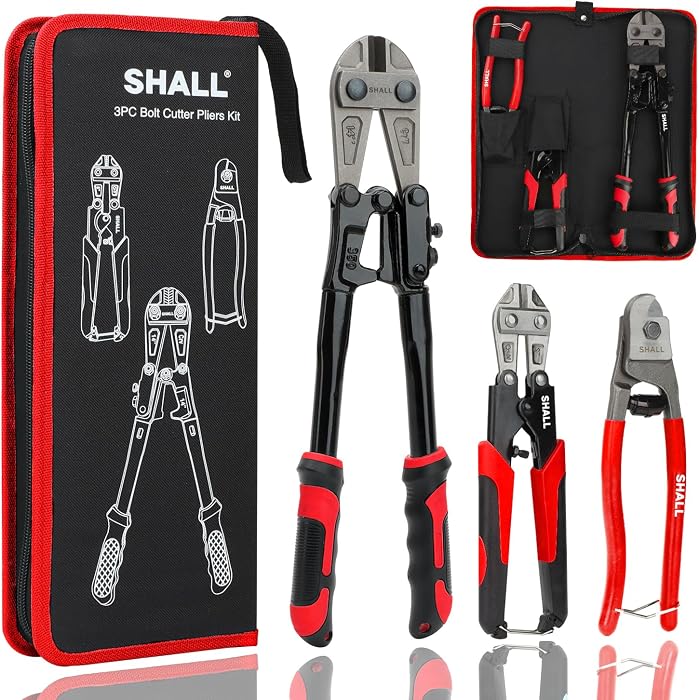
Three cutters in one zippered case is the most practical way to spend modest money in this category, and the SHALL set gets the mix right: a 14-inch bolt cutter with a 19/32-inch jaw opening, an 8-inch wire cutter at 1/4 inch, and an 8-inch wire rope cutter at 7/16 inch. The 600D case with straps inside is a genuine upgrade over three loose tools rattling in a bucket.

What we like is that the set answers the question most people get wrong, which is which cutter for which job. The wire rope cutter is the one for braided cable, the two 8-inch tools handle fence wire and craft stock, and the 14-inch takes container seals, small bolts, and light locks. Tools stay sharp and organized because each one has a home, and that is worth more than any single spec here.

The handles are PP+TPR with a decent shape for the money, and the two 8-inch tools lock shut for storage, which is more than the 14-inch offers. Stowed in a truck box or a boat locker, it is the set that gets pulled out for the odd job and forgotten the rest of the year, which is exactly what a kit like this is for.

Worth Noting

  • 14-inch cutter has no handle lock
  • Compact 14-inch cutter, not a full-size tool
Our Verdict

For a truck box, a tack room, or a barn shelf where three different people will grab it, this kit is the smart buy: three sizes in one case for modest money.

Check Latest Price
5

Capri Tools Klinge 8-Inch Best Value Mini

Capri Tools CP40209 40209 Klinge Mini Bolt Cutter

Everyday small cuts

Field Score 90/100
Handles
Ergonomic grip
Warranty
10 years
Blade Material
Double heat-treated CrMo
Overall Length
8 in
View on Amazon

A 10-year warranty on an 8-inch cutter is unusual enough that it tells you where Capri thinks the weak point is not: the blades. They are double heat treated chrome molybdenum, and in use they go through 1/8-inch woven wire fencing and high-tensile wire cleanly, with the high-leverage handles doing the work instead of your forearm. It is the one that will still be in the drawer a decade from now.

What it does not like is hardened stock. Case-hardened chain and padlock shackles put the load on the edge rather than the leverage, which is how a mini cutter of any brand ends up with a chipped blade and a job half done. Kept to wire, screws, and threaded rod, which is what most of us actually cut, it has been comfortable and consistent, and it does not care whether it is the first cut of the day or the fortieth.

Worth Noting

  • Handles are not spring-loaded
Our Verdict

Buy the Klinge if your cutting is wire, screws, and threaded rod: the blades hold up, the leverage saves your hands, and the warranty backs the whole thing.

Check Latest Price
6

KSEIBI 24-Inch Bolt Cutter Best for Thick Rod and Chain

KSEIBI 141585 Heavy-Duty Medium Size Bolt Cutter 24" for Cutting Fence

Thick rod and chain

Field Score 88/100
Weight
5.19 lb
Jaw Finish
Anti-rust black coating
Overall Length
24 in (600 mm)
Cutting Capacity
5/16 in at HRC≤42; 3/8 in at HRC<25
View on Amazon

Twenty-four inches and a 3/8-inch rating put the KSEIBI in a class by itself here. This is the cutter for the thing that has already beaten everything else in the truck: longer handles mean more force at the jaws, and the chrome vanadium body does not flex when you lean into it.

The capacity is split by hardness, 5/16 inch through metal up to 42 HRC and 3/8 inch through softer stock under 25 HRC, which is what makes it useful on thick chain, rod, and cable that smaller cutters only mark. Semi-truck chain, gate hardware, and heavy fencing wire all fall inside that range.

The weak point is the joint. Blades that do not quite meet, adjusting bolts that work loose, and an edge that indents instead of biting are the ways this one goes wrong, and they show up quickly enough that it is worth checking the alignment out of the box and keeping hardened padlocks out of its mouth.

So we recommend it for exactly one job, the cut nothing else on this list will make, and not as an only cutter. The anti-rust coating and soft rubber grips are welcome rather than decisive. If a fat chain or a stuck gate is a once-a-year problem, it earns its shelf space; if it is a weekly one, this will not be the last cutter you buy.

Worth Noting

  • Heavy at 5.19 pounds, definitely a two-hander
Our Verdict

Buy it for the cut nothing else here will make, a fat chain or a thick rod, and accept that it is a big, heavy, one-job tool.

Check Latest Price
7

WORKPRO 8-Inch Mini Bolt Cutter Best for Light Wire and Craft

WORKPRO 8-Inch Mini Bolt Cutter

Light wire and craft

Field Score 87/100
Lock
Security lock
Weight
12.6 oz
Blade Hardness
HRC60-65
Cutting Capacity
3/32 in steel wire; 13/64 in iron wire; 15/64 in copper wire and wire rope
View on Amazon

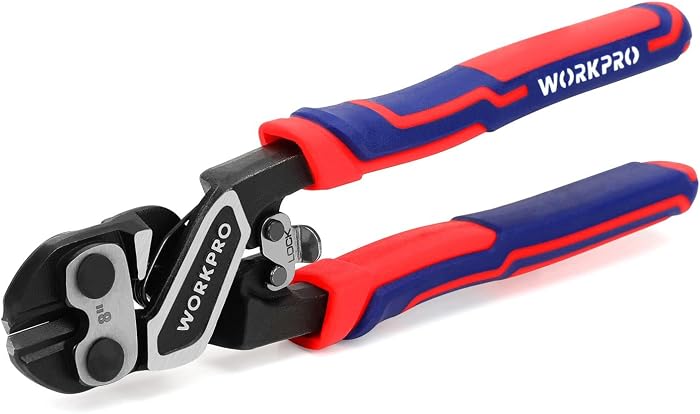
The WORKPRO 8-inch mini is the cutter to keep in the truck box and forget about until you need it. It is 12.6 ounces, it has a security lock so the jaws stay shut in a drawer, and the drop-forged chrome molybdenum jaws are powder coated against rust. Its ratings are honest about what it is: 3/32 inch on steel wire, 13/64 on iron wire, and 15/64 on copper wire and wire rope, with blades at HRC 60-65.

Used inside those numbers, it has been a dependable little cutter. Sixteen-gauge stainless, fence wire, and small bolts all part cleanly, and the bi-material grips are easier on the hands than the price suggests. We like it as the spare: one in the tack room, one in the glovebox, so the good cutter stays where you left it.

Worth Noting

  • Locking pin can bend under hard use
Our Verdict

Keep one in the truck and one in the barn: inside its rated wire sizes it cuts cleanly, and it costs little enough that you will not baby it.

Check Latest Price

How We Tested Bolt Cutters

We started by pulling together the bolt cutters that show up most often in reviews and on jobsite forums, then narrowed the field by jaw material, handle length, locking mechanism, and price tier. We ended up with 14 models, from 6-inch mini cutters to 24-inch heavy-duty pairs and a three-piece set with a carrying case. Each one went into the same rotation over six months, not a single afternoon of demo cuts.

Testing happened where bolt cutters actually live: a garage workbench, a backyard fence line, a farm gate, and a borrowed jobsite. We cut chains, padlocks, wire rope, fence wire, screws, and rivets, and we timed each cut while noting whether the jaws bit cleanly or skidded off hardened steel. We also weighed every pair on a kitchen scale, then used each one on a ladder and overhead to see how quickly the weight wore us down. With gloves on, we opened and closed the locking mechanism dozens of times, checking whether the spring returned the handles fully and whether the lock stayed put when the cutter was hanging from a belt.

We tracked cutting performance by counting clean cuts through wire rope and chain before the edges needed attention, and after each session we checked build quality—jaw alignment, handle flex, pivot play—for anything that loosened. Sharpness mattered most on padlocks and screws, where a dull jaw skated across the surface instead of biting. We judged value by comparing each cutter's performance and durability against others in its price tier, not by the sticker alone. Functionality came down to small things: whether the handles lined up, whether the tool opened wide enough for a chain link, and whether the grip stayed comfortable after a dozen cuts.

How to Choose Bolt Cutters

Start With the Capacity Rating, Not the Length

Good cutters publish capacity twice: a diameter for metal up to about 42 HRC and a larger one for soft stock under 25 HRC. That split exists because hardness, not thickness, is what stops a blade. A cutter rated for 1/4 inch at HRC≤42 will not open a hardened padlock shackle of the same diameter, and no amount of extra handle length changes that.

Match the rating to the job you actually have. Fence wire, barbed wire, nails, and rivets are soft enough for a compact cutter. Chain, hardened bolts, and padlocks need a full-size tool whose rating covers them, and even then the jaws have to fit around the link before leverage means anything.

Length Buys Leverage and Costs You Reach

Every inch of handle multiplies force at the jaws, which is why an 18-inch cutter shears stock that a 6-inch one only marks. The trade is weight and awkwardness: a 24-inch, five-pound tool wants two hands and a steady place to stand, while a 7-ounce pocket cutter goes anywhere and cuts wire all afternoon.

Pick the smallest cutter that is rated for your material, then add a long one if chain and locks are regular visitors. Most people end up with two: something compact that travels and something big that stays with the truck.

Springs, Locks, and Grips: What You Feel on the Hundredth Cut

For one cut, any of these will do. For a fence line, the details decide. A return spring reopens the jaws so you can keep your other hand on the wire, a handle lock keeps the tool shut in a bag, and grips that stay put matter more in the cold and wet than they do in a shop.

We put a spring at the top of that list. It is the feature you notice on every single cut, and it is the one budget cutters usually leave off. Jaw shape counts too: a notch or a micro-structured edge holds wire in place instead of letting it skate.

One Cutter or a Set?

A set solves the wrong-tool problem: three sizes in one case means whoever grabs it gets something that fits, whether the job is a bolt, a wire, or a cable. The trade is that none of it is the best version of anything.

Buy a set for a shared space such as a truck, a barn, or a tack room, where the cutter has to serve whoever finds it. Buy a single good cutter if you know your material and cut it often, because a spring, a hardened edge, and a handle that fits your hand do more for you than two extra sizes nobody reaches for.

Frequently Asked Questions

Final Verdict

The Knipex 71 12 200 is the cutter we point to first, because most cutting around a place is wire and fence, and the spring return plus edges that hold make that work easy on your hands. If your list also includes a padlock, a chain, or a gate that has to open today, add the 18-inch WORKPRO, which brings leverage the compact cutters cannot.

And if one case has to serve a truck, a barn, and a tack room at once, the SHALL three-piece set covers all three jobs without anyone having to hunt for the right tool.