The 4 Best Game Bags of 2026

A bull elk down two miles from the truck is a great problem to have — until you realize the game bags are still in the garage. Game bags are the unglamorous gear that decides whether a hard-earned quarter comes out clean and cool or dusty, flyblown, and losing moisture before you reach the trailhead. The right bag protects meat from dirt, insects, and freezer burn while letting heat escape; the wrong one turns a pack-out into a mess.

I've learned that price and thick fabric don't always predict how a bag behaves when it's wet and heavy. We put 14 game bag sets through six months of real use—early-season deer, late-season elk, and a few trips that ended with meat in the freezer—and focused on closure, labeling, weight, and how easily each bag handled a full quarter. Some sets are sized for a whole quarter, some for trimmings; some roll tight, some don't. The picks below are the ones that earned a place in my pack and stayed there.

Our Top Picks

The 4 Best Game Bags of 2026

1

GearOZ Elk Game Bags 5-Pack Best Overall
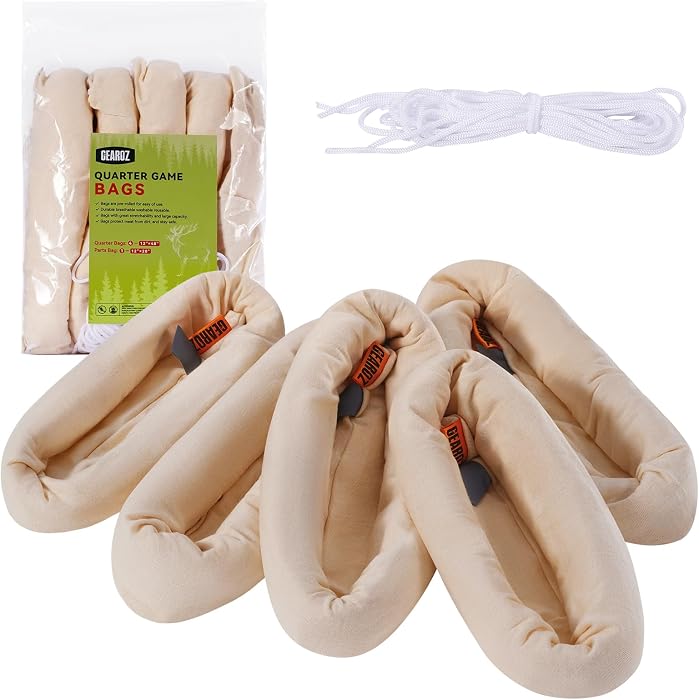
GearOZ Elk Game Bags 5-Pack – Elk Game Bags Hunter Meat Bag for Caribou/Deer/Moose Hunting 5-Pack

Elk and deer quarters

Field Score 94/100
Material
100% cotton
Bag Sizes
12 x 48 in (4), 12 x 28 in (1)
Reusability
Machine washable
Reflective Strip
Yes
View on Amazon

Four 12-by-48-inch bags and one 12-by-28-inch bag — that split is why the GearOZ set is our top pick. A quartered elk gives you four quarters plus a pile of backstraps, neck meat, and trim, and a set that spends every bag on quarters leaves you improvising something for the best cuts. The small bag is cut for exactly that job, and it's the first thing we noticed when we laid the kit out.

Cotton is the material we want against bare meat. Air moves through the weave, the surface of a quarter dries to a dark crust, and that crust is what slows spoilage and keeps flies from settling. The cost is water: cotton soaks up blood and rain, and a wet set weighs noticeably more than a dry one. On a fly-in or a long walk-in where every ounce is counted, that's a real argument for mesh. On a truck hunt or a horse pack-out, it never comes up.

Generous is the word for the cut. There's enough length to gather the fabric above the widest part of a hindquarter and tie off there, instead of fighting the bag closed at the bulge where seams give out. The reflective strip looked like a catalog feature until we were hunting a hanging quarter with a headlamp at the end of a long pack-out, and then it didn't. Machine washable matters more than it sounds, too — a blood-soaked bag you can't clean is a bag you throw away.

Worth Noting

  • Soaks up water and dries slower than mesh
Our Verdict

For most deer and elk hunters, this is the set we point to: four cotton quarter bags, a separate trim bag, and fabric that lets warm meat cool instead of sweat.

Check Latest Price
2

Gociean Game Bags 5-Pack Best Closure

Gociean Game Bags 5-Pack – Game Bags Elk Hunting Meat Bags

Buggy early-season hunts

Field Score 93/100
Closure
Drawstring
Material
Polyester mesh
Bag Sizes
48 in (4), 28 in (1)
Reflective Strip
Yes
View on Amazon

Closing a loaded game bag usually means hunting for paracord with hands you shouldn't be touching anything with. The Gociean bags have a drawstring built into the top, so you pull, cinch, and move on. That single change made them the fastest five-pack to close in our testing, and on a night pack-out speed is worth more than any line on a spec sheet.

The fabric is dense polyester mesh rather than cotton, and the density is the point: the weave is tight enough to keep mosquitoes and blowflies off exposed meat, which is the difference between a clean quarter and one speckled by morning. Polyester also doesn't drink blood and rain the way cotton does, so the bags stay light on the pack out and rinse clean instead of needing a real wash.

The pack splits four 48-inch quarter bags and one 28-inch bag for trim, the same configuration as our top pick, so an elk or a big mule deer is covered without buying a second set. The trade is airflow — a tight weave moves less air than an open cotton bag — which is why these are the ones we grab for a wet, buggy September hunt rather than a dry late-season one.

Worth Noting

  • Tight weave moves less air than open cotton
Our Verdict

If bugs and fiddly closures are your headaches, this is the set we pack: dense mesh, a drawstring that pulls tight, and fabric that doesn't hang onto water.

Check Latest Price
3

Koola Buck Standard Game Bags 5-Pack Best Budget

Koola Buck Standard Game Bags 5-Pack – Deer

Deer and antelope

Field Score 92/100
Count
5 bags
Seams
Reinforced stitching
Bag Size
16 x 50 in
Material
Cotton/poly blend
View on Amazon

The least expensive of the fabric sets here buys you five bags that are, on paper, the easiest of the group to load. Sixteen inches across and 50 inches long, in a stretchy cotton-poly knit with reinforced stitching at the seams, and one bag to spare beyond the four quarters.

That 16-inch opening is the number that matters. A whitetail hindquarter drops in without the fight you get from a narrower tube, and the length leaves room to gather the top and tie off well above the meat. The catch is length: 50 inches of fabric wants to fold over on itself while you're wrestling a quarter in, and solo that usually means laying the meat down on something clean first. Spread the bag over a tarp or a pack frame, or have a partner hold the mouth open, and the annoyance disappears.

The stretch is genuine and it helps on a bulky load — the fabric conforms around the quarter rather than standing off it, which means less dead air to chill. Koola Buck sizes these for deer and antelope, and that's how we'd use them; for a bull elk, spend the extra on one of the longer sets above. For a big whitetail or a pronghorn, the five bags are more than enough, and the price leaves room for a second set next season.

Worth Noting

  • Sized for deer and antelope rather than elk quarters
Our Verdict

We keep recommending this one to deer hunters on a budget: wide 16-inch mouths, 50-inch length, and stretchy fabric that forgives a sloppy load.

Check Latest Price
4

LEM Wild Game Bags 100-Count Best for Freezer and Ground Meat

LEM Products 2 lb Wild Game Bags

Freezer and ground meat

Field Score 91/100
Count
100 bags
Capacity
2 lb
Material
Polyethylene
Printed Labels
Seven game and cut check-offs
View on Amazon

These aren't quarter bags, and it's worth being blunt about it. LEM's two-pound polyethylene bags are for ground meat, sausage, and steaks headed for the freezer. Sealing a warm quarter in plastic is the opposite of what game bags are for: no airflow, no cooling, and meat that was fine on the mountain spoils in the bag. If you're packing an animal out, buy one of the fabric sets above.

Where they earn their place is the kitchen table two days later. Fill them from the grinder or a funnel, press them flat, and they stack like books in the freezer, which is why a box of a hundred disappears faster than you'd expect. The printed check-off list — buffalo, elk, moose, antelope, venison, burger, sausage — sounds gimmicky until February, when a freezer full of unlabeled white bricks becomes a guessing game.

One thing to know before you fill the first bag: the fill line is marked for a pound, not the two pounds in the product name, so weigh anything larger instead of trusting the print. Treat the whole box as disposable packaging rather than gear — it's a box you rebuy each season, and priced that way it's still the cheapest way to get a deer's worth of burger in the freezer.

Worth Noting

  • Seams can split on a sharp bone edge or overfill
Our Verdict

Buy these for the grinder and the freezer, not the mountain — they're the bags we keep on the processing table all season.

Check Latest Price

How We Tested the Best Game Bags

We started by pulling every game bag we could find from hunting shops, outdoor retailers, and direct-to-consumer brands, then narrowed the field to 14 sets that covered the range of materials, sizes, and closure styles hunters actually choose between. We ignored claims on the package and looked at what was in the bag: cotton versus synthetic, sewn-in versus separate closures, quarter-sized versus trim-sized, reusable versus disposable. Over six months, those 14 sets went on early-season deer hunts, late-season elk pack-outs, and a handful of weekend trips where we quartered, hung, and hauled meat in real conditions.

On each hunt, we filled bags with a full quarter—roughly 30 to 50 pounds depending on the animal—and carried them out, hung them in camp, and checked how the fabric handled blood, dirt, and brush. We noted whether the closure stayed tight when we lifted a loaded bag by the top, whether we could mark each bag clearly with a tag or marker without it smearing, and whether the empty bag added noticeable weight to a pack. We also timed how long it took to open, fill, and tie each bag with cold hands, because fumbling with a closure at dusk is its own kind of failure.

Back home, we washed each reusable bag according to the maker's instructions and inspected seams, stitching, and fabric for thinning or tears. We weighed bags before and after a full day of carrying meat to see how much water and blood they held, and we checked airflow by hanging a filled bag in still air and feeling for heat buildup. For the disposable options, we looked at whether the material tore at the seams or corners when loaded and whether the bags kept meat from touching cooler ice or freezer surfaces. Value came down to cost per use: a cheap bag that tore on the first pack-out wasn't cheap.

How to Choose Game Bags

Fabric Is the Whole Point

Breathable fabric lets heat and moisture escape so the surface of a quarter dries to a dark crust, and that crust is what buys you time. Seal warm meat in plastic and you've done the opposite: no airflow, heat held against the meat, and spoilage starting before you reach the truck.

Between the two fabrics worth carrying, cotton breathes best and holds water, while polyester mesh dries fast and blocks bugs when the weave is tight enough. We reach for mesh on wet, buggy hunts and cotton when the air is dry and cold and airflow matters more than drying speed.

Length and Width: What 48 Inches Buys You

Length is tie-off room. A 48- to 50-inch bag lets you gather fabric well above the meat, knot it, and hang the whole thing from that knot — no rope, no grommets. Close a short bag at the widest part of a hindquarter and the seam takes the load, which is where bags fail.

Width decides how it loads. A 16-inch opening takes a big whitetail quarter without a fight; a 12-inch tube needs more coaxing. The catch with long bags is loading solo: 50 inches of fabric wants to fold over itself while you wrestle a quarter in, so lay the bag over something clean before you start.

Closures, Bone, and Field Handling

A drawstring cinches in one pull and stays shut; a plain bag gets knotted, which works fine but takes two hands and a spare loop of fabric. Whichever you carry, leave headroom at the top and keep cut bone ends turned away from the fabric — a sharp shard under a loaded quarter is what punctures a bag.

Hang quarters where air moves and sun doesn't reach them. A reflective strip sounds like a catalog feature until you're locating your meat with a headlamp at the end of a long pack-out, and then it earns its place on the bag.

Care, Reuse, and Weight in the Pack

Everything you carry in comes out heavier. Cotton is the heaviest dry option in this group and gains the most weight when it's soaked; polyester mesh packs smaller and dries in the sun. On a fly-in or a deep backcountry hunt, shake the bags out and roll them tight before they go in the pack.

Machine wash cold with plain detergent, skip fabric softener — it coats the fibers and quietly kills the breathability you paid for — and air dry before storage. A set treated this way lasts for seasons; retire any bag with a nick through the weave.

Frequently Asked Questions

Final Verdict

The GearOZ set is our answer for most hunters: four cotton quarter bags long enough for an elk, plus a small bag for the trim you'd otherwise be wrapping in a jacket. If you hunt where bugs are worse than the cold, take the Gociean set instead — the drawstring and dense mesh are worth the small loss in airflow.

Deer and pronghorn hunters watching the budget should start with Koola Buck's wide 16-inch bags, and a box of LEM bags belongs on the processing table no matter which quarter bags you carry.