The 8 Best Hay Nets for Horses

Colic is the word no horse owner wants to hear, and the horse who inhales a flake in eight minutes is often the one pacing an empty stall an hour later. A slow feed hay net stretches forage out closer to the way a horse grazes in a field, and it keeps the hay you paid for inside the horse instead of trampled into the bedding. The catch is that slow isn't one setting.

I've shoveled enough wasted hay out of stalls to be fussy about which nets earn a spot on the door. Over four months, my team and I rotated 14 nets through morning and evening feedings in stalls, paddocks, and the trailer, judging hole size, how well the closure cinched, and whether the rope could tie around a real rail.

Around two inches is a sensible restriction for most horses; easy keepers and ponies usually need something smaller. It also pays to own two, so one can dry while the other hangs. The picks below are the ones we kept reaching for.

Our Top Picks

The 8 Best Hay Nets for Horses

1

Weaver Equine Slow Feed Hay Net Best Overall

Weaver Equine Slow Feed Hay Net

Everyday stall feeding

Field Score 91/100
Length
36 inches
Closure
Drawstring
Material
Nylon rope
Mesh Openings
1 to 1.5 inches
View on Amazon

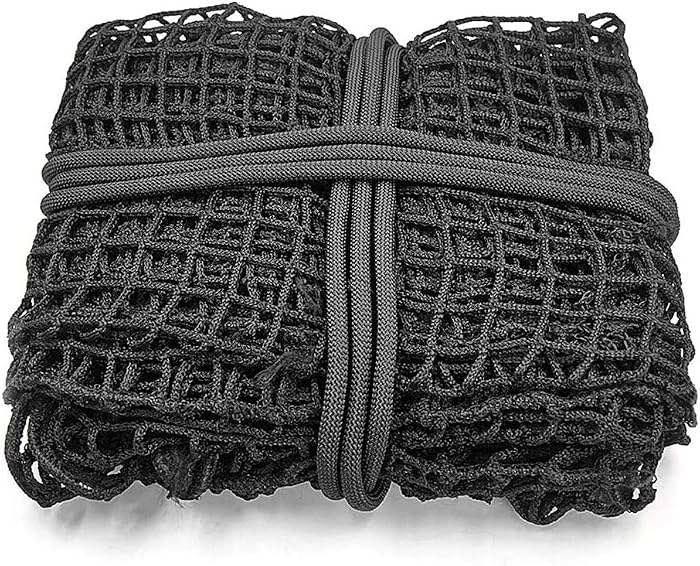
The net we reach for first is the plainest one here: a 36-inch tube of synthetic rope with small openings and a drawstring at the top. Weaver got the basics right and stopped, which is why it works in a stall, on a fence line, or tied off in a trailer without any hardware to lose. It is also the one we hand to someone buying a first slow feeder, because nothing about it needs explaining.

The openings run 1 to 1.5 inches, squarely in slow-feed range, though we noticed they sit closer to the wider end of that. A horse still has to work for its hay, just not as long as a one-inch net would make it. Capacity is the other half of the story: a full net swallows six to eight flakes, which covers a night in the stall and gives a bored horse something to do through bad weather.

Durability is where a cheap net gives itself away, and this rope holds. It takes daily loading and the grabbing a hungry horse does without coming apart at the seams. Our caveat is the mesh: openings can arrive wider than the stated 1 to 1.5 inches and relax further as the net fills, so if you are buying specifically for a laminitis-risk horse, go tighter. For everyone else this is the best value in the group.

Worth Noting

  • Mesh can run wider than the stated 1 to 1.5 inches
Our Verdict

Our default pick: a big, tough rope net that holds a night's hay and survives daily use, unless your horse needs a tighter mesh than this.

Check Latest Price
2

Hay Chix Half Bale Hay Net Best Easy-Fill Design

Hay Chix Half Bale Hay Net for Horses

Easy daily filling

Field Score 90/100
Closure
Rope and Hoggle toggle
Made In
Texas, USA
Capacity
Half bale, 4 to 6 flakes
Mesh Openings
1 3/4 inches
View on Amazon

Every hay net has the same weak point: the top, where you close it. Knots work loose, drawstrings disappear into the mesh, and cold fingers fumble the whole business. Hay Chix replaced the knot with a plastic toggle it calls a Hoggle and a rope you slide and half-hitch around it. Slide, hitch, hang, done.

We think that hardware justifies its price on its own, especially in February with gloves on. The net underneath is 1 3/4-inch mesh, hand-tied in Texas with fixed knots, and those knots are why we trust the hole size to stay put. The usual way a slow feeder stops being slow is that the mesh stretches and a horse starts pulling mouthfuls again. A half bale, four to six flakes, disappears inside.

The limit is what fits. Four to six flakes is less than the biggest nets in this group take, so it suits a stalled horse or two rather than a full barn, and it costs about what a two-pack of the cheaper nets does. For the person filling nets before work every morning, that trade is easy to make.

Worth Noting

  • Half-bale capacity only
  • Costs as much as a two-pack of budget nets
Our Verdict

The least fussy net here to fill and hang, and the one we trust to hold its mesh size; buy it for one or two horses.

Check Latest Price
3

Aoneky Knotless Hay Net Best for Full Square Bales

Aoneky Knotless Hay Net for Horses

Whole-bale feeding

Field Score 89/100
Length
47 inches
Material
Knotless nylon
Fits Bales
36 x 18 x 18 inches
Mesh Openings
1.5 inches
View on Amazon

Forty-seven inches of net is enough to slide over a three-string square bale and pull shut, which makes this the pick if you want to load hay once a day instead of three times. It is a bag the size of a bale, not a flake holder pretending to be one.

The weave is knotless nylon, softer in the hand than knotted rope and with no hard lumps for lips and gums to work against. Filled, it sits flat against the hay rather than ballooning out, and the reinforced hanging loop takes a carabiner or a tie without sliding down.

The 1.5-inch mesh is the compromise. It slows a fast eater properly, and it is tight enough that some horses spend the first week objecting, pawing and nosing and walking away and coming back. Give it several days before you decide it is too small, because most of them settle into it and eat steadily.

The draw rope is short for a bag this size. Wrestling it closed over a full bale takes both hands and a shimmy, and a longer cord is the one fix this design still needs. Otherwise it is the most net for the money when your hay comes in squares.

Worth Noting

  • Short drawstring is fiddly over a full bale
Our Verdict

The whole-bale answer: one lift fills it for the day, and the soft knotless weave suits a horse that tears through rope nets.

Check Latest Price
4

T TEKE Classic Slow Feed Hay Net Best Two-Pack

T TEKE Classic Slow Feed Hay Net for Horses

Two-horse barns

Field Score 88/100
Hanging Rope
6 mm, 8.5 ft
Mesh Openings
2 inches
Nets Per Pack
2
Estimated Volume
2.6 cu ft per net
View on Amazon

Two nets for about the price of one is the entire argument, and it is a good one if you feed more than one horse or like having a filled net waiting by the door. Each is 40 inches with 2-inch openings, among the most open mesh here, so a horse is slowed down without being made to work as hard as the tightest nets demand.

The 6 mm hanging rope is thick enough to carry a full net without cutting into your hand, and the 520 hand-tied knots per net are set so the openings stay wide after filling. The maker's example fill is 11 pounds of hay, about 2.6 cubic feet. Where it annoys us is the top: the opening is small and the whole net is floppy, so stuffing flakes takes both hands and some patience.

Worth Noting

  • Small top opening is slow to fill
Our Verdict

A sensible two-horse buy: thick ropes, forgiving 2-inch mesh, and a spare net always ready to hang.

Check Latest Price
5

Derby Originals Front Web Hay Bag Best for Stalls and Trailers

Derby Originals Front Web Slow Feeder Horse Hay Bag Super Tough Bottom with 6

Stall walls

Field Score 87/100
Hanging
Replaceable straps and snaps
Capacity
2 to 3 flakes
Warranty
6 months
Mesh Openings
1.75 inches
View on Amazon

Most hay nets are bags that swing. This one is a panel: a flat web front on a nylon body, held by straps and snaps that press it against a stall wall or a trailer divider instead of dangling from a single tie. A horse eats from it head-on, which is closer to grazing than a pendulum of hay is.

That flat back is why we like it in a stall. Nothing swings, nothing gets pawed into motion, and hay does not ball up in a corner where a horse cannot reach it. The front web is reinforced with overlapping nylon at the bottom, exactly where teeth work hardest, and the hanging straps and snaps are replaceable, so a worn strap does not retire the whole bag.

It is a stall or trailer bag rather than a day's hay for a hard keeper, and the six-month warranty against manufacturing defects is longer than anything else in this group offers. The parts most likely to wear are also the parts you can swap, which is the kind of thinking we want from a bag at this end of the price range.

Worth Noting

  • Holds only 2 to 3 flakes
  • Most expensive per flake of the picks here
Our Verdict

The best bag here for hanging flat on a stall wall, with a reinforced bottom and replaceable straps; buy it for a stalled horse and a twice-daily routine.

Check Latest Price
6

Majestic Ally 42-Inch Hay Net Best for Shows and Travel

Majestic Ally 2 pcs Slow Feed 42” Hay Net for Horses

Shows and travel

Field Score 86/100
Length
42 inches
Capacity
3 to 5 flakes
Mesh Openings
2 x 2 inches
Nets Per Pack
2
View on Amazon

Two nets in one pack, 42 inches each, with 2 x 2-inch mesh. This is the pair for feeding away from home, because one can ride in the trailer while the other hangs in the stall.

Each holds 3 to 5 flakes, and packing one with a half bale is realistic if you are heading to a show. The 2-inch mesh is the moderate middle of this group: enough restriction to slow a horse that bolts its hay, not so tight that a good doer gives up and walks away.

The 42 inches is measured stretched, and these arrive feeling smaller than the number suggests, closer to three flakes than five on a first fill. They relax into shape with hay in them, and the polypropylene rope and mesh soften with use, so give them a few weeks before you judge the size.

We rate them as the travel pair. Moderate mesh, quick to fill, and inexpensive enough that losing one behind a trailer is not a disaster. They are also the easiest of the tighter nets to load from a single flake, which matters at six in the morning in the dark.

Worth Noting

  • Runs smaller than the listed 42 inches
Our Verdict

A good pair for shows and trailers: two moderate-mesh nets that fill fast and do not take up the whole tack trunk.

Check Latest Price
7

MKO SHUN Four-Pack Hay Nets Best for Multi-Horse Barns

MKO SHUN Four-Pack Hay Nets – Slow Feed Hay Nets for Horses

Multi-horse barns

Field Score 84/100
Size
35 x 31 inches
Includes
8 carabiners
Mesh Openings
1.2 inches
Nets Per Pack
4
View on Amazon

Four nets and eight carabiners in one box, with the tightest mesh here: 1.2 inches empty, opening to about 1.5 inches once it is stuffed. If you are feeding a barn or rotating nets between stalls, this is the least expensive way to cover every door.

The rope is knotless polyester, softer in the mouth than knotted nylon, which matters for an older horse or one with worn teeth. Each net is 35 by 31 inches and takes four or five flakes, and the dual handle rings let you hang one flat against a wall or across a stall front.

Our reservation is how long they last. Some of these nets come apart at the stitching within a month, and the mesh is the lightest of the group. For a barn running four in rotation, with a regular look at the seams, that is an acceptable trade. For one horse and one net you want to keep for years, buy heavier rope.

Worth Noting

  • Stitching can fail within weeks
  • Lightest mesh of the picks here
Our Verdict

The barn-size option: four tight-mesh nets with clips for the price of two, if you can keep an eye on the seams.

Check Latest Price
8

Bloomoak Slow Hay Net Feeder Best for Paddock Bale Feeding

Bloomoak Slow Hay Net Feeder for Horses

Paddock bale feeding

Field Score 83/100
Length
Extends 50 to 64 inches
Fits Bales
36 x 18 x 18 to 47 x 25 x 17 in
Mesh Openings
1.6 inches
Nets Per Pack
2
View on Amazon

Bloomoak prints a safety warning with the net, which is more candor than most of the picks here offer: no horned animals, no horses in blankets, no non-breakaway halters, and shod horses need the net hung beyond hoof reach or paired with a ground-level ring.

What you get is a pair of PE nets sized for bales from 36 x 18 x 18 up to 47 x 25 x 17 inches and extending 50 to 64 inches, so a whole two-string bale disappears inside one. The rings at the opening make filling and closing easier than a plain drawstring, and the rope ties off tightly at the ends.

The 1.6-inch mesh is the part to watch. Openings stretch with use, and a loop that slips free of its ring can leave a gap a horse will find within a day. Check the closures every time you fill and the net keeps working the way it should.

We see it as the bulk feeder of the group. For someone feeding square bales in a paddock, two nets that each swallow a bale hang a lot of hay in one trip, and the PE holds its strength when wet. It is simply not the net for a horse that dismantles everything it is given.

Worth Noting

  • Mesh stretches and can slip into gaps
Our Verdict

The bulk pick: two bale-sized nets that hang a lot of hay at once, for paddocks and owners who check the closures.

Check Latest Price

How We Tested the Best Slow Feed Hay Nets

We started with every slow feed net we could find that was actually built for horses, then narrowed by hole size, stated capacity, closure style, and what came in the box, since a net with no carabiner and a stubby drawstring means improvising at 6 a.m. Fourteen nets made the cut, and we fed from them for four months.

Each one went into real rotation: hung in a stall for a horse on rest, tied to a fence line in the paddock, and stuffed into the trailer for a weekend show. We weighed flakes so every net carried the same load, then timed how long the horse took to empty it and noted whether he left hay jammed in the corners or got rough with the net out of frustration.

Once a week we ran our hands along the seams, the bottom ring, and the spot where the rope meets the mesh, looking for fraying, slipped knots, and mesh that had stretched out of shape after being packed full. We filled them bare-handed and in gloves, untied them in the cold, counted the carabiners that came with each, and stuffed them until they stopped giving to see whether they really swallowed the bale size on the label. Price per net and per pack only factored in at the end, once we knew which ones had survived.

How to Choose a Slow-Feed Hay Net

Start With the Mesh, Not the Length

Openings across these picks run from about 1 inch to 2 inches, and that number sets how long a horse spends eating. Tighter mesh means smaller bites and a longer meal, but it also means the horse has to want the hay badly enough to keep working. A 1- to 1.5-inch net can leave a lazy or sore-mouthed horse short on forage, while 2-inch mesh, as on the T TEKE pair and the Majestic Ally nets, is the forgiving end of the range.

The trap is that hole size is measured empty. Knotted rope stretches, so a net that starts at 1.5 inches can open up after a season of pulling. Fixed knots and smooth knotless weaves hold their shape better than loose hand-ties, which is the quiet reason a more expensive net can still be the cheaper one.

Match Capacity to How You Feed

Flakes are the useful unit. A two- to three-flake bag covers a stall meal, a four- to six-flake net is a half bale, and a 47-inch net like the Aoneky takes a whole square bale in one lift. Bigger is not automatically better, though: an overfilled net in a small stall swings, drags, and gets pawed. Weigh what you actually put in for a week; if you are refilling twice a day, size up rather than hanging a second net.

Listed lengths are measured stretched, so a net sold as 42 inches can hold noticeably less than you expect. Judge capacity by what the maker states it holds in flakes, pounds, or cubic feet, and treat the length as a rough guide to how it hangs.

Closures and Hanging Hardware

You will open and close this thing twice a day, in the dark, in gloves, for years. A drawstring is fine and costs little. A toggle or a set of rings is faster, and straps and snaps let a hay bag hang flat against a wall instead of swinging from one tie point, which is the whole idea behind the Derby Originals front-web bag. Hay Chix builds its entire closure around a plastic toggle for the same reason.

Look at the hang point too. A reinforced loop you can clip a carabiner to beats threading a wet rope through a fence gap every morning, which is why the four-net MKO kit ships with clips.

What Actually Wears Out

Nets fail in three places: the bottom third where teeth work, the seam where the body meets the closure, and the hanging loop. Reinforced webbing, thick rope, and fixed knots all buy time, and a six-month or one-year warranty tells you the maker expects the bag to survive more than a season.

Two nets are better than one good net. A wet, frozen, or torn net needs a replacement while it dries or gets mended, and a horse does not skip a meal because you are repairing its dinner.

Hang It Safely

Height is the safety decision. Keep the net high enough that shod hooves cannot hook it, and use a ground-level hay ring instead if your horse paws. Makers of these nets also warn against using them with horned animals, horses wearing blankets, and non-breakaway halters, all of which can snag on rope mesh.

None of that makes a net unsafe. It makes placement, turnout, and a daily glance at the closures the things you check before you hang one.

Frequently Asked Questions

Final Verdict

The net we recommend first is the Weaver: 36 inches, six to eight flakes, small holes, and rope that survives daily loading, at the lowest price of the single nets here. Take the Hay Chix instead if filling is the part you dread, since the toggle closure and fixed knots are genuinely easier to live with.

And if your hay comes in square bales, the Aoneky saves you a loading trip every day.