The 7 Best Hiking Boots of 2026

The wrong hiking boot doesn't announce itself on the shelf — it waits until mile three, when your heel starts to slide and the trail has turned to mud. A good pair fixes that before it starts: it locks your foot in place, keeps water out, and stays light enough that you forget you're wearing boots. It should also look decent enough that you don't mind wearing them into town.

Over the past six months, we tested 12 pairs on rocky climbs, muddy after-work walks, and one slushy camping weekend. We paid attention to the things reviews tend to surface later: inconsistent sizing, a stiff heel that never softens, and the occasional squeak that shows up only on wet pavement. Waterproofing got special scrutiny because a boot that soaks through is worse than no boot at all.

The lightweight pairs gave up more durability than we expected, and several 'waterproof' boots only stayed dry for one season. The best ones balanced comfort, fit, traction, and appearance without feeling like a compromise. The picks are the ones we kept reaching for.

Our Top Picks

The 7 Best Hiking Boots of 2026

1

Columbia Newton Ridge Plus II Best Overall

Columbia Men's First Generation Newton Ridge Plus Ii Waterproof

All-around trail use

Field Score 93/100
Upper
Suede
Listed Weight
1.12 lb
Waterproofing
Waterproof
View on Amazon

This is the boot we hand people first, because it doesn't make you choose a single virtue. The outsole grips wet rock and packed snow, the cushioning is there on the first mile rather than after a month of breaking in, and the waterproof membrane keeps feet dry without turning the boot into a plastic bag. Other boots in this guide win one category. This one sits near the top of several.

The upper is suede with the membrane behind it, and the listing puts it at 1.12 pounds, which reads as a mid-weight three-season hiker rather than a mountaineering boot. We paid closest attention to the ankle, since that's where a boot either steadies you or doesn't: the collar holds its shape side to side, which is the difference between a boot that braces you on a sidehill and one that lets your ankle roll toward the downhill side.

Against the Timberland White Ledge, it feels more supportive underfoot and slightly heavier in the hand. Against the NORTIV 8 Armadillo, the extra money buys waterproofing you can trust on a wet day rather than waterproofing that mostly holds.

Width is the thing to sort out before you order. If you wear thick wool socks or have a broad forefoot, take the wide rather than going up a length, because a longer boot just moves your heel to a spot where it will rub.

Worth Noting

  • Runs narrow in the standard width
Our Verdict

The boot we recommend to most hikers: grip that holds on wet rock, cushioning that needs no break-in, and waterproofing where it counts. If your forefoot is broad, take the wide.

Check Latest Price
2

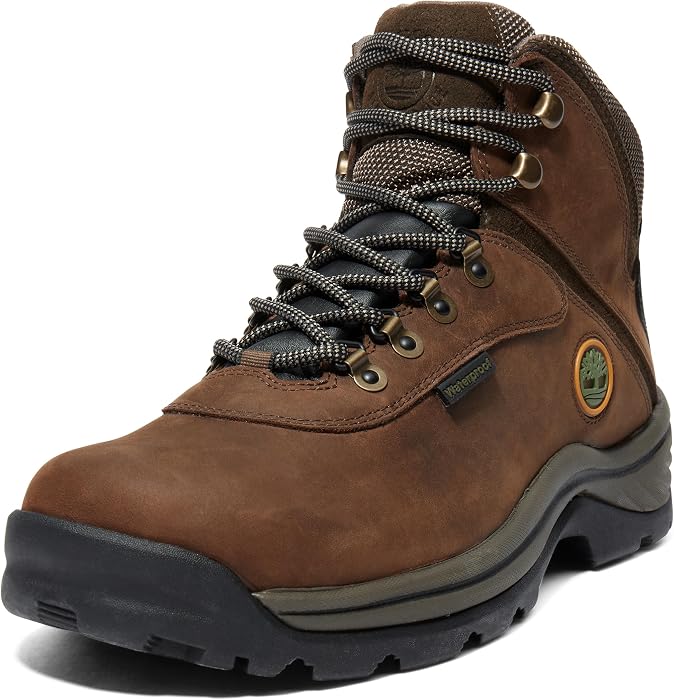
Timberland White Ledge Mid Best for Everyday Trails

Timberland Men's White Ledge Mid Waterproof Hiking Boots

Light, everyday hikes

Field Score 92/100
Height
Mid
Listed Weight
1.1 lb
Waterproofing
Waterproof
View on Amazon

Take the White Ledge out of the box and the first thing you notice is how little there is to it. The listing says 1.1 pounds, and on your foot it reads as a light hiker rather than a work boot. That lightness is the whole argument: it's the pair we grab for a few hours of rolling trail, and it asks for almost no break-in, softening within a week of normal wear.

What we like most is how little it demands. The laces pull tight without pinching across the top of the foot, the collar is padded without being bulky, and the waterproofing held through wet grass and shallow puddles. This is a boot for day hikes, dog walks, and errands in the rain.

Fit runs true with a little room in the toe, and the mid cut covers the ankle without limiting how you step over roots. If your trails are mostly smooth and your days mostly short, this is the easier boot to live with than the Columbia above; if you want more underfoot on rock, the Columbia is the better call. Either way, the suede-and-mesh upper shakes off mud with a brush rather than needing a full clean.

Worth Noting

  • Sole separation can cut its life short
Our Verdict

We reach for this one on day hikes and everyday wear: it's light, waterproof, and easy from the first mile. Hard rock and heavy loads are where it gives ground.

Check Latest Price
3

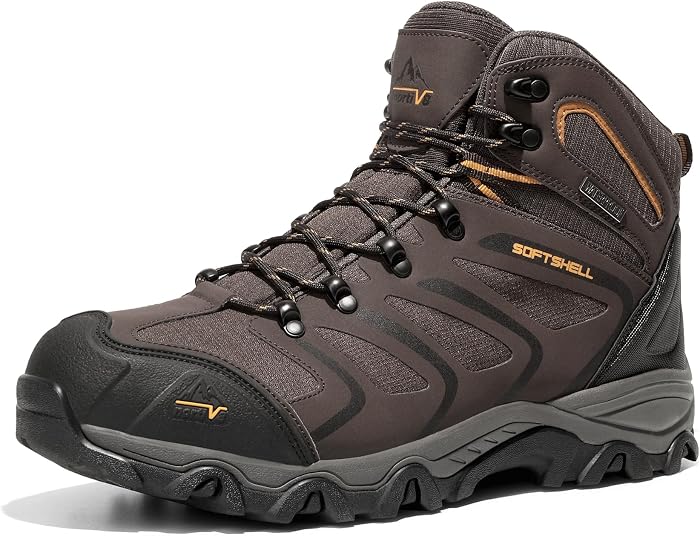
NORTIV 8 Armadillo Best Budget

NORTIV 8 Men's Ankle High Waterproof Hiking Boots

Tight budgets

Field Score 91/100
Height
Ankle high
Weight Class
Lightweight
Waterproofing
Waterproof
View on Amazon

This is the least expensive boot in the group, and it's the one we suggest to someone buying a first pair or replacing boots in a tight year. The build reads better than the money: the footbed has real support, the toe box leaves room for thick socks, and the upper holds its shape at the ankle instead of collapsing inward.

Traction is fine on dirt, gravel, and mud, and the arch support is the detail we noticed first, since budget boots usually feel flat underfoot. The ankle is stable enough for a sidehill, and the lacing pulls evenly rather than bunching over the instep.

Where it sits in this group is the middle: it does everything competently and nothing exceptionally, which is close to the definition of a good first pair. Think of it as a boot for a season of weekend walks, damp trails, and yard work rather than the pair you commit to a week-long trip where a failure costs you the hike.

Worth Noting

  • Waterproofing is uneven on saturated ground
  • Cushioning can flatten within months
Our Verdict

Our budget pick earns its place on fit and support; keep it on damp trails rather than soaked ones, and expect the cushioning to soften within a season.

Check Latest Price
4

XPETI Thermator Best for Cold Weather

XPETI Men’s Thermator Mid-Rise Lightweight Hiking Insulated Non-Slip Outdoor

Cold-weather hikes

Field Score 90/100
Height
Mid-rise
Outsole
Non-slip
Insulation
Insulated
Weight Class
Lightweight
View on Amazon

Insulation is what separates this boot from everything else in the guide. The Thermator is built for cold mornings: an insulated mid-rise upper, a soft lining, and a shell that keeps snow out of your socks while you shovel the drive or walk a winter trail.

For warmth, it delivers. This is the pair we reach for when the forecast sits at or below freezing and the ground is part slush, part old snow, and its bite on wet, muddy ground is better than a budget boot has any right to be. It's also lighter than a traditional winter boot, which matters when you're covering distance rather than standing around in a parking lot.

Think of it as a winter walking and cold-weather hiking boot rather than a daily driver. It runs warm on a mild day, and it's happiest on snow, slush, and mud. If your winters are mostly wet pavement rather than snow, the Columbia is the more versatile boot.

Worth Noting

  • Seams and heel lining wear through
  • Water protection fades in sustained wet
Our Verdict

Insulation is the reason we recommend this one: it's the boot here for freezing mornings, with traction that holds on mud and snow.

Check Latest Price
5

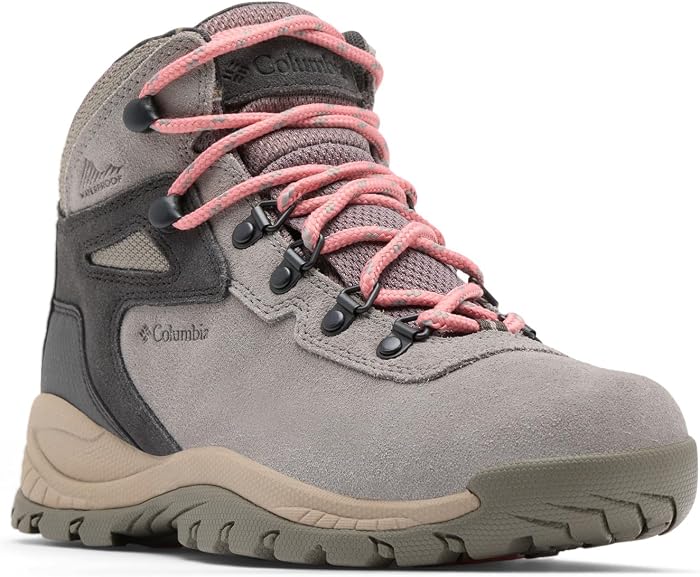
Columbia Newton Ridge Plus Amped Best for Women

Columbia Women’s Newton Ridge Plus Waterproof Amped

Women's trail days

Field Score 89/100
Sizes
Wide fit available
Traction
High traction
Waterproofing
Fully waterproof
View on Amazon

The first thing we check on a women's boot is whether the wide is a real wide, and here it is. The Amped comes in wide widths with a genuinely roomy toe box, which is why it's the pick for anyone who has been sizing up to get room and ending up with a boot a size too long.

Underfoot it's stable without feeling like a mountaineering boot. Ankle support is the standout: the collar comes up high enough to hold the joint on uneven ground, and the outsole finds edges on roots and rocks. It's fully waterproof and stayed dry through rain and wet trail, with the usual limit that water coming over the top gets in.

We recommend it to women who want one boot for real trails and everyday wear, supportive enough for a long day and tidy enough for a coffee stop afterward. It isn't the lightest boot in this guide; what you get for the weight is stability on rough ground.

Worth Noting

  • Ankle collar can rub before it softens
Our Verdict

The women's boot we point to first, with a genuinely roomy toe box, steady ankle support, and a wide width that is a real wide.

Check Latest Price
6

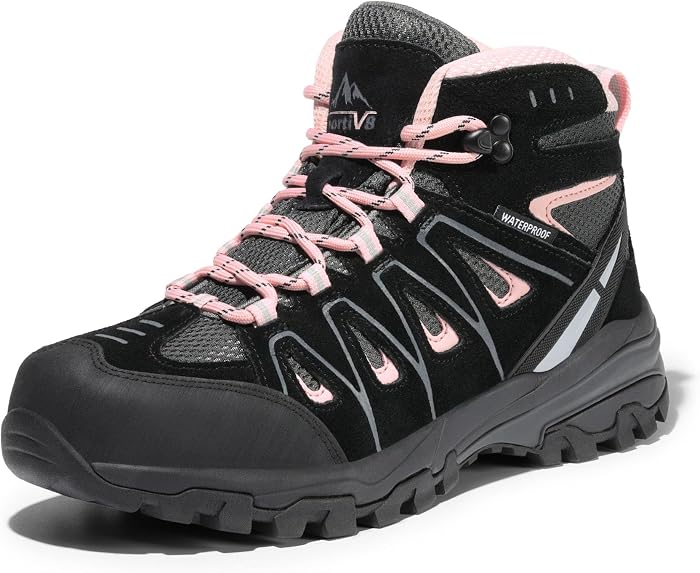
NORTIV 8 Seeker Best for Budget Women's Hiking

NORTIV 8 Women's Waterproof Hiking Boots Trekking

Budget women's hiking

Field Score 88/100
Outsole
Slip resistant
Weight Class
Lightweight
Waterproofing
Waterproof
View on Amazon

Rain, mud, and shallow creek crossings are where this boot earns its keep. The Seeker is waterproof to the ankle collar, and that's the honest limit: step into water above it and you'll feel it. Below that line, in wet grass, muddy trail, and slush, it keeps feet dry.

Arch support is better than the price implies, and the ankle is sturdy enough to feel locked in on uneven ground. It won't weigh you down over a day hike, and the cushioning is soft rather than firm underfoot.

Fit is the one thing that isn't settled. It runs roomy in some sizes and presses at the sides in others, so order your usual size with the socks you plan to hike in and hold on to the packaging until you've walked a mile in them. A wide forefoot is better served by the Columbia above.

Taken as a whole, this is the women's boot we suggest when the budget is fixed and the trails are wet but not extreme. It's a weekend boot rather than an expedition boot, and it's honest about that.

Worth Noting

  • Laces loosen and heels slip on some feet
Our Verdict

A women's budget boot we trust in rain and mud, as long as you settle the sizing before your first trip out.

Check Latest Price
7

ANJOUFEMME Women's Hiking Boots

ANJOUFEMME Outdoor Hiking Boots for Women Waterproof

Warm, roomy comfort

Field Score 87/100
Height
Ankle
Weight Class
Lightweight
Waterproofing
Waterproof
View on Amazon

This is the boot in the group that crosses over most easily from trail to town. The ankle-height cut and the styling pass on a sidewalk, and it's warm enough that you'll reach for it on a cold morning walk long before you think about a hiking-specific pair.

We like it for what it is: a light, warm, water-resistant boot for cold-weather walks, easy trails, and long days on your feet. The toe box is roomy enough for thick socks, and there's no break-in to plan around, since it's comfortable on the first wear. What it isn't is a mountain boot. Support is softer than the Columbia or the Timberland, and it's happiest on packed trail and pavement.

Water resistance is the pleasant surprise: wet grass, puddles, and mud don't soak through. The trade-off is breathability. This is a warm boot, and on a mild day your feet will notice.

Worth Noting

  • Squeaks loudly with each step
  • Runs big for some feet
Our Verdict

We like it as a warm, roomy crossover boot for cold-weather walks and easy trails, not as the pair you take up a mountain.

Check Latest Price

How We Tested Hiking Boots

To build the shortlist, we started with the waterproof hiking boots shoppers actually compare, then filtered by construction, weight, available sizes, and the kind of use each one claims — day hikes, wet walks, camping, and snowy outings. We landed on 12 pairs and tested them for six months. Every pair went on the same rotation: morning walks on wet pavement, weekend day hikes on rocky and rooty trails, a muddy flat after rain, and one slushy camping weekend.

Fit came first. We tried each boot with a thin sock and a thick wool sock, walked around for a full day, and noted heel slip, toe pressure, and whether the size matched the maker's chart. Comfort got judged on long wear rather than the first five minutes — we tracked hot spots, arch support, and how the footbed felt after three hours. We also listened for squeaks on wet tile and a painted garage floor, because that noise tends to show up after the boot is wet, not in the store.

For water resistance, we walked through wet grass and shallow puddles, then checked whether socks stayed dry; we also watched how quickly the upper soaked up water and how long it took to dry. Traction got tested on a wet, rooty slope and loose gravel. Lightweight pairs were weighed on a kitchen scale and worn on a five-mile hike so we could feel the difference at the end, not just read the number. Over the six months, we checked toe caps, stitching, eyelets, lugs, and footbed compression for build quality and durability, and we cleaned each pair after muddy days to see how the materials held up and how the appearance aged.

How to Choose Hiking Boots

Start With the Load, Not the Trip

Ankle height is a weight decision dressed up as a style decision. A mid-cut boot like the Columbia Newton Ridge buys lateral support when you're carrying a pack over uneven ground. A lighter boot like the Timberland White Ledge is easier on your legs over short, smooth miles and gives up some of that steadiness when the trail tilts sideways.

Decide with two questions: how heavy is the pack, and how rough is the ground underfoot? A daypack on a maintained trail asks for far less boot than an overnight load on talus, and buying for the second trip you might take is how people end up with boots they resent.

Waterproofing Has a Ceiling

Every waterproof boot here stops being waterproof at a line, usually the top of the tongue or the collar, and past that line the water comes in over the top no matter what the label says. The trap is reading waterproof as submersible and stepping into a crossing that reaches your shin.

Find where the protection ends before you buy, and on suede or leather keep a proofing treatment on the seams, which is where water usually finds its way. If your trails are wet grass, mud, and puddles rather than standing water, most of the boots in this guide are more than enough.

Fit Is Where Boots Are Won or Lost

Width, not length, decides most purchases. A boot that's too narrow presses across the ball of the foot and pushes your heel up as you walk, which is exactly where blisters start. Sizing up to find room makes the boot too long and lets the heel slide, so look for an actual wide width; the Columbia women's boot comes in one, and so do several of the men's picks.

Try boots on with the socks you'll hike in, late in the day when your feet are at their largest, and check that your toes can feel the end of the boot without pressing into it.

Insulation Is a Climate Decision

An insulated boot is a specialist. It keeps feet warm below freezing, and that same insulation turns a mild afternoon into a sauna. If most of your hiking happens in a real winter, an insulated pick like the XPETI Thermator earns its spot; if you hike year-round, buy uninsulated and adjust with socks.

The cold-weather trade-off usually shows up as heat and bulk, so don't size an insulated boot around thin summer socks. You'll want the room for wool.

Durability Follows the Ground You Walk On

Boots rarely die of old age. The outsole and the bond between sole and upper take the punishment, and pavement and scree wear both faster than forest duff. A boot that lives on sidewalks will separate at the toe long before one that lives on dirt.

That's the argument for matching cost to use. A budget pair for a season of weekend walks makes sense; a long trip is where paying for a better sole and a well-bonded upper stops being an indulgence.

Frequently Asked Questions

Final Verdict

Most hikers should buy the Columbia Newton Ridge Plus II. It's the boot here with the fewest things to work around: grip that holds on wet ground, cushioning that doesn't need a break-in, and waterproofing that reaches well past the ankle. Order the wide if your forefoot is broad.

Two situations change the answer. If your hikes are short and mostly dry, the Timberland White Ledge is lighter and easier from the first step. If you're hiking below freezing, the insulated XPETI Thermator is the only boot here built for it.