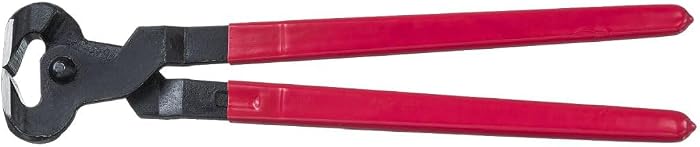
The 5 Best Hoof Nippers of 2026

A hoof nipper is an oversized pair of pliers with almost no margin for error. The horse's leg is between your knees, the jaws are lined up on a wall you can't see past, and you squeeze: a sharp pair takes the hoof down in one clean slice, while a dull one crushes the wall and leaves you filing twice as long. We spent eight months and 12 pairs finding out which ones slice.

Most nippers sold for horses run 14 inches, and that length is doing real work: the long handles are your leverage against a wall about as tough as a thick fingernail. An 8-inch pair is easier to steer on a donkey's hoof or a young horse's small foot, and it's worth having one even if it isn't your everyday tool.

Sharpness out of the box matters more than anything printed on a listing, and so does how a pair feels by the tenth hoof of the morning. The ones below held an edge, sat well in a sweaty hand, and were still cutting cleanly at the end of the day.

Our Top Picks

The 5 Best Hoof Nippers of 2026

1

Diamond 14D Hoof Nipper Best Overall

Diamond 14D 14-Inch Hoof Nipper with Plastic Grips

All-around hoof trimming

Field Score 88/100
Warranty
Limited lifetime
Item Weight
2 lb
Overall Length
14 inches
Handle Material
Plastic
View on Amazon

Fourteen inches and two pounds of steel is the short version, and the weight is most of the argument. The long handles give you the leverage to take a hard, dry hoof wall in one bite instead of three, and the mass keeps the head steady once the jaws are in the cut. You notice the heft by the third horse, since this is the heaviest nipper in this group, but we'll take two pounds over a pair that flexes when the hoof fights back.

Where the Diamond earns its price is the head. The jaws close with one hand, which matters more than it sounds when the other hand is holding up a hind hoof, and the two edges meet evenly enough that the wall comes away flat instead of stepped. On dry, hard hooves the leverage does the work and the cut stays clean. It's also the only nipper in this group with a limited lifetime warranty, which covers the end of the tool that takes the beating.

A dull edge can be dressed; a jaw that won't meet can't be fixed at home. That's the line separating the Diamond from the cheaper pairs here, and the reason we keep reaching for it.

Worth Noting

  • Hard plastic grips need gloves
  • Thick head is clumsy on soft, wet hooves
Our Verdict

We recommend the Diamond 14D for anyone trimming more than an occasional hoof: the jaws close with one hand, the edge arrives true, and it carries the only lifetime warranty here.

Check Latest Price
2

Equine Care 14-Inch Hoof Nipper Best for Draft Horses and Cattle

Equine Care 14-Inch Hoof Nipper – Farrier Hoof Nippers for Horses

Draft horses, cattle

Field Score 87/100
Jaw Return
Spring-free
Blade Steel
Drop-forged chrome vanadium
Item Weight
1.72 lb
Overall Length
14 inches
View on Amazon

There's no return spring on this one, so you spread the handles with your own hand before every cut. It reads like a chore and feels like one for the first hoof; by the second we were sold on the directness. Nothing to jam with dried mud, nothing to lose in the shavings, and a jaw that opens exactly as far as you open it.

At 1.72 pounds it's the lightest 14-inch nipper in this group, and the difference shows up at the end of a session rather than the start. The long handle profile is aimed squarely at draft horses, donkeys, and cattle, which means dense, heavy hooves that reward leverage over finesse. Ours arrived factory-honed and pre-oiled in a red pouch, and that pouch has kept it out of the bottom of a tote more than once.

Look after the edge and it will look after you. The steel is hard and relatively thin, so bite straight through the wall rather than levering sideways in the cut, then wipe it dry with a drop of oil on the pivot before it goes back in the pouch. Skip that and a rust spot turns into a ragged cut.

Worth Noting

  • No return spring means hand work every cut
Our Verdict

For draft horses, donkeys, and cattle, we point people to the Equine Care: long handles, 1.7 pounds instead of 2, and an edge that arrives honed and oiled.

Check Latest Price
3

Partrade 8-Inch Hoof Nipper Best for Goats and Sheep

Partrade 8-Inch Hoof Nipper – Hoof Nipper 8" W/Vinyl Handle

Goats and sheep

Field Score 86/100
Material
Alloy steel
Overall Length
8 inches
Handle Material
Vinyl
View on Amazon

Eight inches is the wrong length for a horse and close to right for almost everything else. Shorter handles mean less leverage, which is simple physics, but on a goat or a potbellied pig leverage isn't what you're short of. Control is, and the Partrade keeps your hands close enough to the hoof to see what the jaw is actually doing.

We like it most on the hind hoof of an animal that would rather you didn't. The vinyl grips give you something to hold with wet or muddy hands, and a short nipper turned sideways fits the angles a 14-inch pair can only reach with an extra elbow in the way.

The surprise is the jaw. A short nipper still carries a full-size cutting head, so even a small goat's hoof gets a mouthful of tool. Take smaller bites than your 14-inch habit suggests and check the line before the second cut. It's also about half the price of the 14-inch pairs here, which is the right ratio for a tool used on animals that weigh less than you do.

Worth Noting

  • Jaw runs roomy for dwarf-breed goats
  • Pivot is stiff until it wears in
Our Verdict

Goat, sheep, and mini-pig owners should start with the Partrade: eight inches of control in tight quarters, and no more nipper than a small hoof needs.

Check Latest Price
4

QWORK 14-Inch Hoof Nipper Best Budget

QWORK 14-Inch Hoof Nipper

Tight budgets

Field Score 85/100
Material
Hard steel
Item Weight
1.82 lb
Overall Length
14 inches
Handle Material
Plastic
View on Amazon

This is the cheapest 14-inch nipper here by a wide margin, less than half the Diamond, and that's the whole pitch. Black plastic grips, a full-length handle, a head that opens wide: out of the box it looks like the tool it's copying.

The edge is the gamble. The steel is on the soft side, and soft steel rolls instead of chipping, so you'll feel it skate across a hard wall and then start crushing where it should be slicing. At 824 grams it's also heavier than the Diamond, which means the low price isn't buying you a lighter tool.

So check it before the first hoof. Close the jaws on a scrap of hard horn or a piece of hardwood and look at the line: a clean slice means you got a keeper, while a flat shiny spot or a ding means you send it back. A good one makes a perfectly useful second pair, one for the barn and one for the trailer, and at this price that's a fair trade for the risk.

Worth Noting

  • Edge can arrive rolled or dull
  • Soft steel gives up on tough hooves
Our Verdict

The QWORK is the budget 14-inch we suggest for a few goats or a spare pair in the trailer, provided the edge checks out on arrival.

Check Latest Price
5

Tough 1 14-Inch Hoof Nipper Best for Light-Duty Trimming

Tough 1 14-Inch Hoof Nipper

Light-duty trimming

Field Score 84/100
Warranty
90 days
Item Weight
1.7 lb
Construction
Drop-forged and oil-tempered steel
Overall Length
14 inches
View on Amazon

Before this nipper touches a hoof, close the jaws on a scrap of hard horn and look at the line where the two edges meet. On the Tough 1 that line is the whole story: when the edges meet true you've got a 14-inch drop-forged nipper with cushioned grips for less than most of this group, and when they don't, no amount of handle length saves the cut.

The rest of the package is genuinely likable. Those grips are the most comfortable here over a long session, since they're the only pair in this group with real cushioning, and the 14-inch handles give honest leverage on a hard hoof. There's also a 90-day guarantee against defects, which is more coverage than most budget nippers offer and long enough to find out what you bought.

Consistency is the catch. A pair whose edges don't meet will crush the wall instead of slicing it, and leaning on the handles in that situation is exactly how they flex. Test it on arrival, keep the receipt, and treat the first hoof as the audition.

Worth Noting

  • Edge alignment varies between pairs
  • Handles can flex when the edge won't bite
Our Verdict

The Tough 1 is a cheap 14-inch pair with cushioned grips and a 90-day guarantee, and it's worth a shot if you test the edge before the first trim.

Check Latest Price

How We Tested Hoof Nippers

We started by pulling every hoof nipper we could find in the 8- to 15-inch range and reading the listings for the things that actually change how a tool cuts: drop-forged versus stamped steel, heat-treated jaws, how the blades are joined, and whether the grips are molded on or slid over the metal. From that pool we bought 12 pairs and put them to work over eight months on a small herd of horses, a pair of donkeys, and a few head of cattle, because a hoof wall isn't the same thickness or hardness across all of them.

Every pair got the same first job: hind hooves on a stand in the barn aisle, where we counted how many squeezes it took to get through one wall and whether the cut face came off smooth or chalky and crushed. We closed each nipper slowly on a sheet of paper to see whether the blades met along their whole length or only at the tips, which is the difference between a slice and a pinch. Then we kept going, ten hooves and then twenty and thirty, noting the point where a pair that started easy suddenly needed a second hand on the handle.

Handles got the wet test: hosed off, then used with wet hands, and the pairs lived in a truck bed and a damp tack room between appointments instead of on a shelf. We passed each one to a person with larger hands and a person with smaller hands, since a 14-inch nipper that feels planted to one user can feel like a hockey stick to another. At the end we checked the pivot for wobble and the cutting edge under good light to see how much had rolled and whether a sharpening shop could bring it back.

How to Choose Hoof Nippers

Match the Handle to the Animal

Handle length is leverage, and leverage is what takes a hard, dry hoof wall in one bite rather than three. A 14-inch hoof cutter is the standard for horses and cattle; 8 inches sits at the goat, sheep, and mini-pig end of the range, where having your hands close to the hoof matters more than force. Ponies and smaller horses live in between.

The trap is assuming a short nipper comes with a short jaw. Plenty don't, so a goat owner can still end up with a full-size cutting head over a hoof the size of a thumb. Take smaller bites than the handle suggests and watch the line the edge leaves before you commit to a second cut.

Spring or No Spring

Most nippers carry a return spring between the handles that reopens the jaws after every cut. It saves hand work across a long session, and it's the easier introduction if you've never trimmed before. Spring-free models such as the Equine Care make you spread the handles yourself, which is more work per bite.

What you get in exchange is one less part to fill with grit or mud, and a jaw that opens exactly as wide as you set it. Neither design is better. Pick the spring-free one if you trim a lot of dense, gritty hoof and dislike fiddling with small parts; pick the sprung pair if fatigue is what ends your sessions.

Judge the Edge, Not the Finish

A polished head tells you nothing about the two edges that do the work. What matters is whether they meet along their full length and how hard the steel behind them is. Soft steel rolls at the first hard hoof; steel that's too hard chips. Either way you end up crushing the wall instead of slicing it, and a crushed wall tears out ragged and costs you time with a rasp.

Check a new pair before it touches an animal. Close the jaws on a scrap of hard horn and look at the line: a clean slice means a keeper, a flat shiny spot or a ding means a return while the packaging is still around.

Weight and Grips Over a Full Session

Two pounds doesn't sound like much until you've held it at chest height through four horses. The lighter 14-inch nippers here come in around 1.7 pounds, and if you trim a barn regularly that difference is worth paying for.

Grips matter for the same reason. Hard plastic is fine for a hoof or two and punishing for a dozen, and a cushioned or vinyl handle is easier on your palms with gloves on. Neither will make a dull edge cut, so settle the head first and the handle second.

Frequently Asked Questions

Final Verdict

The Diamond 14D is the nipper we recommend to most people: the jaws close in one hand, the edges meet true, and the lifetime warranty covers the part that takes the beating.

If you're trimming draft horses, donkeys, or cattle, the lighter Equine Care is the better fit and easier on your arms over a long session. Goat and sheep owners should skip both and take the 8-inch Partrade, because a long handle over a small hoof is just extra weight.