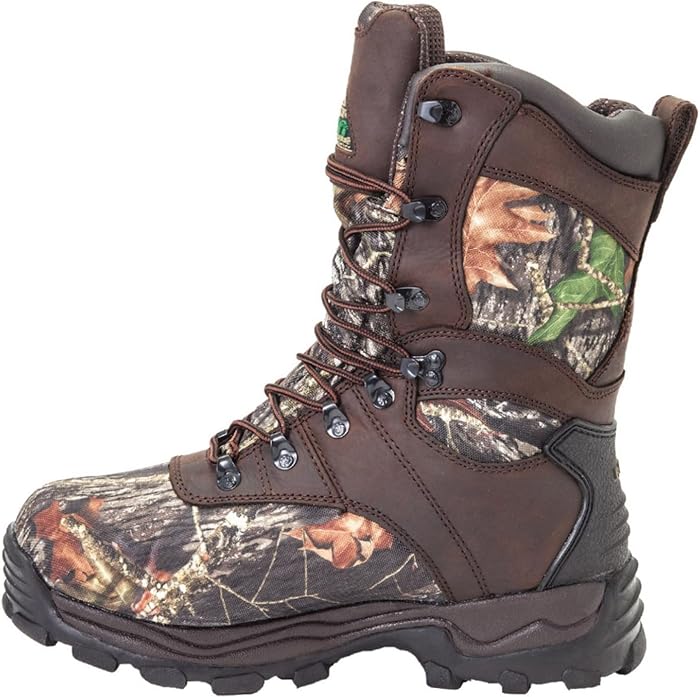
The 8 Best Hunting Boots for Wide Feet of 2026

Most boots labeled wide aren't. The extra room usually shows up in the length, not across the ball of your foot, so you end up with something a half size too long that still pinches at the widest point. I've limped back to the truck in a pair like that, and it's a long walk. A genuinely wide hunting boot adds volume where your foot actually is — snug through the heel, roomy across the forefoot — so you can sit in the cold or cover miles without thinking about your feet at all.

We spent eight months in a dozen pairs, starting with September scouting walks and ending with the last cold sits of the season. Warmth gets all the attention, but fit does more for warm feet than insulation does: a narrow boot cuts circulation, and an overly roomy one lets your heel slide until blisters form. We weighed every pair, stood them in creek water, and wore them with the same liner and heavyweight sock. The picks below are the ones I'd hand to a friend with wide feet without a caveat.

Our Top Picks

The 8 Best Hunting Boots for Wide Feet of 2026

1

Irish Setter Wingshooter Best Overall

Irish Setter Men's Wingshooter Waterproof Hunting Boots

Wide forefoot hunting

Field Score 95/100
Insulation
Uninsulated
Waterproofing
Waterproof
Width Options
Wide sizes available
View on Amazon

Rubber comes in one width. That single fact decides most of this category, and it is why the Wingshooter is our top pick: this is the boot here you can order in an actual wide size instead of going up a length and hoping the volume follows. Laces do the rest — you can open the forefoot over the widest part of your foot and still keep the heel locked down, which is the adjustment no pull-on can make.

Waterproof leather with no insulation makes it the most useful three-season boot on this list. On a warm October walk-in it does not cook your feet the way an 800-gram rubber boot does, and on a wet, cold morning the leather keeps the water out; we stood in wet grass and shallow puddles without a leak. Ankle support is there without the break-in heavy leather usually demands. What it is not is a late-season boot — sitting still below freezing, you need insulation and a heavy sock.

The outsole is the part that gives out first. The leather upper outlasts it, so plan on a resole rather than a replacement, and expect faster wear if a lot of your walking happens on gravel and pavement. What keeps us recommending it is the fit: for once, a wide forefoot does not have to be the compromise you shop around.

Worth Noting

  • Outsole wears out before the leather does
Our Verdict

For wide feet this is the one we point people to: an actual wide size, laces that adjust over a wide forefoot, and waterproof leather that works from opening day to the rut.

Check Latest Price
2

MUCK Woody Max Best Pull-On Fit

MUCK Men's Mossy Oak® Break Up Country™ Woody Max Boot

Pull-on wet-weather hunts

Field Score 94/100
Closure
Pull-on, no laces
Camo Pattern
Mossy Oak Break Up Country
Waterproofing
Waterproof
View on Amazon

Step in and the neoprene opens around the widest part of your foot. There is no tongue to fight and no lacing to balance, which is exactly why this boot works for a wide forefoot — the upper gives where a stiff rubber shell would press. It is also the fastest boot here to get on and off at the tailgate.

It runs slightly big, and that is the feature rather than the problem: for a wide foot it is room to add a heavy wool sock without cutting off circulation. We wore ours through cold, wet mornings with dry, warm feet, and the extra height over Muck's shorter chore boots kept splash out of the shaft. The Mossy Oak Break Up Country pattern is straight-faced camo, not a fashion print.

Where it belongs is the active, wet, cold hunt — walking to the stand, pushing a slough, running traps — not a mountain climb. The boot is light enough that the walk in does not cost you, and a pull-on means no laces to fumble with cold hands in the dark. Fit the sock to the boot: thin socks leave it sloppy, heavy ones make it exact.

Worth Noting

  • Sole seam can separate with hard use
Our Verdict

Our pick if you want a pull-on that fits a wide foot: the neoprene gives where rubber presses, it is warm enough for a wet cold morning, and there are no laces to fight in the dark.

Check Latest Price
3

MUCK Arctic Pro Best for Extreme Cold

MUCK Men's Arctic Pro Insulated Boot

Sub-freezing stand hunting

Field Score 93/100
Weight
6.5 lb packaged
Insulation
Insulated
Waterproofing
Waterproof
View on Amazon

Some hunts are a walk and some are four hours of standing in a slough in January. The Arctic Pro is built for the second kind, and it is the boot in this group we trust most when the temperature refuses to come up all day.

Fit is where it separates itself. The neoprene upper takes a wide foot without a fight and slides on over a heavy sock, and the boot stays dry in slush, marsh water, and standing snow. Warmth holds through a long sit rather than fading by mid-morning, which is the difference between this and a 400-gram boot.

The trade is bulk. Six and a half pounds of boot is a lot to swing up a hill, and that is the price of the warmth; on a short walk to a blind it is a fair trade, on a mile-long climb it is not. Getting them off takes a real pull when your hands are cold and the rubber is wet.

Worth Noting

  • Sizing runs large and inconsistent
  • Snug through the top of the shaft
Our Verdict

Buy it for the coldest stand of your season: it is the warmest boot in this group, it slips on over a heavy sock, and it keeps feet dry in slush.

Check Latest Price
4

LaCrosse Burly Classic Best Knee-High for Deep Mud

LaCrosse Burly Classic

Knee-deep water

Field Score 86/100
Upper
Rubber
Weight
6 lb
Insulation
Foam insulated
Shaft Height
18 inches
View on Amazon

Eighteen inches is the number to fix on. That shaft puts the top of the boot above the knee, which is what you want when the mud is deep and the water is over your calf, and it is why this is the boot we reach for in bottomland sloughs and flooded timber.

Roomy is the other reason it earns its place. The fit runs true to size with enough volume for a thick sock and an aftermarket insole, and the foam insulation plus a fleece-lined interior holds heat in cold water. The included EVA footbed is there for cushioning rather than support, so a high arch needs a swap.

The ankle flex point is where these eventually give out — the rubber cracks above the heel after a couple of hard seasons, and that is the failure to watch. LaCrosse covers the boot with a 365-day limited warranty, so an early crack is a claim rather than a loss. For cold, deep, wet ground, we have not found a more direct way to stay dry to the knee.

Worth Noting

  • Fights you at the door when wet
Our Verdict

The knee-high pick for flooded timber and deep mud: roomy enough for a heavy sock and a support insole, insulated for cold water, and backed for a year.

Check Latest Price
5

TIDEWE Neoprene Hunting Boot Best Value Rubber Boot

TIDEWE Neoprene Hunting Boot

Three-season wet ground

Field Score 85/100
Height
Mid-calf
Comfort Rating
-4°F/-20°C to 50°F/10°C
Shaft Circumference
13 inches
View on Amazon

The comfort rating reads -4°F to 50°F, and the upper number is the interesting one. Most insulated rubber boots are miserable by the time the season warms up; this one is built to stay wearable into mild weather, which makes it a three-season boot rather than a deep-winter specialist.

Value is the obvious draw. It does most of what the name-brand rubber boots do for a good deal less, and we were impressed by the reinforced toe and the kick-off ledge at the heel, details that usually show up on pricier boots. The shape is the caveat: the shaft measures 13 inches around, fine on an average calf and tight on a heavy one.

Read the size chart before you order. The listing runs one chart across men's and women's sizing, with the largest sizes cut for men, so a foot near that break can land a size or two off. It is the one place this boot punishes a quick purchase.

Worth Noting

  • Sole can separate from the upper
Our Verdict

If you want rubber-boot performance without name-brand money, start here: warm below freezing, wearable in mild weather, and finished with a reinforced toe.

Check Latest Price
6

ROCKY Sport Utility Best Lace-Up for Late Season

ROCKY Sport Utility 1000G Insulated Waterproof Boot

Late-season cold sits

Field Score 84/100
Weight
4.5 lb packaged
Insulation
2.2 lb
Waterproofing
Waterproof
View on Amazon

A thousand grams of insulation under a lace-up upper is an unusual pairing, and it is the reason this boot makes the list: late-season warmth with a forefoot you can actually loosen.

Ankle support is where it beats every rubber boot here. Laces and a padded collar hold the heel in place on sidehills, which matters when you are tracking rather than sitting, and the insulation carries a long cold sit without the feet going numb. The fit runs true with a snug heel; if you are between widths, the lacing gives room a molded rubber shaft cannot.

Water is the caveat, and it is worth taking seriously. The boot is sold as waterproof, but soaked ground and heavy wet grass can get through once the leather is saturated, so keep it treated and do not treat it as a wading boot. What we keep coming back to is the combination: warmth, ankle control, and adjustability in one boot.

Worth Noting

  • Heavy over a long walk in
  • Laces wear out before the boot
Our Verdict

Late season is where this boot earns its place: 1000 grams of insulation, real ankle support on sidehills, and laces that give a wide forefoot room.

Check Latest Price
7

ROCKY Retraction

ROCKY Retraction Waterproof 800G Insulated Outdoor Boot

Icy, snowy ground

Field Score 83/100
Height
8 inches
Insulation
1.76 lb
Waterproofing
Waterproof
View on Amazon

The outsole is the reason to look at this one. The lug pattern is aggressive and it bites on packed snow and ice in a way smooth rubber soles do not; we noticed the difference on a frozen access road.

The rest of the boot is conventional: eight inches tall, 800 grams of insulation, and a fit that runs generous, so a wide foot slides in without a fight. Warmth is solid for the rating, and the shorter height keeps it easier to walk in than a knee boot.

The build is closer to the price than the leather boots here. A hard season shows on the sole and the upper sooner than it would on the Irish Setter, and this is a boot that rewards a rotation rather than daily punishment.

What it comes down to is ground conditions. On ice, crusted snow, and frozen mud this is a confident boot for the money, and one we hand to anyone whose late season is spent on hard ground rather than in water.

Worth Noting

  • Water resistance fails in wet grass
  • Heavy and bulky for its height
Our Verdict

Buy it for frozen ground — the lugs hold on ice and crusted snow better than anything else here, and the fit runs generous for a wide foot.

Check Latest Price
8

Hunthor 800g Insulated Best for Budget Cold-Weather Hunts

Hunthor 800g Insulated Hunting Boots for Men

Budget cold-weather hunts

Field Score 82/100
Sizes
6 to 14
Neoprene
6 mm
Insulation
1.76 lb
View on Amazon

This is the least expensive insulated boot in the group, and it does not look it: thick neoprene, an EVA midsole, a steel shank, and a camo pattern that is not a cheap print.

Eight hundred grams of insulation over 6mm neoprene makes this a cold-weather boot, and it keeps feet warm and dry in freezing, wet conditions. The neoprene is thick enough that the boot stands up on its own, which is not something you can say about every budget rubber boot.

The back pull strap is the weak part. It is what you grab to haul the boot on, and it is also what fails first; everything else has held together through a season of hunting use.

The fit is where we hesitate. It comes up too big for some feet and too narrow for others, which suggests a last shaped for an average foot rather than an extreme one. If your width is in the forefoot rather than the calf, this is the riskiest buy on the page.

Worth Noting

  • Fit is inconsistent across feet
  • Back pull strap can break
Our Verdict

Spend the least and still get 800 grams of insulation, thick neoprene, and a steel shank — provided the fit suits your foot.

Check Latest Price

How We Chose and Tested Wide Hunting Boots

We started by pulling every hunting boot we could find that was actually offered in a wide width or built on a last known to run generous, then cross-checked each maker's size chart against measurements buyers had posted. That eliminated a lot of boots that only run wide in the toe box. We landed on a dozen pairs spanning leather and rubber, lace-up and slip-on, uninsulated through heavily insulated, and running from budget-friendly to buy-it-once.

Testing ran eight months, from early September scouting through late-season sits. Each pair went on three- to five-mile scouting walks on public land, got worn through wet grass and shin-deep creek crossings, and spent at least one four-hour sit in a treestand below freezing. I wore the same liner sock and heavyweight wool sock every time so the fit comparisons meant something.

The first thing I did with every box was pull the insoles and measure them — total length, width across the ball, heel width — and compare those numbers to the maker's chart. That's how we caught the pairs whose wide was really just longer. On the trail I noted where pressure showed up: pinky toe, instep, or a heel that slipped on climbs. For water resistance, we stood in moving water to the laces for ten minutes and checked socks afterward, and warmth was judged on cold sits rather than insulation numbers. Each boot got weighed on a kitchen scale before and after the season, cleaned of mud, and we checked seams, toe caps, and lug wear to see what eight months actually does to them.

How to Choose Hunting Boots for Wide Feet

Two Kinds of Wide: Forefoot and Calf

You can have a wide forefoot and an average calf, or the reverse, and the two problems have different solutions. Forefoot width needs volume across the ball of the foot, which is why a lace-up leather boot is the most precise answer: you open the lacing over that area and keep the heel locked. The Wingshooter is the one here sold in genuine wide sizes. A heavy calf needs a wider shaft, and the number to check is the circumference — the TIDEWE runs 13 inches around, generous for an average leg and tight on a thick one.

Sizing up fixes neither cleanly. It adds length and a little volume, which is why a heavier sock is the usual workaround, but a boot that is a size too long will still press in the same places.

Match Insulation to How You Hunt

Insulation holds the heat you make, which means it works when you are sitting and works against you when you are climbing. An uninsulated leather boot like the Wingshooter is the right tool for early season and for hunts that cover miles; 800 to 1000 grams is for standing in cold. Wear that boot in September and you sweat through the walk in, then sit cold all morning in wet socks.

Shaft Height and Getting Them Off

Eighteen inches puts the top above the knee and lets you cross water a mid-calf boot can't, at the cost of weight and a boot that fights you at the door. Mid-calf boots are easier to walk in and easier to get out of, and they suit a hunt that is more walking than wading. Before you buy, picture the end of the day: cold hands, wet rubber, and a shaft that needs a real pull. A boot jack earns its place in the truck.

Waterproof Is Not the Same as Wading

Every boot here is sold as waterproof, and most are, in rain, dew, and mud. Standing water is a different test: an eight-inch boot stops at eight inches, and a saturated leather upper can pass water long before the shaft does. If your ground is wet rather than flooded, a treated lace-up is fine; if you are crossing creeks, buy the height. Check the crease above the heel now and then, because that flex point is where rubber boots fail first.

Frequently Asked Questions

Final Verdict

For most hunters with wide feet, the Irish Setter Wingshooter is the answer, because it is the one boot here that lets you choose a width and then tune it with laces. It suits a season that runs from early fall into the rut, on hunts where you walk to your spot.

If you want a pull-on, the MUCK Woody Max is the roomiest rubber fit in this group and the easiest to get on in the dark. And if your season is standing in cold water rather than walking to it, the LaCrosse Burly Classic gets you dry to the knee.