The 8 Best Merino Wool Shirts of 2026

I switched to merino the winter I spent a drizzly afternoon in a wet cotton long-sleeve and never warmed up again. Wool handles damp and temperature swings in a way synthetics don't, and it shrugs off odor — I've worn the same shirt through three days of hiking and it smelled like nothing at all. What that reputation hides is how wildly these shirts differ once they're actually on your back.

Some arrive so thin that a dark undershirt shows straight through; others are dense enough to wear alone with jeans. Sleeve length swings by a couple of inches from shirt to shirt, which matters more than you'd expect when you're layering under a jacket cuff. Our team pulled together 12 shirts — 100% merino and a few blends, from featherlight crews to midweight thermals — and wore them for six months to sort out which ones hold up.

The cheapest weren't always the thinnest, and the priciest didn't fit best. Below are the shirts that earned a permanent spot in the rotation.

Our Top Picks

The 8 Best Merino Wool Shirts of 2026

1

MERIWOOL Men's Midweight Base Layer Best Overall

MERIWOOL Men's Midweight Base Layer

Cold-weather layering

Field Score 94/100
Style
Long-sleeve thermal
Fabric
100% merino wool
Weight
Midweight
View on Amazon

Midweight is the weight most of us actually need for a cold-weather shirt, and this MERIWOOL crew is the one we hand people who want a single layer to cover a frosty morning and a mild afternoon. The knit is 100% merino, dense enough to hold heat while you are standing around, and it does not turn clammy the moment you start walking. We wore it under a wool jacket in real cold and on its own on milder days, and it reads as a plain long-sleeve tee either way.

What surprised us is how little break-in the fabric needs. Merino at this weight can feel scrubby at the neck seam for the first few wears; this one does not, and the softness holds after washing. It also stays neutral between washes, which is the whole reason to pay for wool instead of polyester on a trip where laundry is not happening.

The cut is honest: a crewneck with room for a thin tee underneath, long enough in the body to stay tucked when you bend over, and long enough in the arm for taller frames. Nothing about it is fashion-forward, which is fine, because nobody sees it until you take the jacket off.

It sits in the middle of the price range here, above the Merino.tech crew and well below the premium names, and that feels right for a knit this even. The Minus33 below is the one to pick if you need more length; the Merino.tech crew is the one if the budget decides it.

Worth Noting

  • Sizing runs small, so size up
Our Verdict

We recommend it first because a 100% merino midweight is the most useful shirt most people can own, and this one is warm, soft, and fairly priced.

Check Latest Price
2

Merino.tech Men's Base Layer Best Value

Merino.tech 100% Merino Wool Base Layer Mens

Value-minded layering

Field Score 93/100
Style
Long-sleeve thermal
Fabric
100% merino wool
Weight Options
Lightweight to heavyweight
View on Amazon

Set next to our top pick, the Merino.tech crew costs less, runs roomier through the body, and comes in lightweight, midweight, and heavyweight versions, so you can buy the same shirt for a September hike and a January sit. The knit is 100% merino, and the hand feel is closer to a soft athletic tee than to anything you would call wool.

We like it best as the shirt you do not have to baby. It moves with you under a pack strap, the stretch means a close fit never feels like compression, and it does not need to be tucked to stay put. It is also the pick we hand someone buying a first merino layer, because the price makes the experiment a low-stakes one.

Sleeve length is the fit wildcard: the same size comes up long enough to bunch at the wrist for one build and short for another, so compare the size chart against a shirt you already own rather than assuming. On warmth, it holds up in genuinely cold weather under a shell, though it is not the shirt to wear alone when the temperature drops hard.

Worth Noting

  • Small holes and seam wear can develop with hard use
Our Verdict

Our value pick: the same 100% merino performance as our top choice for less money, with a roomier cut and a shorter lifespan.

Check Latest Price
3

MERIWOOL Women's Midweight Base Layer Best for Women

MERIWOOL Womens Base Layer 100% Merino Wool Midweight Long Sleeve Thermal Shirt

Women's winter layering

Field Score 92/100
Style
Long-sleeve thermal
Fabric
100% merino wool
Weight
Midweight
View on Amazon

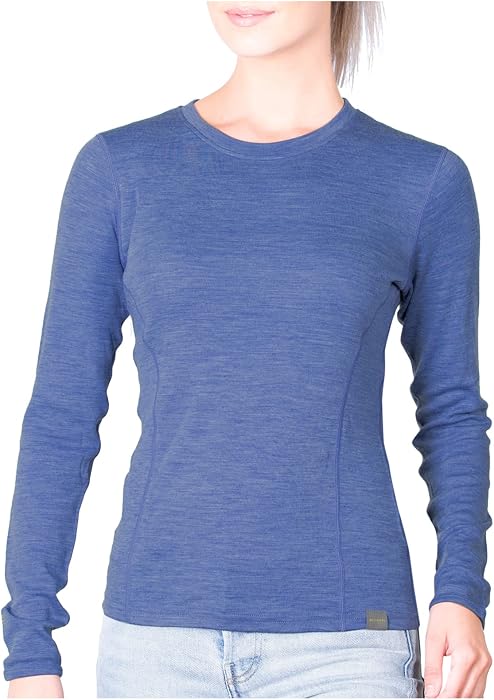
This is the same midweight merino as our top pick in a cut that is shaped rather than boxy, and that is the whole reason we recommend it. It goes under a sweater without adding a lump at the shoulder, and it looks deliberate when you take the sweater off at lunch instead of looking like underwear that escaped.

The fit is what sells it: close through the shoulders and body without squeezing, with front seams that give it some shape, and long enough through the torso that it stays put when you reach overhead. It is warm on a genuinely cool fall day without turning into a sauna once you are indoors, which is the balance merino is supposed to strike and plenty of knits miss.

It costs the same as the men's version, which makes it the easiest recommendation in the women's half of this list. The Merino.tech layer below is the alternative if you want something lighter and cheaper that disappears under a jacket, and the C202 top is the one to look at if you want a dressier shirt rather than a layer.

Worth Noting

  • Sleeves run long on shorter frames
Our Verdict

We point women here first: a warm, flattering midweight merino that layers under a sweater and stands on its own.

Check Latest Price
4

Merino.tech Women's Base Layer Best Lightweight Layer

Merino.tech 100% Merino Wool Base Layer Women

Lightweight layering

Field Score 91/100
Style
Long-sleeve thermal
Fabric
100% merino wool
Features
Odor-resistant, moisture-wicking
View on Amazon

This is the shirt that disappears under whatever you put over it, which is exactly what we want from a first layer. It is thin, it lies flat under a flannel or a vest, and it does not leave a ridge across the shoulder where a heavier knit would.

For how little it weighs, it holds a surprising amount of warmth, and it stays comfortable when you work up a sweat rather than going cold and damp the way cotton does. That combination is why it ends up in the pack for cool-weather hikes and long travel days, where one shirt has to do the work of two.

The sleeves are cut long, which tall women will appreciate and shorter frames will push up once. Colors are the other reason it gets picked over the plain crews here, and it comes in comfortably under the price of our women's top pick.

Worth Noting

  • Light knit works as a layer, not a standalone cold-weather shirt
Our Verdict

Buy it as a light layer that disappears under everything else; we like it best for travel and cool-weather hiking, not deep cold.

Check Latest Price
5

Smartwool Classic Thermal Crew Best Premium

Smartwool Men's Classic Thermal Merino Base Layer Crew

Premium everyday warmth

Field Score 90/100
Style
Crewneck
Fabric
Merino wool
Weight
10.4 oz
View on Amazon

The Classic Thermal is the most expensive shirt in this guide, and it is the one we reach for when comfort rather than technical performance is the point of the day.

What the money buys is the nicest fabric here: a fine, even merino knit that feels like a soft sweatshirt against skin, warm for its 10.4-ounce weight, with sleeves cut long enough that they stay tucked instead of sliding up your forearm under a jacket. If you have ever spent a morning yanking a cuff back down, that detail alone is worth something.

The cut is a little more generous than a true base layer, which is either the point or a problem depending on how you layer. It wears well over a tee with a vest on top, and it does not feel like underwear if you take your jacket off at lunch. Sleeve length runs long, which suits long arms and gives shorter ones something to push up.

We think the premium is worth it for the person who wears one shirt from November through March and notices how it feels against the skin. If the shirt is going to get sweat-soaked under a pack, the MERIWOOL crew does the same job for less and you will not wince about the wash.

Worth Noting

  • The priciest shirt in this set
Our Verdict

The splurge we still think is worth it: the softest merino here, warm and long-sleeved, for someone who wears one shirt all winter.

Check Latest Price
6

Minus33 Men's Crew 705 Best for Tall Frames

Minus33 Merino Wool 100% Merino Wool

Tall frames

Field Score 89/100
Model
705
Style
Long-sleeve crew
Fabric
100% merino wool
View on Amazon

If you are long in the arm or long in the torso, start here. The 705 is cut generously in both, so it stays tucked when you reach for a sling, a rein, or a branch instead of pulling up over your belt, and the sleeves do not stop an inch short of your glove.

The knit is a substantial 100% merino that holds warmth without feeling heavy, and it handles a wide range of temperatures without the clammy patch across the back that synthetic layers get when you stop moving. It feels good against the skin and it does not need a break-in period.

It sits at the premium end of the price range, more than the Merino.tech crew and less than the Smartwool, and the extra length is what you are buying. For anyone who has given up on base layers that come up short, that is money well spent.

Worth Noting

  • Holes can develop under the arms with hard use
Our Verdict

Our pick for tall frames: extra length in the body and sleeves, with the temperature regulation to match.

Check Latest Price
7

Carhartt Force Merino-Blend Crew Best for Workwear Layering

Carhartt Men's Force Midweight Synthetic-Merino Wool Blend Base Layer Crewneck

Workwear layering

Field Score 88/100
Style
Crewneck
Fabric
Synthetic-merino wool blend
Weight
Midweight
View on Amazon

Read the label before anything else: this is a synthetic-merino blend, not a 100% merino shirt, and that one fact explains what the Force crew is good at and what it is not.

What the blend buys is a light, easy layer in Carhartt's familiar cut. It is warm enough under a jacket, thin enough that you forget you have it on, and soft against skin without the itch people expect from wool. The polyester side of the blend also means it takes a beating in the wash without much fuss.

What it gives up is the thing merino is actually famous for. With synthetics carrying part of the load, it picks up odor sooner and does not regulate temperature across as wide a range as a pure wool knit, so it is a one-day shirt rather than a four-day one.

We recommend it for a specific job: a light crew under a work jacket or a hoodie on a cold morning, where you want warmth without bulk and you are washing it at the end of the day anyway. If you are packing one shirt for a week, one of the 100% merino picks is worth the extra money.

Worth Noting

  • Thin for a cold-weather layer
Our Verdict

A good light layer, not a true merino shirt — we recommend it for workwear layering, not for multi-day odor control.

Check Latest Price
8

C202 Boat Neck Merino-Blend Top

C202 Boat Neck Merino-Blend Top – Women's Merino Wool Blend Shirts Boat Neck Long Sleeve Tops

Everyday wear

Field Score 86/100
Fabric
Merino wool blend
Weight
Lightweight
Neckline
Boat neck
View on Amazon

This is not a technical base layer, and the listing does not really pretend otherwise. It is a soft boat-neck top with a modest amount of merino in the blend, and the wool content is low enough that you should think of it as a knit shirt with a little wool in it rather than a piece of outdoor gear.

What it does well is feel and shape. It is genuinely soft, cut to skim rather than squeeze, with sleeves that reach past the wrist and a neckline that looks intentional under a jacket or with jeans on its own. It holds up through repeated washing, which is more than a lot of inexpensive knits manage.

We treat it as a top rather than a layer: the thing you put on to look put together, not to stay warm. Nothing else in this set fills that role, and it is the least expensive pick here by a wide margin. If you want merino performance rather than a nice shirt, the MERIWOOL women's crew is the one to buy instead.

Worth Noting

  • Sheer in the lighter colors
  • Little wool, so minimal warmth or odor control
Our Verdict

We like it as a soft, flattering everyday top at a low price; it is not the shirt to buy for warmth or odor resistance.

Check Latest Price

How We Put 12 Merino Shirts Through Six Months of Wear

We started with a list of roughly 40 merino shirts from established wool makers and a few outdoor brands, then narrowed it by fiber content, fabric weight, size range, and price. That left 12 shirts — mostly 100% merino, plus a couple of blends — which my team and I wore for six months across weekday commutes, cold-weather hikes, an overnight ski trip, and a handful of nights slept in them.

The first thing we did with each shirt was pull it on straight out of the bag and pay attention to the neckline and underarms, where scratchy wool announces itself immediately. We wore them alone on mild afternoons and under a shell on 30-degree mornings, noting which ones ran hot on a climb and which turned clammy the moment we stopped moving. To check for thin material, we held each shirt up to a window in daylight, then again over a dark undershirt.

Fit got tested twice: once right away, and again after five wash-and-dry cycles, when we re-measured sleeve and body length against our original notes and checked whether cuffs had stretched, sleeves had gone baggy, or elbows had lost their shape. One male and one female tester wore two different sizes in each shirt to see how sizing ran from one make to the next. Durability showed up mostly at the underarms and side seams, where we looked for pilling after those same washes.

Value came down to price per wear rather than price tag — the shirts that came out of the drawer twice a week beat the ones that only made sense for a specific trip.

How to Choose a Merino Wool Shirt

Read the Fabric Content First

Merino earns its price through temperature regulation and odor resistance, and both come from the wool itself, so a blend dilutes exactly what you are paying for. A shirt labeled a merino blend can be mostly synthetic, which is fine for a light work layer but will not stay fresh through a week of hunting or backpacking the way a 100% knit does.

The Carhartt Force crew here is the honest version of that trade, and it is a good shirt for what it is. If you want the wool benefits, look for 100% merino on the label, as on the MERIWOOL and Merino.tech shirts.

Match the Weight to How Hard You'll Work

A lightweight knit is for moving: hiking, climbing, working up a sweat under a pack. Midweight is what most people want for standing around in the cold, whether that is a blind, a stand, or a cold ride. Heavyweight earns its place only in serious cold or for someone who runs cold all the time.

The trap is buying the heaviest shirt a trip might need. A heavyweight layer under a pack on a climb is misery, and you cannot take it off halfway. Merino.tech sells its crew in all three weights, which makes it easy to buy the same fit twice for different conditions.

Fit and Length Beat the Size on the Tag

Merino base layers are cut to sit close, and sizing shifts enough between brands that the letter on the tag is a starting point rather than an answer. Measure a long-sleeve shirt you already like across the chest, in body length, and in the sleeve, then compare that to the size chart.

You want it close enough that a jacket slides over without bunching, but not so tight that it binds across the shoulders when you reach. Length is the detail people forget: a shirt that pulls out of your waistband every time you bend over is one you stop wearing. The Minus33 705 is the pick here for extra length.

Wash It Cold and Skip the Dryer

Merino is a fine fiber, and the two things that ruin fine fibers are heat and agitation. A shirt that develops holes after a couple of months is usually meeting a hot wash or a dryer cycle, not coming from a bad batch of wool.

Wash cold on a gentle cycle, or by hand, and hang it or lay it flat to dry. Skip fabric softener, which coats the fiber. It also pays to buy one shirt and live with it for a month before committing to four, because fit and hand feel vary more between brands than the spec sheets suggest.

What You're Paying For

Price in this category tracks knit quality and consistency more than any single feature. The lower end gets you 100% merino for less, usually with a thinner knit and a shorter life. The middle is where most people should buy. The premium end buys a finer hand, sleeves that stay where they are put, and tighter quality control.

Think in cost per wear. A shirt you reach for twice a week from October through March is cheap at any of these prices, and one that pills or tears inside a season is expensive at any of them.

Frequently Asked Questions

Final Verdict

Start with the MERIWOOL men's midweight crew or its women's counterpart. A 100% merino midweight covers more cold-weather days than anything else in this guide, and both are soft enough to wear against skin all day without thinking about it.

Buy the Merino.tech crew instead if the budget is the deciding factor and you accept a shorter life from the knit. Buy the Smartwool if how the fabric feels matters more to you than how it performs under a pack. And if you are long in the arm or the torso, the Minus33 705 is the one shirt here that will stay tucked.