The 5 Best Mole Traps of 2026

The first molehill showed up on a Tuesday, dead center in a lawn I'd spent all spring babying. Two weeks later there were nine, and the grass along the tunnel line was lifting like a rug with something under it. The mound is only exhaust — the runway is a straight tunnel a few inches down, and a mole runs the same one daily, which is why a trap set in the right spot ends the damage in days while repellents and granules keep you waiting.

Over four months this spring, my team and I set fourteen traps — scissor, choker loop, and plunger styles — in sandy loam, heavy clay, and one yard so full of roots that setting anything took three tries. The lesson: the trap matters less than the set. A crisp trigger and a strong spring do more than a fancy housing, and a stiff trigger on an otherwise good trap will let a mole walk straight through.

Galvanized steel and genuine reusability turned out to matter far more than any listing photo suggests, and a couple of the traps took mice as readily as moles. The picks below are the ones I'd set again.

Our Top Picks

The 5 Best Mole Traps of 2026

1

Wire Tek 1001 EasySet Mole Trap Best Overall
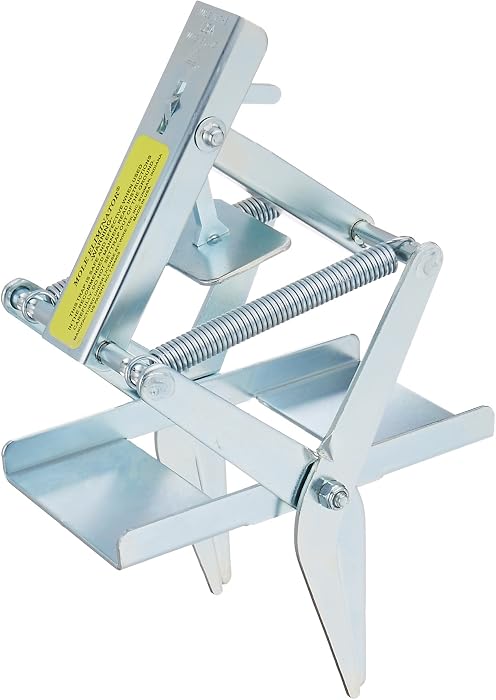
Wire Tek 1001 EasySet Mole Eliminator Trap (1)

All-around lawn use

Field Score 86/100
Material
Stainless steel
Warranty
Limited lifetime
Trap Type
Scissor, step-set
Suited Soil
Soft soil, sand, mulch
View on Amazon

A mole trap fails in two familiar ways: a trigger light enough that a wet night sets it off, or a spring so stiff you stop resetting it. The Wire Tek 1001 lands in the middle of that range, and that balance is why it is our top pick. Nothing needs assembling. You press the jaws down across a run, step on the top plate, and the trap is live. What struck us is how little ceremony the job takes, which matters more than it sounds, because the traps that catch moles are the ones you are willing to reset.

The mass behind that convenience is real: stainless plates, a heavy-gauge frame, and 16 ounces of steel in a 12-inch-tall body. Weight is the point here, since the plates have to drive through soil without twisting on the way down. The maker also states it for soft soil, sand, and mulch, and that is the honest boundary of this design; in baked clay or a mat of roots you will fight it. Firming the ground around the jaws before you step on the plate keeps a loose-soil set from tripping early.

Retrieval takes a bit of prying. Gloves and a short blast from a hose make it a much shorter job than it looks, and the trap goes back in the ground without complaint the same day. Everything above ground is steel and a step plate, with no plastic tab or bait cup to crack off in the sun.

Worth Noting

  • Sold singly, so a full yard means buying several
Our Verdict

Our pick for most yards: it sets in one step without assembly, kills without poison, and its stainless plates survive season after season.

Check Latest Price
2

Nash 100 Choker Loop Mole Trap Best for Yards with Kids and Pets

Nash 100 Choker Loop Mole Trap

Families with pets

Field Score 84/100
Origin
Made in USA
Material
Cast aluminum and steel
Trap Type
Choker loop
Dimensions
9.25 x 9.5 x 6.75 in
View on Amazon

Walk a yard shared with a toddler and the usual scissor trap starts to look like a poor idea: two steel jaws standing open at shin height, waiting. The Nash 100 takes that objection seriously. The loop, the trigger, and the load all sit in the tunnel, so the working parts are underground and the mole is dead before anything shows above the grass. That is the reason it holds a place here for households with kids, dogs, or a bird feeder that pulls in wildlife.

It is also the oldest design on this page. The choker loop has been in production since 1894 with only minor changes, and this one is cast aluminum over galvanized steel, hand-tested, and made in the U.S. At a pound it is light enough to carry three at once. In a clean, sandy run the loop closes around the mole and holds it until you lift the trap, which is why the design outlived a century of imitators.

Seating it is a two-step job: cut the wire slots with the flat of a shovel, then press the loop down over the run and squeeze the spring until the trigger catches. In soft, worked ground the whole thing takes a minute, and the low profile means you can mow over a set trap without hitting it.

Worth Noting

  • Stiff spring takes a firm two-handed squeeze
Our Verdict

For a yard shared with kids and dogs, this is the trap we point to: the loop kills underground, out of reach.

Check Latest Price
3

Polaflex Mole Trap Scissor 2-Pack Best Value Multi-Pack

Polaflex Mole Trap Scissor 2-Pack – 2 Pack Mole Traps

Large yards

Field Score 83/100
Material
Galvanized steel
Pack Size
2 traps
Trap Type
Spring-loaded scissor
Set Method
Step-on, no digging
View on Amazon

One trap is a guess. Several traps, set in runs that are actually live, is a plan, because a mole digs fast and a single tunnel system can wander most of a lawn in a season. So the practical question is not only which trap is best in isolation; it is how many you can leave in the ground at once. That is where a two-pack earns its keep.

Both traps are spring-loaded scissors in galvanized steel, and the pair weighs a listed 5.7 pounds, enough mass that the frame does not twist when the spring lets go. We appreciate the no-dig setup most: find a run, press the closed jaws in, step down, walk away. Nothing to bait, nothing to poison, and nothing to check twice a day beyond whether the jaws have closed.

Bedding matters more than anything else with this pair. The trigger wants firmly packed soil beneath it, so firm the run with your heel before you set, and check the trap after a hard rain when loose ground lets the jaws shift. Seated properly in a fresh run, they work quietly for weeks and go back in the ground after every catch.

Worth Noting

  • Strong springs need your full body weight
Our Verdict

A pair of galvanized scissor traps for about the money of one premium single, which is the sensible buy when several runs need covering.

Check Latest Price
4

Tomcat Mole Trap, 2 Pack Best for Hands-Free Setting

Tomcat Mole Trap, 2 Pack

Hands-free setting

Field Score 82/100
Jaw Shape
Curved
Pack Size
2 traps
Trap Type
Dual-spring jaw
Set Method
Step-on foot pedal
View on Amazon

The Tomcat's whole argument is the yellow foot pedal. Rather than bearing down on the trap's body, you seat the curved jaws in the run and step on the pedal to cock the trigger, so you can set it standing up in the mud instead of kneeling in it. In a wet spring that difference decides whether a trap gets moved as often as it should.

We like that for a trap you will shift every day or two, and the curved jaws are the other half of the design. Tomcat says the shape kills without drawing blood; what matters practically is that it holds a mole against the tunnel wall rather than pinching at it. Two traps in the pack means one in each live run you can find, which is how the math should work anyway.

Set each one in your hands before it goes in the ground: you want to hear the latch catch and feel the pedal hold. Soft, loose ground is where this design feels least planted, so firm the run under the jaws first and it stays put.

Our Verdict

The Tomcat is our hands-free pick: step on the pedal and the curved jaws close in the tunnel, no kneeling required.

Check Latest Price
5

Wanqueen 4-Pack Mole Traps Best for Budget Multi-Trap Setups

Wanqueen 4-Pack Mole Traps – 4 Pack Mole Traps That Kill Best

Budget multi-trap setups

Field Score 81/100
Setup
Set before placing
Material
Galvanized steel
Pack Size
4 traps
Trap Type
Pre-set scissor
View on Amazon

Four traps is more than most people think to buy, and about right for a property with moles in the lawn, the garden, and the field edge. Coverage is the entire case for this pack. You put one in each run you can find, and whichever trap fires tells you where the colony is working that week.

The design does the practical part. These cock before they go in the ground, so you set the jaws at the surface and lower the trap vertically into the hole instead of fighting a spring at ground level. Galvanized steel, roughly eight inches long, and reusable season after season.

For the money, we are happy to run these as a first wave: put all four out, learn which runs are hot, then spend more on a premium trap for the tunnel that keeps producing. The catch is the hole. A trap that goes in already set needs a clean, straight drop, and roots or stones hang it up halfway down, so clear the top couple of inches with a trowel first.

Worth Noting

  • Pre-set jaws need a clean hole to drop into
Our Verdict

Four pre-set traps for roughly one premium trap's money: the fastest way to cover a big property on a budget.

Check Latest Price

How We Tested Mole Traps in Real Yards

We started with mechanisms rather than marketing: scissor traps that pinch, choker loop traps that cinch, and plunger styles that drive down into the tunnel. We sorted candidates by galvanized versus painted steel, single versus multipack, and whether the maker claimed it could be set without kneeling in the mud, then ordered fourteen units to cover every combination of style, spring strength, and trigger design we could find at a sensible price.

Testing ran four months, from early spring into midsummer, across a half-dozen yards. Each trap went into an active run — the straight stretch between two fresh mounds, confirmed by opening the tunnel with a trowel — and was checked at dawn before work and again after dinner. We set every trap twice: once in daylight with the instructions open, and once in the dark with a headlamp, timing how long setup took and noting how much force the spring demanded to compress.

Trigger sensitivity got its own test. We pressed each pan or loop with a stick in small increments to see how much movement fired it, then watched how that played out in loose soil versus clay, where grit can jam a delicate mechanism. After every catch we hosed the trap down, reset it, and logged whether the spring still held tension; the galvanized models shrugged off a month of wet soil, while one painted model began to pit at the weld. We also noted whether a trap could be tripped by a curious dog's nose, and whether it caught mice as readily as moles.

How to Choose a Mole Trap

Trap Style and Setting Force

A scissor trap, also called a jawed or step-set trap, opens like shears and is cocked by standing on it; it is the fastest style to reset and the one most people picture. A choker loop, like the Nash 100, puts the wire loop and trigger underground. A plunger or jaw trap, like the Tomcat, uses a foot pedal to cock the trigger while you stay upright.

The mechanism matters less than the spring. If you cannot compress it, you will not reset the trap after the first catch, and a trap left tripped is a trap doing nothing. Test that before you buy two of anything.

Find the Live Run Before You Set Anything

Fresh mounds show where a mole has been; the run is where it will be again. Look for a straight, smooth-walled tunnel a few inches down, usually running between two mounds or along a foundation or fence line. Press your thumb into a suspect run and check the next morning: a mole that repairs the dent is a mole you can trap.

Seat the trap so the jaws straddle the tunnel itself, not the mound, and mark the spot with a stake so you can find it after rain. Most traps that never fire are sitting in a tunnel the mole dug past a week earlier.

Buy More Traps Than Feels Reasonable

Two or three traps in the ground is a fair start on a suburban lot, and four is not excessive on acreage. A mole works a lot of ground and rarely revisits a tunnel on a schedule you can predict, so coverage beats precision. This is where the multi-packs earn their place: the Polaflex two-pack and the Wanqueen four-pack both put more sets in the ground for what one premium trap costs.

Buy fewer, better traps only if you genuinely plan to pull them up and move them every couple of days. Most people do not, and a trap in the shed catches nothing.

Safety Around Kids, Pets, and Wildlife

None of these traps use poison or bait, which removes the biggest risk to a dog that digs where it shouldn't. The remaining risk is the hardware. A cocked scissor trap holds enough spring energy to break a finger, so keep set traps out of the paths you walk barefoot and out of reach of small hands.

Gloves help twice over: they keep your scent off the trap and your fingers away from the jaws while you cock it. If other wildlife crosses the yard regularly, the underground loop of the Nash is the shape that spares them.

What Lasts, and What You Pay For

Galvanized steel rusts slowly; stainless costs more and holds up longer in wet ground. A trap that bends at the frame is finished, so judge the plate and frame thickness rather than the paint. Look at the warranty too: the Wire Tek's limited lifetime coverage is unusual for this category, and it tells you the maker expects the trap to survive years of being stepped on.

Price alone is a poor guide. Cost per trap is what matters, and a good multi-pack can land well under half of a premium single. The premium trap earns the difference only if it fires more reliably and you keep resetting it.

Frequently Asked Questions

Final Verdict

The Wire Tek 1001 is our pick for most yards: it sets in one step without assembly, kills without poison, and its stainless plates shrug off a season of being stepped on. If children or dogs share the space, take the Nash 100 instead and accept the stiffer spring as the cost of an underground kill.

Where the damage covers a lot of ground, start with the Polaflex two-pack or the Wanqueen four-pack and put several traps to work at once. Then spend up on the premium single only for the run that keeps producing.