The 7 Best Small Pocket Knives of 2026

A pocket knife only earns its keep if you forget it's in your pocket — until the moment you need it. That's the tension with small folders: the ones light enough to disappear struggle through a double-walled box, and the ones that cut beautifully stay home because they feel like a brick. Get the balance right and you have a knife that opens mail, breaks down cardboard, cuts garden twine, and trims a loose thread without dragging your waistband down.

Over the past four months, my team and I have carried 14 of these — on hikes, in the garage, at the kitchen counter, and clipped to a pocket on ordinary workdays. Here's what I'd tell a first-time buyer: don't fixate on blade length. Almost anything under three inches handles everyday cutting. What separates these knives is the lock, whether the blade opens one-handed without a fight, and whether the edge is sharp out of the box or needs a session on a stone. Some of these are slim workhorses, a couple pack a bottle opener and a screwdriver, and the right one for you is in the list below.

Our Top Picks

The 7 Best Small Pocket Knives of 2026

1

Kershaw Leek Best Overall

Kershaw Leek

Everyday pocket carry

Field Score 97/100
Lock
Frame lock with tip lock
Weight
3 oz
Blade Steel
Sandvik 14C28N
Blade Length
3 inches
View on Amazon

Three inches of blade, three ounces of knife, and a handle thin enough that we lose track of which pocket it is in: that combination is why the Leek is the first knife we recommend here. Most small folders make you choose between a blade that can do real work and a body that disappears. This Kershaw does not, and it is what we put in front of someone who wants one good pocket knife and does not want to think about it again.

The steel is where it separates from the pack. Sandvik 14C28N is a step above the budget stainless on most folders this size: it takes a fine edge, holds it through a run of boxes and twine, and comes back fast on a stone. SpeedSafe flicks the blade out with one hand, the frame lock seats with a solid click, and the small tip-lock slider on the handle blocks the blade from opening in a pocket. We set that slider every time the knife goes into jeans, and we have come to think every assisted knife should have one.

What you give up is muscle. The drop point tapers to a fine tip that is lovely on tape and cord and wrong for prying, scraping, or opening a paint can, and the whole knife is built around that idea. It is a cutter. If your knife work runs to gaskets and wire, look at the heavier picks below. If it runs to feed sacks, packaging, and the string on a bale, the Leek does it with less in your pocket than anything else in this guide.

Worth Noting

  • Fine tip is a slicer's point, not a pry bar
Our Verdict

We recommend the Leek to most people because it pairs a 3-inch blade of genuinely good steel with a 3-ounce handle thin enough to forget.

Check Latest Price
2

Victorinox Tinker Best Traditional Multi-Tool

Victorinox Tinker Swiss Army Knife Multipurpose Pocketknife

Coat pocket and camp

Field Score 96/100
Weight
1.6 oz
Functions
12
Closed Length
3.5 inches
Blade Material
Stainless steel
View on Amazon

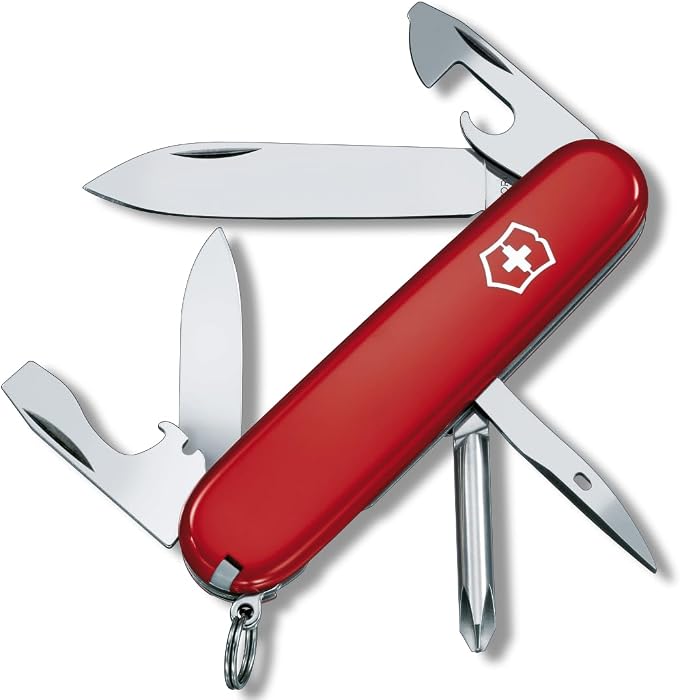
If you need a blade out one-handed while the other hand holds a lead rope or a gate latch, this is not your knife. The Tinker opens with two hands and takes its time about it. What it is instead is twelve functions in 1.6 ounces, lighter than any of the modern folders here and thin enough to vanish in a shirt or coat pocket.

We keep coming back to it because the tool set is honest. A blade, screwdrivers, a can opener, a reamer, plus the small things, tweezers and a toothpick, that you only miss once they are gone. Nothing on it is a gimmick, and the stainless takes a good working edge. Victorinox covers it with a lifetime warranty against defects in materials and workmanship, which says something about how the company expects the knife to be used.

Speed is the price. On a cold morning with gloves on, this is the slowest knife in the guide, and any one-hand opener beats it whenever you are holding something else. For a knife that opens mail, bags of feed, and the occasional package, that is a fair trade for the weight and the tools. For the knife you expect to open while doing something else, it is not.

Worth Noting

  • Two-hand opening only
Our Verdict

Buy the Tinker if you want a tool kit that lives in a coat pocket and opens two-handed without complaint, not a fast one-hand knife.

Check Latest Price
3

CIVIVI Mini Praxis Best Blade Steel for the Money

CIVIVI Mini Praxis Folding Pocket Knife

Heavy daily cutting

Field Score 95/100
Handle
G10
Weight
4.05 oz
Blade Steel
D2
Blade Length
2.98 inches
View on Amazon

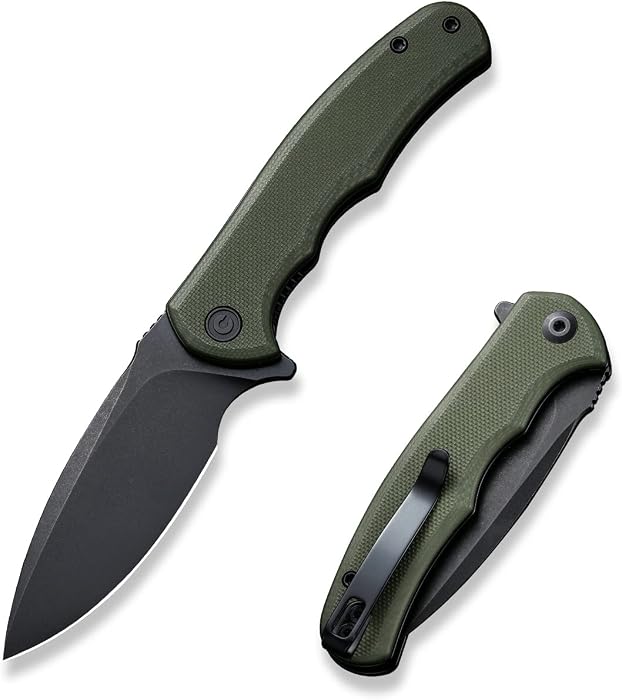
D2 steel is the headline. The Mini Praxis pairs a 2.98-inch D2 blade, a steel that gives up a little stain resistance for noticeably better edge holding than the budget stainless common at this size, with a G10 handle and a ceramic ball-bearing pivot. That is a lot of knife for the money, and it is the pick for someone who cuts every day and is tired of touching up a soft blade.

The action is the other half of the appeal. Bearings make the flipper snap open with a flick, and the G10 gives you something to hold when your hands are wet or gloved, a real difference from the smooth metal handles elsewhere in this guide. At 4.05 ounces it is second only to the GOOD WORKER here, and that heft is the price of a handle that fills your palm.

The one thing that gives us pause is the lock. The liner bar is stiff out of the box, and closing takes a firm thumb pushed well over; backing the pivot screw off a quarter turn helps. This is not a knife you will close absent-mindedly on day one, and it needs a break-in period. Buy it for the blade steel and the grip if a heavier pocket does not bother you, and pass if you want a knife you forget you are carrying.

Worth Noting

  • Stiff liner lock takes a firm thumb
  • 4.05 ounces is heavy for a small knife
Our Verdict

Buy the Mini Praxis if you cut every day and want D2 steel and a G10 grip, and you can live with a stiff liner lock.

Check Latest Price
4

Kershaw Misdirect Best Budget Assisted Opener

Kershaw Misdirect Pocket Knife

First assisted knife

Field Score 94/100
Lock
Frame lock
Weight
3.2 oz
Blade Steel
4Cr14
Blade Length
2.9 inches
View on Amazon

The Misdirect is the least expensive assisted opener here, and it does not feel like corners were cut to get there: a 2.9-inch reverse tanto in 4Cr14, a stainless handle, SpeedSafe, and a frame lock, the same opening system as the Leek at the entry end of Kershaw's line. The reverse tanto runs a straight edge out to a sturdy tip, which we like for scoring, scraping, and opening boxes without hunting for the belly of a blade.

Two things to know. 4Cr14 is the most basic steel in this group, so plan on a few passes on a stone to keep it shaving; Kershaw will sharpen it free if you send it in and will replace a broken blade for a fee, which is more service than most budget knives come with. And the pivot can arrive stiff enough that the flipper feels stubborn until you back the screw off a touch. Neither is a dealbreaker. They are the reasons this is the second Kershaw we recommend rather than the first.

Worth Noting

  • 4Cr14 needs frequent touch-ups
  • Pivot can arrive stiff
Our Verdict

Buy the Misdirect if you want assisted opening on a tight budget and will trade edge-holding steel and a stiff pivot for it.

Check Latest Price
5

Victorinox Rambler Best Keychain Knife

Victorinox Rambler Swiss Army Knife

Key rings

Field Score 93/100
Functions
10
Screwdriver
Magnetic Phillips
Closed Length
2.3 inches
Handle Material
ABS/Cellidor
View on Amazon

A key ring is a bad place for a bad knife and a good place for this one. The Rambler is 2.3 inches closed with ten functions, and two of them earn it the spot: scissors strong enough for zip ties and stray threads, and a magnetic Phillips driver that holds screws on the tip instead of dropping them in the grass.

What we appreciate most is the restraint. A blade, a bottle opener, two screwdrivers, a nail file, tweezers, and a toothpick, with nothing along for the ride. It is the Swiss Army knife we put on a ring and forget about until a bottle cap or a knotted hay string shows up, and the build is the same as the full-size models: crisp tool snap, tight scales, a sharp little blade.

The blade is the smallest thing on it, and it is a supplement to a real knife rather than a replacement. You will still want one of the folders above for anything bigger than a package or a length of twine. What the Rambler buys is the guarantee that something sharp is on you, and on that score it earns its ring space better than anything else here.

Worth Noting

  • Tiny blade makes it a backup, not a main knife
Our Verdict

Buy the Rambler if you want a genuinely useful tool on your keys and accept that the blade is a backup, not a main knife.

Check Latest Price
6

Mossy Oak Mini

Mossy Oak Mini Folding Pocket Knife with G10 Handle

Budget all-rounder

Field Score 92/100
Handle
G10
Weight
3.5 oz
Blade Steel
3Cr13
Blade Length
2.5 inches
View on Amazon

A bottle opener, a glass breaker, a cord cutter, and a 2.5-inch blade in a 3.5-ounce knife with G10 scales: the Mossy Oak Mini packs more into its handle than anything else at the bottom of the price range. The liner lock is positive, the grip texture is real, and it feels solid rather than hollow in the hand.

It is one of the two cheapest knives in this guide, and it does not read that way. The stonewashed blade, the G10, and the lock all sit a step above the money, and the size is right for a jeans pocket or a saddlebag without the bulk of the bigger folders here. For a knock-around knife that gets lent, dropped, and left in a truck, that combination is hard to argue with.

Two honest complaints. 3Cr13 is a soft steel, and ours came sharp but not shaving; a few passes on a stone fixes it, and you will be back on that stone more often than with the D2 or 14C28N knives. And the cord-cutter notch on the spine catches on cardboard and cloth during a straight cut. It is genuinely useful on strapping and twine and in the way the rest of the time.

Worth Noting

  • Soft 3Cr13 steel needs frequent sharpening
  • Cord-cutter notch snags on cardboard
Our Verdict

Buy the Mossy Oak Mini if you want the most tools for the least money and will keep a sharpener within reach.

Check Latest Price
7

GOOD WORKER Pocket Knife Best for Truck and Trailer

GOOD WORKER Legal Pocket Knife with 2.95” Serrated Blade

Truck and trailer

Field Score 91/100
Weight
4.16 oz
Blade Steel
440C
Blade Length
2.95 inches
Rescue Tools
Glass breaker and strap cutter
View on Amazon

The reason to look at this one is not the blade, it is the two tools beside it. A glass breaker and a separate strap hook mean the emergency jobs do not depend on the blade being open, and the 2.95-inch serrated blade goes through webbing, rope, and twine that a plain edge slides right off.

The blade is 440C, serrated along most of its length, and it is a better rope knife than a whittler: the teeth grab webbing and cord instead of skating across it. It is also the heaviest folder here at 4.16 ounces, with an aluminum handle thicker in the hand than any of the Kershaws.

There is no assist, so opening takes a deliberate push on the thumb stud and a full swing, and full matters. A liner lock only does its job with the blade all the way open, and on this one the last few degrees take a firm thumb. Open it until it clicks, every time, or do not open it.

Buy it as the knife that lives in the truck, the tack box, or the saddlebag and gets used hard and rarely, not as the one in your pocket every day. With three tools most knives here do not have and a price at the bottom of the range, that is a fair job for it.

Worth Noting

  • No assist, so it opens two-handed
  • Heaviest knife here at 4.16 ounces
Our Verdict

Buy this as a truck, trailer, or tack-box knife for rope and emergencies, not as the folder you open one-handed every day.

Check Latest Price

How We Tested Small Pocket Knives

We started with more than 60 small folders from brands we already trusted and a handful we didn't, then filtered by blade length, steel, lock type, weight, and price. Fourteen made the cut, and we've carried them for four months — at the kitchen counter, in the garage and garden, and on weekend hikes and camping trips.

Sharpness came first. Every blade had to slice printer paper cleanly, push through a length of sisal rope, and shave hair off my forearm before it went into a pocket. After each session we noted whether the edge had rolled or chipped and how many passes on a honing rod it took to bring it back.

Then we went at the lock. Pressing the spine of each open blade against a cutting board with steady pressure revealed any wiggle; opening and closing each one more than 50 times showed whether the mechanism smoothed out or got gritty, and whether the release pinched. Ease of use we tested the way you actually use a knife: one hand, light work gloves on, the other hand holding a box, then closing it the same way.

Size and portability were judged over whole days, not minutes. We weighed each knife, clipped it to a jeans pocket through a full workday of sitting, driving, and crouching, and noted whether it dug into a hip or snagged a seatbelt. After four months we went back through the whole group: which edges had held, which handles still felt solid, whether the clips still gripped, and whether the extras — a bottle opener, a glass breaker — did anything useful.

How to Choose a Small Pocket Knife

Blade Length: What Two to Three Inches Buys

Two to three inches of blade covers tape, cord, packaging, feed sacks, zip ties, and a loose thread on a blanket, with a handle short enough to sit in a jeans pocket. Drop below about two inches and you are into keychain territory, which is useful as a backup and frustrating as a main knife. Go much past three and the handle grows faster than the usefulness does, and the knife starts to print through a pocket or catch on a saddle fender.

If you want one do-everything size, aim for the middle of that band and let the shape of the handle decide the rest. Our top pick sits right at three inches and still carries like a much smaller knife, which is the exception rather than the rule.

How It Opens, and What the Lock Has to Do

An assisted flipper or a thumb stud gets the blade out with one hand, which matters when the other hand is holding a lead rope, a gate, or a branch. A traditional two-hand folder trades that speed for a thinner, lighter body, and for a lot of buyers that is the better trade. Neither is wrong, but be honest about how you use a knife, because you will open it far more often than you sharpen it.

Whichever you pick, a lock only counts when the blade is fully open: a liner or frame lock that has not seated is a blade waiting to fold on your fingers. Open it until it clicks, every time, and expect a firm press on the lock bar when you close it, especially in the first weeks.

Steel and Weight: Where the Money Goes

Sandvik 14C28N and D2 generally hold an edge longer than the 3Cr13 and 4Cr14 blades at the bottom of the price range, and you pay for it. The trade is upkeep: harder steels take longer to bring back on a stone, and D2 wants a wipe of oil if the knife lives somewhere damp. A soft steel is not a bad choice for a truck knife that gets lent and dropped, as long as you keep a sharpener nearby.

Weight matters just as much. A 1.6-ounce Swiss Army knife disappears in a shirt pocket, while the four-ounce folders here want a jeans pocket or a belt to feel right. Decide on the weight you will tolerate before you fall for a steel.

Clip, Key Ring, or Loose in a Pocket

A pocket clip keeps the knife at the top of the pocket, leaves room for everything else, and makes the knife visible, which matters in an office or a town. A key-ring knife is the opposite trade: always with you, never big enough to be the only blade you own. Both beat a knife left in a drawer at home.

Then check the rules where you live and where you travel. Blade length and one-hand-opening restrictions vary by state and city, and a claim on a listing that a knife is legal everywhere is marketing, not law. A knife that is fine at the farm can be a problem two states over.

Frequently Asked Questions

Final Verdict

The Kershaw Leek is the small pocket knife we recommend to most people: a three-inch blade of good steel in a three-ounce, thin-handled frame with assisted opening, a lock that seats with a click, and a tip-lock safety for pocket carry. It is the one that does the most without asking you to notice it.

If you want tools instead of speed, the Victorinox Tinker carries twelve functions at 1.6 ounces in a package you will forget is in your coat. And if the knife never leaves your keys, the Rambler earns the ring space.