The 4 Best Tick Sprays for Yard of 2026

The first warm Saturday of the year is usually when it happens: bare feet in the grass, the dog crashing through the hedge, and by evening someone's pulling a tick off an earlobe. That's the moment the yard stops being scenery and becomes a project. A good spray is the fastest way to take it back, but the bottles on the shelf are not interchangeable — some hook straight to a hose, some need mixing, and a few are built around how long they keep working after the water dries.

I've spent the past four months living with 12 of these sprays, from plant-oil formulas to concentrate jugs, and the differences show up fast. One bottle treats a small city lot while another barely covers a driveway turnaround, so I did the square-footage math on every one. I also paid attention to what the label doesn't lead with: whether you can let the dog back out once it dries, how strong the smell is the first hour versus the next morning, and whether the mix clogs a sprayer halfway through.

The picks below were chosen for what happens two weeks later, not the day you spray. Keep reading for the ones that earned a spot in my garage.

Our Top Picks

The 4 Best Tick Sprays for Yard of 2026

1

Spectracide Triazicide Insect Killer for Lawns & Landscapes Best Overall
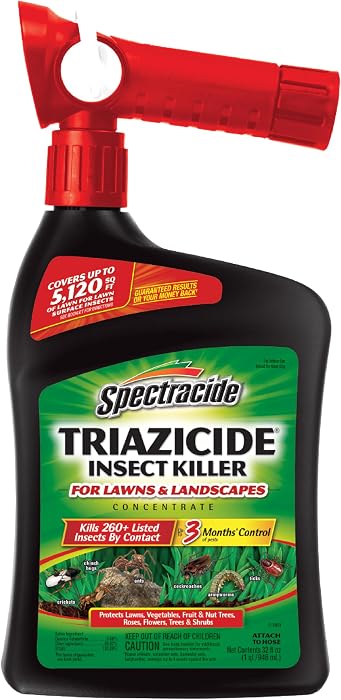
Spectracide Triazicide Insect Killer for Lawns & Landscapes 32 Oz

Most yards

Field Score 90/100
Application
Ready-to-spray hose-end
Tick Coverage
Deer ticks and 260+ insects
Control Period
Up to 3 months
Active Ingredient
Gamma-Cyhalothrin 0.08%
View on Amazon

The first thing we check on a yard spray is whether the label actually says ticks, and Spectracide does. Deer ticks are named among the 260-plus insects it kills. That matters because plenty of backyard products are aimed at mosquitoes and fleas and leave ticks to a vague other-listed-insects line. The hose-end bottle is the other reason this is our default: you screw it on, flip the switch, and walk the lawn. No measuring, no pump sprayer to clean.

The label claims up to three months of control, which is longer than what we see from most ready-to-spray options here. We treat that as a ceiling, not a promise. Rain, mowing, and heavy pressure will shorten the window, and the label still tells you to reapply as directed. The flip switch is easy to work with one hand, which sounds minor until you are dragging a hose across a slope. We also appreciate that the label covers lawns, vegetables, flowers, trees, and shrubs, so it can follow the edge of a garden without a separate product.

For a straightforward lawn, Spectracide is the one we reach for first. It is the least expensive pick here, and it does not ask you to store or clean a sprayer. If your yard is complicated, with several beds, a fence line, and a slope, the measuring flexibility of a concentrate may serve you better. But for the common case, the simplicity is the recommendation.

Worth Noting

  • Less precise than a concentrate
Our Verdict

For most yards, we reach for Spectracide because it names deer ticks, attaches to a hose, and keeps working for up to three months.

Check Latest Price
2

Atticus Talak 7.9% Bifenthrin Concentrate Best Concentrate

Atticus Talak 7.9% Indoor/Outdoor Bifenthrin Insecticide Concentrate (32oz)

Concentrate users

Field Score 89/100
Size
32 fl oz concentrate
Application
Mix with water
Target Pests
Ticks and 75+ more
Control Period
Up to 3 months
View on Amazon

The Tip 'N Measure bottle is the detail that won us over. Instead of guessing a capful, you squeeze the bottle to a marked line, pour, and rinse. That sounds like a small thing until you are mixing for a backpack sprayer and want the job done in one pass. The 32-ounce concentrate is labeled for ticks and more than 75 other pests, and the label claims up to three months of control.

The payoff is control: you can mix only what you need, treat a perimeter at a stronger rate, and keep the rest for a second application. The water-based formula dries clear and has no odor, which we appreciate near a patio or front walk. Against Spectracide, Talak asks for more equipment but gives you a more flexible concentrate. The 7.9% bifenthrin formula is the same active ingredient class as several professional-style products, and the measuring tip makes it easier to stay consistent.

A single bottle leaves room for multiple batches, so you are not buying a new ready-to-spray bottle every time the ticks come back. That is the real value of a concentrate: you buy the sprayer once and the refills stay compact. The measuring tip is the reason we trust it for repeat treatments; it takes the guesswork out of the job that matters most.

Worth Noting

  • Requires a separate pump sprayer
  • Mix ratio must be measured per use
Our Verdict

Talak earns our recommendation for pump-sprayer users: it lists ticks, measures cleanly, and stretches across multiple batches.

Check Latest Price
3

Wondercide Flea & Tick Yard Spray Best Natural

Wondercide Flea & Tick Yard Spray

Natural lawns

Field Score 88/100
Size
32 fl oz
Application
Ready-to-use spray
Formulation
Plant-based cedarwood oil
Tick Coverage
Up to 2,500 sq ft
View on Amazon

The cedarwood scent is the first thing you notice, and it is a pleasant change from the solvent smell of a synthetic yard spray. More important, the formula is plant-based and labeled safe around pets and people when used as directed, which is why we keep it in the natural category. Wondercide's flea and tick yard spray is ready to use, and the label lists ticks as a target. For a dog household that wants to treat the lawn and kennel area without synthetic residue, that combination is the appeal.

Natural oil products live or die on reapplication, and Wondercide is no exception. Plan to reapply after rain or heavy dew, especially during a heavy tick season. The scent lingers pleasantly, but it is strong enough that we avoid spraying it right before a backyard dinner. That is a fair trade for a formula we feel comfortable using around the dog.

The 2,500-square-foot tick coverage is the smallest here, so measure your lawn before you buy; a half-acre lot will take multiple bottles. For heavy tick pressure, we start with Spectracide or Atticus and use Wondercide as a maintenance or boundary spray. For a light population and a plant-based routine, it is the natural option we reach for first.

Worth Noting

  • Shorter residual than synthetic picks
Our Verdict

Wondercide is our pick for pet parents who want a plant-based yard spray and accept that natural tick control needs more frequent reapplication.

Check Latest Price
4

Ortho Home Defense Insect Killer for Lawn & Landscape Best for Large Lawns

Ortho Home Defense Insect Killer for Lawn & Landscape Ready-to-Spray

Large lawns

Field Score 87/100
Size
32 fl oz
Application
Hose-end sprayer
Target Pests
Ticks and 235 listed bugs
Tick Coverage
Up to 5,300 sq ft lawn
View on Amazon

The 5,300-square-foot coverage figure is what separates Ortho Home Defense from the other hose-end picks here. That is a full lawn for many suburban lots, or a long perimeter and foundation line if you are treating the edges where ticks wait. The label lists ticks, ants, mosquitoes, fleas, and spiders among 235 bugs, and it starts killing within minutes.

We like the hose-end applicator for the same reason we like Spectracide's: no mixing and no tank to clean. Ortho's bottle is a little less intuitive to set up than a simple flip switch, but it is manageable. The results are more uneven on heavy tick pressure than we want for a primary pick, which is why Spectracide stays our default. What Ortho buys you is ground coverage: if your lawn is the main treatment area, it finishes the job in fewer passes.

The coverage is the reason to pick it over the other hose-end bottles here. If your lawn is the main treatment area and you want to finish in one pass, Ortho makes the math easier. We still start with Spectracide on a smaller lot, but Ortho is the one we grab when the fence line runs long.

Worth Noting

  • Costs more than Spectracide
Our Verdict

For large lawns, Ortho Home Defense is the hose-end pick we trust to cover the most ground and list ticks among 235 bugs.

Check Latest Price

How We Tested Tick Sprays for Yards

We built the shortlist by pulling the best-selling yard treatments across major retailers, then filtering by active ingredient family, whether the product arrived ready-to-spray or as a concentrate, and the stated coverage area. We pulled out anything that couldn't be applied with a standard garden hose or a pump sprayer, and anything whose coverage claims didn't pencil out to a reasonable price per 1,000 square feet. That left 12 products, which we tested from late April through August.

Testing happened in real yards — mine and two colleagues' — on fescue and mixed lawn bordered by woods, the kind of edge where ticks actually live. We staked 1,000-square-foot plots about ten feet back from the tree line, mowed two days before applying, and timed how long each product took one person to cover the plot, including setup. Hose-end bottles got attached at the spigot and checked for leaks; concentrates got mixed in a pump sprayer, and we noted whether the measuring method made a half-batch awkward. We noted clogging, sputtering, and how evenly the fan pattern laid down.

Effectiveness got measured two ways: a white flannel drag cloth pulled across each plot before treatment and again at day three, week two, and week six, plus a visual count of live ants, fleas, and mosquito landings at the same intervals. We watched for collateral damage too, walking the plots after drying to check for burn on hostas and staining on concrete edging.

Scent and pet safety were judged standing downwind at one hour, 24 hours, and one week, and we logged the re-entry interval on each label before letting a dog back into a treated plot. For value, we divided the purchase price by the square footage one bottle actually covered and by the weeks we saw pests stay down, which is where several of the cheaper-looking bottles fell apart.

How to Choose a Tick Spray for Your Yard

Start with the tick claim

A yard spray can list mosquitoes, fleas, ants, and spiders and still say nothing useful about ticks. Read the label for the word ticks, ideally deer ticks, the species most people are trying to stop. If the label only promises listed insects without naming ticks, do not buy it for a tick problem. Spectracide Triazicide names deer ticks among its 260-plus targets; Atticus Talak lists ticks among its 75-plus pests.

Also look at where the product is labeled to go. Lawns, ornamentals, foundation perimeters, and kennel runs are different surfaces, and a spray labeled only for patios is not a lawn treatment. Ticks concentrate along edges, tall grass, leaf litter, and shaded borders, so plan to treat those zones as well as the open lawn. The label is the only reliable guide to what the product can legally and safely touch.

Choose ready-to-spray or concentrate

Ready-to-spray bottles are the fast lane: attach the hose, turn the switch, and walk. They are the right choice for a single lawn, a fence line, or a yard you want to treat before a weekend. The trade-off is control, since you cannot adjust the mix, and a bottle can run out before you finish a large lot. Ortho Home Defense covers up to 5,300 square feet; Spectracide does not publish a coverage figure for its bottle, so buy by area and do not stretch the last inch.

A concentrate is the better fit for a pump sprayer user with several beds, a long perimeter, or a yard that needs repeat treatments. Atticus Talak's 32-ounce bottle is mixed with water, so you can make only what you need and keep the rest. You pay in setup time and measuring, but you get more control over the mix and less packaging. Measure your lawn first; the label's square-footage figure is the number that decides whether a ready-to-spray bottle is enough.

Match residual to your routine

Residual control is the number that matters most for ticks. A synthetic formula can claim weeks or months on the label; a plant-based oil is usually a shorter-window product that needs more frequent reapplication. Spectracide and Atticus both claim up to three months of control. Wondercide's cedarwood formula is a natural option, but it is not the one to choose if you want a set-and-forget season.

Treat the label interval as a maximum, not a guarantee. Rain, mowing, sunlight, and heavy pest pressure all shorten the window. Pick the product whose reapplication schedule you will actually follow, and mark it on a calendar. One thorough treatment on schedule beats three half-finished passes, especially along the edges where ticks shelter.

Protect pets, kids, and pollinators

Every product here has a label for a reason. Keep children and pets off treated areas until the spray has dried, and follow the label's reentry time even if the surface looks dry sooner. Wear gloves and eye protection when handling concentrate, and store it out of reach. Do not apply on a windy day or let spray drift onto neighboring property, flowering plants, or water.

Pollinators are the other concern. Spray in the early morning or evening when bees are less active, and avoid open blooms. If you are treating a lawn for ticks, you do not need to spray every flower bed; focus on the edges, tall grass, and shaded perimeter where ticks actually wait. That is better for beneficial insects and for your budget.

Frequently Asked Questions

Final Verdict

Our default for most yards is Spectracide Triazicide. It names deer ticks, connects to a hose, and gives you up to three months of labeled control without mixing, which is the combination most people will actually keep up with.

If you already own a pump sprayer, Atticus Talak is the better concentrate; if natural ingredients are the priority, Wondercide is the one to try with a reapplication plan. Ortho Home Defense makes sense when covering a large lawn in fewer passes is the deciding factor.