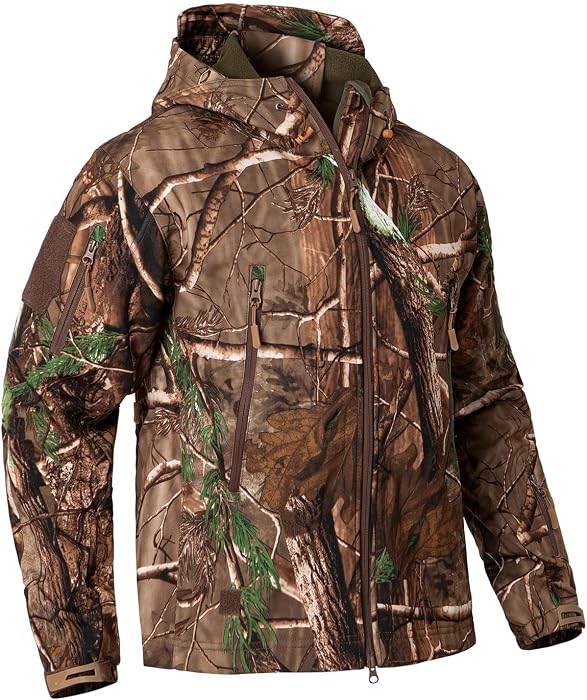
The 6 Best Waterproof Hunting Jackets of 2026

A hunting jacket only has to be waterproof once to earn its price, and it only has to fail once to wreck a season. I've watched a steady drizzle turn a jacket's shoulders dark and heavy by 8 a.m., and I've sat through sleet in gear that shrugged it off without a sound. The difference usually isn't the label — it's the seams, the zipper, and the fabric.

My team and I spent the past eight months wearing 10 hunting jackets through early teal season, late-season deer sits, and the muddy walk-in between them. Warmth, fit, and comfort mattered as much as water resistance, and a shell that rustles every time you shift will cost you a shot long before the cold does.

The first thing to know: zippers fail before membranes do. A covered, storm-flapped zipper is worth more than a fancy rating on the hangtag, and a jacket too warm for the walk in has you sweating at the stand — its own kind of cold. Here's what held up.

Our Top Picks

The 6 Best Waterproof Hunting Jackets of 2026

1

Drake Waterfowl Refuge Eqwader Best Overall

Drake Waterfowl 1/4 Zip Refuge Eqwader™

Early-season waterfowl

Field Score 94/100
Style
1/4-zip pullover anorak
Fabric
Medium weight, no stretch
Breathability
Ultra-breathable fabric below the chest
Waterproofing
100% waterproof Refuge HS, HyperShield 2.0 upper body
View on Amazon

The Eqwader isn't cut like the other jackets in this guide, and that's the reason it's our top pick. Above the chest it's a 100% waterproof, windproof Refuge HS fabric with HyperShield 2.0; below the chest the material turns ultra-breathable. That split reads strange until you think about how a waterfowler actually dresses — waders up to the ribs, which means the bottom half of the jacket sits sealed inside rubber anyway. Waterproofing down there buys you nothing but sweat, so Drake let it breathe instead.

It's a quarter-zip anorak in a medium-weight, no-stretch fabric, and we treat it as a layer rather than a coat. A base layer and a fleece underneath carry it through a cold, wet morning, it moves with you on the walk in, and you don't get the clammy back a full shell gives you on the way to the hole. Wear it as your only outer layer in a hard December wind and you'll want more, which is the honest boundary of what it's for.

The detail we keep coming back to is the Magnattach pocket — a magnetic closure sized for a call and a whistle, so you're not fighting a zipper with numb fingers while birds are circling. It's a small thing that tells you the jacket was drawn up by people who hunt. Fit runs true to the size chart, and the fitted cut is what keeps it from bunching under waders.

Worth Noting

  • Fewer pockets than many hunters want
Our Verdict

The waterproof layer we reach for most: dry shoulders, a back that breathes under waders, and a magnetic call pocket, all without the bulk of a full coat.

Check Latest Price
2

HOT SHOT 3-in-1 Insulated Parka Best for Cold Weather

HOT SHOT Men’s 3-in-1 Insulated Camo Hunting Parka

Late-season cold

Field Score 92/100
Build
3-in-1 with zip-out liner
Pattern
Camouflage
Waterproofing
Waterproof outer shell
View on Amazon

The Drake above is a layer; this is a coat, and that's the difference you're paying for. HOT SHOT's 3-in-1 pairs an insulated, waterproof camo shell with a liner that zips out, so the same jacket covers a mild October afternoon and a morning that never climbs above freezing.

What we appreciate is that it ends the layering guesswork. With the liner in, it holds heat into the twenties and still leaves room for a sweater underneath without the shoulders going tight. Liner out, it's a shell you can wear on a warm, wet teal opener. The hood comes off when you want a cap instead, and the weight question answers itself once you remember the liner is removable — stripped down it's light, zipped up it's serious outerwear.

Where it stops is the shell itself. This is a weather-resistant outer that shrugs off drizzle, wind, and snow, not a hard shell for an all-day soaker; for that, the SITKA earns its price. Short of a soaking, this is the most jacket per dollar in the group, and it's the one we point at when somebody can only buy once.

Worth Noting

  • Main zipper can be finicky at the base
Our Verdict

If your season runs into real cold, this is the coat to buy: one purchase that becomes a shell, a liner, or both, warm enough for a 20-degree morning.

Check Latest Price
3

SITKA Hudson Waterproof Jacket Best Premium

SITKA Men's Hudson Waterproof Insulated Hunting Jacket

Wet, windy hunts

Field Score 91/100
Wind
Windproof
Insulation
Insulated
Waterproofing
Waterproof
View on Amazon

This is the most expensive jacket here, and there's no way around that. What the money buys is the most complete weather protection in this group: a waterproof, windproof, insulated hunting jacket with a build-quality record that nothing else on this page approaches.

In wind-driven rain the difference between this and a treated softshell shows up fast. The shell doesn't wet out, the insulation keeps working when everything you own is damp, and the cut leaves room for a fleece or a light insulating layer without pulling across the chest. A large takes that layering for most adult frames, and the belly area isn't cut tight the way a lot of field jackets are.

The value question is the live one, and the honest answer is that it depends on your season. If you're on the water through late season, or sitting late-season deer in weather that sends other people home, the Hudson is a buy-once jacket and the math works out. If you hunt a handful of weekends a year, the HOT SHOT does most of this job for far less, and the CARWORNIC keeps you dry when the rain stays light.

Worth Noting

  • Premium price is the whole decision
Our Verdict

The jacket we trust when the forecast is genuinely bad: fully waterproof, windproof, and warm, at a price that only makes sense if you hunt hard and often.

Check Latest Price
4

Wildfowler Performance Insulated Parka Best Value Insulated

Wildfowler Outfitter Performance Camo Hunting Insulated Parka

Cold, blustery days

Field Score 90/100
Style
Camo parka
Insulation
Insulated
Waterproofing
Waterproof, windproof shell
View on Amazon

Wind is what turns a cold morning into a short one, and this is the jacket here that handles it most convincingly for the money. The shell blocks it, snow and light weather roll off without complaint, and the fabric stays soft while you're shifting around waiting for something to move.

Warmth is the reason to buy it, and it arrives the moment you zip it rather than twenty minutes later. It holds up in the dry, bitter cold that makes tree stands miserable, and it doesn't crackle when you turn your head — one of the quieter jackets in this group, which matters more at 40 yards than any figure on the tag.

The pockets are where it gives ground. The chest pockets are generous, but there's no small one for a tag or a call, nothing on the inside, and the hand pockets sit low and shallow enough to collect water in sleet. A bino harness or a small chest pack fixes it, and that's what we'd plan on if you carry a lanyard.

Worth Noting

  • Cut runs snug through the shoulders
Our Verdict

A quiet, windproof, properly warm parka for cold, blustery mornings — just decide where your calls and tags are going to live before the season.

Check Latest Price
5

CARWORNIC Camo Quiet Softshell Best Budget

CARWORNIC Men's Camo Quiet Hunting Jacket Waterproof Softshell Fleece Lined

First hunting jacket

Field Score 89/100
Lining
Fleece
Pockets
Multiple zippered
Waterproofing
Waterproof softshell
View on Amazon

Two things surprised us at the cheapest end of this group. The first is how much jacket there is: a waterproof, fleece-lined camo softshell with a hood that covers a head properly and enough zippered pockets to carry calls and a tag without adding a pack. Several of those pockets sit where you can reach them over waders, which sounds minor until you're standing in cold water.

The second is the two-way zipper. You can open it from the hem, which is the difference between sitting down in a layout blind and wrestling your own coat, and it's the kind of detail we expect on jackets costing a good deal more. The fleece lining does real work for its weight, and there's room for a mid-layer without the fit going tent-shaped.

Where it sits is simple: this is an early-to-mid-season jacket. A softshell sheds drizzle and blocks wind, but sustained rain will eventually work through, so keep a hard shell for a wet, cold day on the water. For everything else — early duck season, upland, a foggy morning in a blind — you're getting a lot of jacket, and this is the one we leave in the truck for days the forecast is wrong in either direction.

Worth Noting

  • Louder fabric than the quiet-hunting picks
Our Verdict

For a first hunting jacket this is where we point people: camo, fleece-lined, and pocket-rich for the least money here, with the limits a softshell implies.

Check Latest Price
6

TIDEWE Heated Hunting Jacket Best for Blind Sitting

TIDEWE Men's Heated Jacket with Battery Pack

Blind sitting

Field Score 88/100
Heat
3 levels, 4 heated zones
Straps
Anti-slip shoulder straps
Battery
Rechargeable pack included
Waterproofing
Waterproof
View on Amazon

Sitting still is the coldest thing a hunter does, and this jacket is built around that fact. Four heating zones, three levels, and an included battery pack let you warm the parts that go numb first, and the anti-slip shoulder straps keep the whole thing where you put it under waders or a pack.

The practical effect is that you can dress thinner on the walk in. Instead of carrying a coat you only need once you've stopped moving, you wear a lighter layer and switch the heat on when you sit — the difference between arriving at your spot sweaty and arriving cold. It's waterproof as well, so a wet seat doesn't end the morning, and the thick build blocks wind on its own with the heat off.

Our reservation is the same one we have about any heated jacket: you're now managing a battery. Forget to charge it and you're wearing a merely fine insulated coat, and the pack adds weight a plain shell doesn't. It's a newer design than the others here, so treat the heat as a bonus on top of a decent jacket rather than the reason it works.

Worth Noting

  • Battery must be charged and carried
  • Newer design with unproven long-term durability
Our Verdict

For the hunter who sits for hours in freezing weather, heat built into the jacket is a real comfort — buy it because you sit, not because heat sounds fun.

Check Latest Price

How We Tested Waterproof Hunting Jackets

We started by pulling every jacket we could find that claimed waterproof construction, then read the spec sheets closely for taped or welded seams, a storm flap over the main zipper, and an actual membrane rather than a durable water-repellent coating alone. From there we filtered by insulation type, available sizes, and price, landing on 10 jackets that represent what's genuinely on the shelf. Each one went through eight months of real seasons — early teal in short sleeves, October archery, and the cold, wet sits of late fall and early winter.

Water resistance got the hardest look. We wore each jacket through steady rain and, on dry days, stood in the yard and ran a hose over the shoulders, elbows, and hood for ten minutes, then checked inside for dark patches and damp seams. Warmth we judged by wearing the same base layers in the same conditions and noting when we reached for a midlayer and when we didn't, including the half-mile walk in, where a jacket that traps heat becomes its own problem. Fit went to anyone who would wear it: we raised our arms overhead with a pack on, shouldered a rifle to check sleeve length, and layered a bulky fleece underneath.

Noise got a dedicated test, since it's the thing no spec sheet tells you: one tester rubbed sleeve against sleeve and against a tree trunk while another listened from ten yards away. We counted pockets we could actually reach with gloves on and while sitting down, wore each jacket for a full day to judge weight across the shoulders, and worked every zipper one-handed, in the dark, with gloves — watching for snags on the liner and whether the flap stayed put. Value came last: what the jacket costs against how many seasons it looks likely to survive.

How to Choose a Waterproof Hunting Jacket

Waterproof, Water-Resistant, and the Difference That Costs You a Morning

On a listing, waterproof can mean a hard shell with taped seams or a softshell with a water-repellent finish, and the gap between them shows up in hour two of steady rain. Softshells are quieter, stretchier, and cheaper, which makes them right for drizzle, wind, and cold dry mornings. Hard shells give up some silence and some stretch to stay dry through a soaker.

If most of your hunts are wet, put the money into the shell. If most are cold and dry, put it into insulation and quiet fabric instead. The CARWORNIC is honest about being the first kind of jacket; the SITKA is what the second kind costs.

Are You Buying a Layer or a Coat?

An uninsulated shell or pullover is the most versatile thing you can own, because you decide how warm it is each morning — but it only works if you actually layer underneath it. A fixed-insulation parka is warmer for less fuss and less money than a shell plus a good mid-layer, though it's a one-temperature garment. A 3-in-1 splits the difference: shell, liner, or both.

Count the mornings you hunt below freezing. A few, and a layer is the better buy; most of them, and a 3-in-1 earns its keep.

Quiet Is a Performance Spec

You can waterproof almost anything. Making it waterproof and silent is the hard part, and it's the one that decides whether you fill a tag. Stiff shells rustle against brush and amplify every shift of your arms. If you still-hunt or bowhunt, quiet comes before breathability; if you pass-shoot waterfowl from a blind, the shell matters more than the rustle.

Two-piece systems — a soft, silent outer over a thin waterproof layer — are how a lot of experienced hunters solve it, at the cost of one more thing to buy.

Fit, Reach, and Where Your Calls Live

Size for your layers, then check the reach: put the jacket on over a fleece and stretch both arms forward as if you're drawing or shouldering a gun. If the cuffs pull back off your wrists, you need a size up or a longer sleeve.

Pockets deserve the same scrutiny. Hand pockets should be deep and angled so water runs out rather than in, and you want one small closed pocket for a tag or a call that isn't buried under gloves. A jacket that carries your gear quietly is worth more than one with an extra inch of insulation.

Frequently Asked Questions

Final Verdict

The Drake Waterfowl Refuge Eqwader is the jacket we recommend to most hunters, because most hunts are wet and mobile rather than brutally cold and stationary: it keeps rain off your shoulders, breathes where waders trap heat, and puts a call within reach of a numb hand.

If your season runs into hard cold, the HOT SHOT 3-in-1 is the better single purchase. And if you hunt waterfowl in weather that never lets up, the SITKA Hudson is the one that quits last.