The 8 Best Winter Work Gloves of 2026

Winter work gloves carry an awkward tradeoff: the pairs warm enough for a February morning are usually too clumsy to pick up a screw, and the thin ones that let you actually work are soaked through by the second snowbank. A good pair keeps your fingers moving in the cold without going slick the moment things get wet.

I've shoveled plenty of driveways in cotton-lined junk that froze stiff by noon. My team put 14 pairs through four months of real cold-weather work — shoveling, splitting firewood, loading a truck bed, digging ice out of a chest freezer — and water resistance was the great divider. Warmth is easy to manufacture; keeping it after an hour in wet snow is not.

Nobody tells a first-time buyer that the claim worth checking isn't "waterproof" but where a glove stops being waterproof — most failures happen at the cuff, where meltwater wicks up the wrist. Sizing is just as slippery, since a large in one pair fits like a medium in the next. The picks below are the ones we'd reach for again.

Our Top Picks

The 8 Best Winter Work Gloves of 2026

1

Kinco 1927KW Best Overall

Kinco 1927KW

All-around cold work

Field Score 95/100
Back
Cotton-blend canvas
Cuff
Knit wrist
Palm
Grain pigskin
Lining
Heatkeep with TR2
View on Amazon

A pigskin palm, a striped canvas back, and a knit wrist is an old combination, and it is the one we hand people first. The pigskin stays soft when it gets damp instead of hardening into a board, the cotton-blend back breathes through a long shift, and the knit cuff keeps chaff and snow from running down your sleeve. There is a leather pull tab at the wrist, which sounds like a small thing until you are pulling them on one-handed in the cold.

Warmth comes from Kinco's Heatkeep insulation and a soft TR2 lining that traps heat and moves moisture out. These are comfortable on a 20-degree morning of real work, and they do not cook your hands at 40 degrees the way a dipped glove does — which matters, because sweat is what makes your hands cold an hour later. The Gunn cut, wrap-around index finger, and angled wing thumb give the fingers a natural curl, so you can close your hand on a handle without fighting the leather.

Fit is the thing to get right. They run large, and plenty of people go down a full size; if your hands are narrow, take the smaller of your two sizes. Break-in is short — a day of real work and the palm has shaped itself to your grip.

What they are not is waterproof. Wet snow, a stock tank, or a day of rain soaks the pigskin through, and once the leather is saturated the insulation stops doing its job. A coat of leather wax buys you a damp morning, but for anything wetter, take the SHOWA or the toolant dipped glove. Also skip the washing machine entirely; spot clean and air dry, or the leather dries stiff and the lining mats down.

Worth Noting

  • Not waterproof in wet snow
  • Runs a full size large
Our Verdict

Our pick for a winter of outdoor work: warm enough for a hard frost, soft enough to wear all day, and built on a pigskin palm that survives abrasion.

Check Latest Price
2

SHOWA 451 Best for Wet, Cold Work

SHOWA 451 Insulated Work Gloves

Wet, muddy work

Field Score 94/100
Palm
Rough-grip latex
Shell
Latex coated
Insulation
Insulated
View on Amazon

Where the Kinco is a dry-cold glove, the SHOWA 451 is the one that goes out in the wet. A rough latex coating wrapped over an insulated knit means slush, muddy rope, and a frozen hose coupling never reach your skin, and dry hands stay warm hands. The coating is the whole idea: it seals the palm and fingers without the bulk of a lined leather winter glove.

We keep coming back to it for grip. On wet, icy, or slimy surfaces nothing else in this group bites like that rough latex — a shovel handle, a wet line, a bucket rim, a fish. It also holds up: the coating does not blow out at the fingertips the way leather does after a season of hard use, and the interior stays soft and cushioned rather than matting flat.

The limit is warmth. These are good down to a hard frost and fine below it while you are moving, but stand still in serious cold and your fingers will tell you, so add a thin liner. They run snug, with no baggy fingertips but not much room to layer, and the soft fabric back is handy for wiping your forehead or your nose. They are also the priciest pair here, which is easier to take when one pair outlasts three cheap ones.

Worth Noting

  • Needs a liner in bitter cold
Our Verdict

If your work is wet rather than merely cold, buy these — the latex coating keeps hands dry and grips a wet handle better than anything else we tested.

Check Latest Price
3

Carhartt A511 Best for Bitter Cold

Carhartt Men's Waterproof Insulated Knit Cuff Glove

Bitter, still cold

Field Score 93/100
Cuff
Knit cuff
Insulation
Insulated
Waterproofing
Waterproof insert
View on Amazon

Order up. That is the first thing to know about this one: it runs small, and the fingers run short even when the palm fits. Go a size above your usual, and if you are between sizes or want a liner underneath, go up two.

The payoff is warmth. A waterproof insert sits between the shell and the lining, so wind does not cut through and wet snow does not soak in, and the knit cuff closes the gap at your jacket sleeve. Of everything here, this is the pair that stays warm when you are not moving — standing on a lift, watching a gate, sitting in a cold truck waiting for a load.

That insert does not breathe, and that is the trade. Sweat stays inside, so peel them off by the cuff rather than dragging a wet hand out, since the liner can pull free. Dry them overnight and keep a spare pair if you work shifts, because a glove that is damp inside is cold by early afternoon.

Our take: buy it for stillness and bitter cold, and treat it as equipment that needs drying rather than a glove you can abuse. For six hours of swinging an axe or hauling hay it is too much glove — you will be sweating by the second hour, and that sweat is what chills you at the end of the day.

Worth Noting

  • Runs small with short fingers
  • Not breathable; holds sweat inside
Our Verdict

For standing in bitter cold, this is the warmest glove here, as long as you order a size up and dry it out between shifts.

Check Latest Price
4

toolant Waterproof Best Waterproof Value

toolant 100% Waterproof Winter Work Gloves

Wet freezer work

Field Score 92/100
Cuff
Extended
Shell
Double-dipped latex
Lining
Brushed fleece
Touchscreen
Palm dip
View on Amazon

Buy this one for the water, not the cold. The double-dipped latex shell is genuinely waterproof — the kind where you can plunge a hand into a bucket and shake it dry — and the brushed fleece lining takes the edge off without pretending to be a deep-winter glove. That is the honest way to read it, and the way it performs best.

It is the pair we grab for slush, pressure washing, washing the truck in December, and freezer work, which is why these turn up sold as freezer gloves as often as work gloves. The sandy palm dip holds a wet handle, the extended cuff covers a jacket wrist, the hook-and-loop closure snugs things down, and the touchscreen palm actually works instead of demanding a bare fingertip.

Below freezing, standing still, your fingers will get cold — an acrylic knit shell only does so much. Sizing runs a touch small, so go up if you are between, and wash them by hand; the shell is lightweight and a machine cycle is not kind to it.

Worth Noting

  • Warmth fades below freezing
  • Runs a touch small
Our Verdict

We recommend it for slush, spray, and freezer work; it is waterproof first and insulated second, and that is how to get the most from it.

Check Latest Price
5

Wells Lamont HydraHyde Best for Ranch and Barn Chores

Wells Lamont Men's Insulated HydraHyde Work Gloves

Barn and livestock

Field Score 91/100
Leather
Grain cowhide
Insulation
3M Thinsulate
Abrasion Level
ANSI/ISEA 3
Water Resistance
HydraHyde treated
View on Amazon

Troughs, hay, wet fence wire, a horse that leans on you in the rain — this is the glove for a morning of exactly that. The leather is grain cowhide treated with Wells Lamont's HydraHyde finish, which sheds a soaking that would leave a plain cowhide glove stiff and useless by noon, and it stays supple enough to keep working with wet hands.

We like it best of the leather gloves here for damp chores, and the reason is the combination: Thinsulate and fleece for warmth without a mitt's worth of bulk, a reinforced palm patch where a rope or bucket handle grinds, and a cuff tall enough that hay and shavings stay out. Keystone thumb, reinforced stitching, no surprises.

Two things to plan around. It runs small — go up a size, especially if you are a woman wearing a men's pattern. And water resistant is not waterproof: a wet morning is fine, an hour in a flooded pen is not, and they need to air dry rather than sit propped against a stove.

Worth Noting

  • Runs small
  • Water resistant only, not waterproof
Our Verdict

Buy these for livestock and barn chores — treated cowhide that shrugs off a wet morning and stays soft enough to work in, if you size up.

Check Latest Price
6

DeWalt Thermal Grip Best Budget

Dewalt Thermal Insulated Grip Glove 2 In 1 Design

Budget job site

Field Score 90/100
Design
2-in-1
Insulation
Thermal
Intended Use
Cold-weather work
View on Amazon

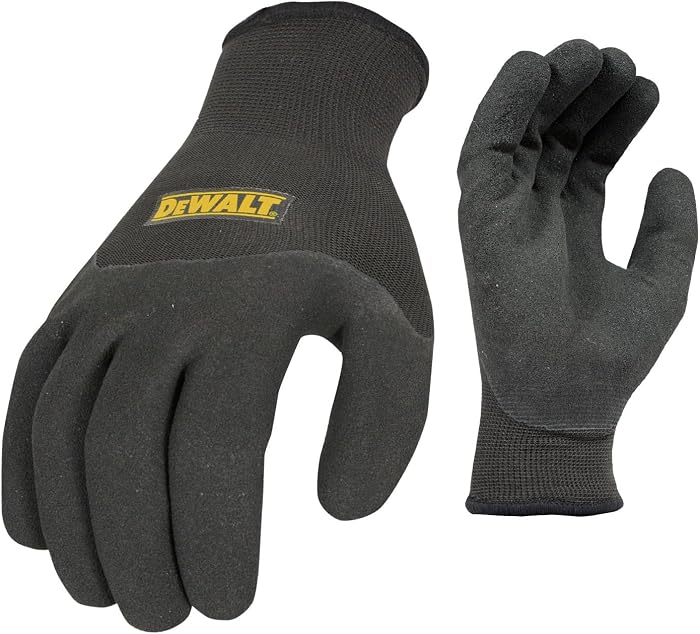
This is the cheapest glove in the guide, and it is not a novelty. The two-in-one design pairs a thermal liner with a grippy outer, and the liner is fully attached, so it does not pull out and wad up at the fingertips the way loose liners do after a few wearings.

What surprised us is the dexterity. These are thin enough to pick up and thread small nuts and bolts, and the grip holds on cold, wet metal, which is where cheap gloves usually give up. Warmth is real into the mid-20s; after an hour in the teens you will want something heavier, but for a glove this thin that is a fair trade rather than a flaw.

Durability is the gamble. Some pairs go years of light use; heavy daily work wears through the palm in weeks rather than months. At this money, plan on two or three pairs — one in the truck box, one by the door, one in the barn — and treat them as consumables rather than an investment.

Worth Noting

  • Wears through fast under daily use
  • Runs a touch large
Our Verdict

A genuinely useful cheap glove: thin enough to work in, grippy on cold metal, and priced so you can keep a spare pair in the truck.

Check Latest Price
7

Mechanix ColdWork M-Pact Best for Impact Tool Work

Mechanix Wear: ColdWork M-Pact Insulated Winter Work Gloves

Impact tool work

Field Score 89/100
Insulation
Insulated
Intended Use
Cold-weather tool work
Knuckle Protection
Rubber armor
View on Amazon

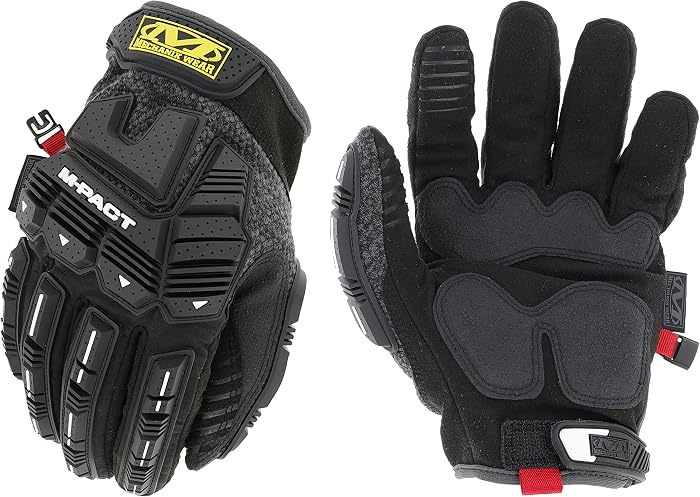
The rubber armor across the back of the hand and knuckles is what separates this from everything else here. If your winter work involves a wrench slipping, a ratchet kicking back, or a hub that needs persuading, that padding earns its keep in the first week rather than the first season.

The rest of the glove is the M-Pact pattern with insulation added, and the balance is good: warm enough to keep your fingers working in serious cold, thin enough to feel a fastener. It fits big, so go down a size. The wrist closure is easy to work with a glove already on, and you can answer a phone without peeling it off.

Keep it out of the snow. There is no waterproof layer, and the fabric back soaks up a wet day; heavier wet work wears the fingertips faster than the armor suggests. For a cold garage, a service truck, or a site where the hazard is impact rather than water, it is the best glove in this group, and it is the one we reach for when a job involves knuckles near steel.

Worth Noting

  • Runs about a size large
  • Soaks up water
Our Verdict

The one to buy when impact, not water, is the hazard — armored knuckles, real warmth, and enough feel to keep working, in a size down.

Check Latest Price
8

Schwer FreezeGuard-X Best for Sharp-Edge Work

Schwer FreezeGuard-X Winter Work Gloves for Men and Women

Sharp-edge work

Field Score 88/100
Palm
Nitrile foam
Liner
Acrylic terry
Cut Level
ANSI A9
Water Resistance
Not water resistant
View on Amazon

ANSI A9 is the top of the cut-resistance scale, and it is the reason to look at this pair at all. HPPE yarn with metal wire spun into it, wrapped around an acrylic terry liner: if your winter work puts razor edges, sheet metal, or broken glass near your hands, nothing else in this guide is in the same conversation.

Warmth is secondary but real. The terry liner is rated for 0 to 32 degrees, and while we would not stand around in single digits in them, they keep fingers usable while you are handling material. The nitrile foam palm grips wet or greasy parts better than bare knit and does not go slick the way plain yarn does.

Two honest caveats. They are not water resistant at all, so wet snow soaks straight through and these are a dry-cold glove. And the sizing is inconsistent between pairs, running large on some and small on others, so check the chart instead of assuming your usual size. The fingertips are the first place to wear when you handle abrasive stock all day.

Where that leaves them: these are the gloves for the job where the cut hazard is the reason you put gloves on. Rank them on warmth and they sit mid-pack; rank them on what they keep your hands out of and they are the only pair here that qualifies. Keep a warmer pair in the truck for the walk between tasks.

Worth Noting

  • Not water resistant
  • Sizing is inconsistent between pairs
Our Verdict

Sharp edges are the winter problem these solve — the A9 rating is the highest protection here, with warmth as a bonus rather than the point.

Check Latest Price

How We Tested Winter Work Gloves

We started with two dozen gloves pulled from listings and customer reviews, then sorted them by insulation style — leather palm with knit wrist, latex-coated, gauntlet cuff, knit cuff — along with cut-resistance ratings and whether the pattern was cut for men's or women's hands. Fourteen pairs made the cut, and we wore them through four months of winter.

Warmth and water resistance fail together, so we tested them together. Each pair went out for 45-minute stretches at temperatures in the teens and twenties — shoveling after storms, splitting firewood, loading a truck bed — and we noted when fingertips went numb versus when the whole hand followed. For water, we stood each glove in a tray of slush for ten minutes with a dry paper towel stuffed inside, then squeezed the towel to see what had gotten through. We repeated it with a wet jacket sleeve pressed against the cuff, since that's where leaks usually start.

Grip got checked on a wet wrench, an oily shovel handle, and a length of rope, plus the small stuff — picking up screws, buckling a strap, tapping a touchscreen with the glove still on. Durability meant a full week of daily work in a single pair, then a close look at palm abrasion, seam separation, and whether the lining pulled out inside-out when we yanked a wet glove off.

We compared cut ratings and noted where the protection stopped; several pairs were reinforced across the palm but bare at the back of the hand. Sizing was measured against each chart, then tried on hands that run wide and fingers that run long, because fit changes everything about dexterity.

How to Choose Winter Work Gloves

Start With What Gets Wet

Water ends a work day early, so choose the shell before anything else. A fully dipped latex or nitrile glove keeps water out completely and grips better wet than dry; treated leather sheds a shower and then wets out; untreated pigskin or cowhide soaks through, and once the insulation is wet it stops insulating.

The trap is the word waterproof on a leather glove — it usually means treated, water resistant, or a sewn-in insert, and an insert that is not breathable leaves your hands damp from the inside by afternoon. Match the shell to the worst hour of your day, not the average one.

Insulation Is About How Much You Move

Insulation traps heat you generate, which is why the warmest glove here is also the wrong glove for hard work. Loading hay or swinging an axe at 30 degrees, a thin insulated glove or a coated shell is plenty. Standing on a lift, watching a gate, or sitting in a cold truck, you want the heavy knit-cuff pair.

Too much insulation carries its own cost: sweaty hands are cold hands the moment you stop, and thick liners take away the finger feel you need for fasteners. Take the gloves off for the heavy stretch, not just for lunch.

Size for the Liner You'll Actually Wear

Sizing runs on palm circumference, so measure around the knuckles of your dominant hand with a tape and compare that number to the maker's chart rather than to the size you wear in disposable gloves. Most pairs here miss by a full size in one direction or the other — the Carhartt and Wells Lamont run small, the Kinco and Mechanix run large.

If you plan to add a thin liner for deep cold, size for the liner. Then look at the cuff: a knit wrist seals at the jacket sleeve and keeps chaff out, while a longer cuff blocks snow but catches on tools and benches.

Grip and Dexterity: What You Trade

A sandy latex or nitrile palm holds a wet handle far better than leather does, but the coating costs feel — the thicker the dip, the harder it is to pick up a washer. Cut-resistant yarns add protection and a little slickness, and armored knuckles add bulk across the back of the hand.

If you spend the day threading fasteners, wear the thinner glove and keep a warmer pair in your pocket for the walk in. If you spend it dragging hose, chain, or wet rope, take the grip and accept the loss of feel.

Frequently Asked Questions

Final Verdict

For a winter of outdoor work, we buy the Kinco 1927KW. It is warm enough for a hard frost, soft enough to keep on all day, and built around a pigskin palm that takes abrasion better than anything else here at the money. Wax the leather and it handles a damp morning.

For work that is wet rather than merely cold, the SHOWA 451 is the better glove — the latex coating keeps hands dry and bites a wet handle. And if the cold is the entire problem, standing and waiting rather than moving, the Carhartt knit cuff is the warmest thing in this guide, provided you order a size up and dry it out between shifts.