The 7 Best Wood Sealers for Pressure-Treated Wood of 2026

Pressure-treated lumber is the cheapest way to build a deck, right up until you ask what goes on it. New boards come home wet with treatment, and the wrong sealer either locks that moisture under a film that peels by spring or soaks in so thin the sun grays the wood inside a season. Then there's color: a clear coat keeps the raw look but gives up UV defense, while a semi-transparent earns that protection and an even tone by hiding some grain.

We've had 12 sealers in rotation since early spring, brushed and rolled and sprayed onto a new pressure-treated deck, a fence line, and a stack of offcuts behind the garage. The differences showed up fast: how a product wets out, whether it streaks or flashes as it dries, and how water still beads months later. Ease of application counted too — a sealer that needs a whole Saturday and a second pair of hands is one you will never reapply.

Worth knowing before you buy: coverage numbers assume smooth, dry lumber, which new pressure-treated boards are not. Let the wood dry, test a scrap first, and expect the first coat to drink more than the label promises. The picks below are the ones that held up through all of it.

Our Top Picks

The 7 Best Wood Sealers for Pressure-Treated Wood of 2026

1

Ready Seal Exterior Stain & Sealer Best Overall

Ready Seal Exterior Wood Stain & Sealer

Decks and fences

Field Score 92/100
Base
Oil-based
Color
Natural Cedar
Coverage
625 sq. ft. per 5-gallon pail
Container Size
5 gallons
View on Amazon

The phrase on the pail is goof proof, and for once it means something specific: no laps, no runs, no back brushing. On a long run of fence pickets or deck boards, that changes the shape of the job. You spray or roll a section and keep moving, and the oil blends itself where wet meets dry instead of leaving the dark overlap bands a thinner sealer leaves behind.

We watched for exactly that, because a fence is where a fussy product punishes you: pickets are narrow, vertical, and there are hundreds of them. It went on evenly with a pump sprayer and covered without dripping down the faces of the boards, and it takes rain within minutes of application and doesn't mind direct sun, which in a real summer is worth more than the label suggests. The tint is the one thing to check first. Natural Cedar lands warm, and on some boards it reads more orange than the swatch, so test a spare picket or the back of a board before you commit to the front of the house.

Our read: the blending is worth more than any single number on the pail. Even coverage is what makes a DIY job look hired, and the semi-transparent pigment does the second half of the work by evening out lumber that was never going to match board to board. It's also a recoat you can do without sanding or stripping, which is the difference between a job you'll repeat and one you'll keep putting off.

The catch is scale. Five gallons covers about 625 square feet, which is a whole deck or a long fence line and far more than a porch rail or a single gate needs. And if you want to keep the wood's own color, including the silver-gray it takes on as it weathers, a clear sealer is the right tool. This one is a color commitment as much as a protective coat.

Worth Noting

  • Natural Cedar is the only color in this pail
  • A pail is a large up-front buy
Our Verdict

For a whole deck or fence line, this is the sealer we reach for: the oil blends its own edges, so a first-timer gets an even, professional-looking finish without chasing lap marks.

Check Latest Price
2

Thompson's WaterSeal Clear Wood Sealer Best Budget Clear

Thompson's WaterSeal Clear Wood Sealer

Budget clear sealing

Field Score 91/100
Base
Solvent-based
Finish
Clear
Coverage
Up to 350 sq. ft. per gallon
Container Size
1 gallon
View on Amazon

Nothing else here covers as much ground per jug. A single gallon goes up to 350 square feet, against roughly 100 to 150 for the tinted stain-sealers on this list, and for a fence, a run of raised beds, or the underside of a porch, that math is most of the argument.

The appeal is what it doesn't do as much as what it does. It soaks into the wood rather than laying a film on top, so the grain and texture of pressure-treated lumber still read through, there's nothing to peel, and a second coat goes on without sanding or stripping. In our testing the water beading showed up immediately, which is the result that matters most from a sealer, and it darkens new lumber by a shade in a way we liked.

What you give up is color. Clear means clear: it won't hide the greenish cast of fresh treated boards or the gray of an old fence, and because it's a penetrating waterproofer rather than a coating, it's a habit as much as a purchase. Plan on refreshing it every year or two, and more often on a deck that takes full sun and rain. Give it a dry day and some patience, too, since cure time stretches in humid weather and it stays tacky longer than you'd expect.

Worth Noting

  • Needs a fresh coat every year or two
  • No pigment, so gray and green still show
Our Verdict

If you want to seal a lot of pressure-treated lumber cheaply and keep it looking like wood, this clear gallon is the one we point to first.

Check Latest Price
3

Eco Advance Siloxane Waterproofer Best Around Plants and Pets

Eco Advance Siloxane Waterproofer – Exterior Wood Siloxane Odorless Spray-On Application Waterproofer

Beds and coops

Field Score 89/100
Base
Water-based
Finish
Clear
Application
Garden pump sprayer
Container Size
1 gallon
View on Amazon

When the wood is a raised garden bed, a coop floor, or a picnic table, the question changes: it isn't only whether the coating sheds water, it's what's in it. This one is a water-based siloxane waterproofer sold as non-toxic and non-flammable, and that's the reason it earns a spot here ahead of better-known names.

What sold us is the application. It's thin, closer to water than to a stain, and it's meant to go on with an ordinary garden pump sprayer, which turns a fence line into a short job rather than an afternoon with a brush. It dries clear and leaves no film, and because the coating stays vapor-permeable, treated lumber that's still giving off moisture can keep drying through it instead of sweating under a skin.

Two things to know before you buy. Repellency builds over the first few weeks rather than appearing the moment it dries, so don't judge it on day two; the beading gets better. And there's no pigment in it, so it won't even out a fence that's already patchy. It protects the wood you have rather than changing how it looks.

Worth Noting

  • Needs your own pump sprayer to apply
  • Repellency builds over the first few weeks
Our Verdict

For raised beds, coops, and anything the kids or the chickens rub against, this is our pick: water-based, sold as non-toxic, and it sprays on in minutes.

Check Latest Price
4

Seal-Once Marine Waterproofer Best for Docks and Wet Wood

SEAL-ONCE Marine Penetrating Wood Sealer and Waterproofer

Constant moisture

Field Score 88/100
Base
Water-based
Finish
Clear
VOC Level
Ultra-low VOC
Container Size
1 gallon
View on Amazon

A dock lives a different life from a deck. It's wet, then dry, then wet again, and the wood never gets a real chance to dry out between soakings. That's the condition this one is built for: it's the marine version of a penetrating waterproofer, aimed at docks, retaining walls near rivers and ponds, and boat wood.

It's water-based and ultra-low VOC, and it works below the surface instead of on top of it. The coating soaks into the fibers, stays flexible and breathable, and doesn't build a film that can lift at the edges. It goes on thin, brushes or sprays out easily, dries clear, and leaves the wood looking sealed and textured rather than plastic-wrapped.

Our take: this is the pick when the wood is in or near water, and it's overkill for a covered porch. The caution we carry is durability. A coating like this lives and dies by prep, and the same product can hold for several seasons on well-dried, properly cleaned wood and give up inside a year where moisture was trapped underneath or the surface went down dirty.

Worth Noting

  • Costs more per gallon than most here
  • Life depends on dry, clean wood at application
Our Verdict

For a dock, a retaining wall at the pond edge, or a trailer bed that lives outdoors, this marine-grade sealer handles constant moisture better than anything else here.

Check Latest Price
5

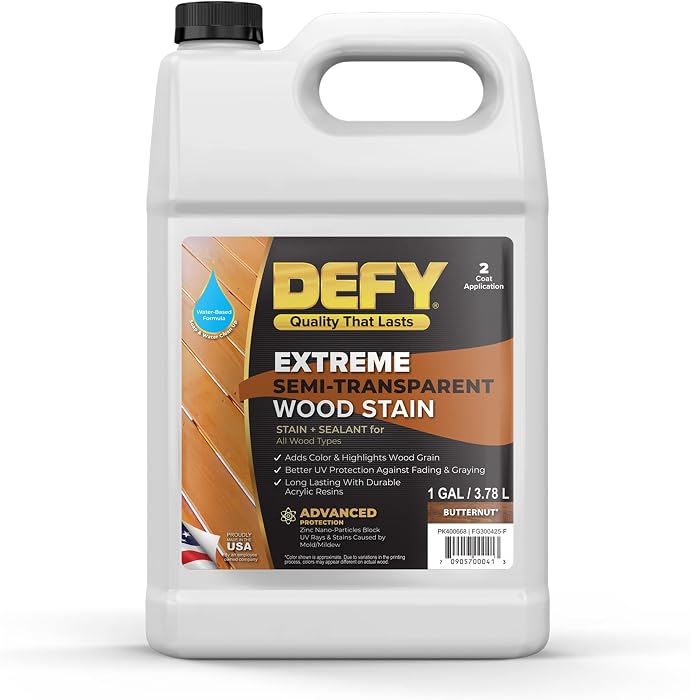
DEFY Extreme Wood Stain & Sealer Best UV Protection

DEFY Extreme Wood Stain and Sealer in One

Sun-exposed decks

Field Score 87/100
Color
Butternut
Finish
Semi-transparent matte
Coverage
100–150 sq. ft. per gallon
Container Size
1 gallon
View on Amazon

Sun, not rain, is what turns a treated deck silver-gray: UV breaks down the lignin at the surface and the boards go pale and fuzzy. This one carries zinc nano-particles for exactly that job, in a semi-transparent water-based stain and sealer that puts pigment and UV protection on the boards at the same time.

We like the water-based chemistry for a big deck. It's thin, it goes on with a sprayer, brush, or roller, spills wipe up with soap and water while they're wet, and the matte finish reads like stained wood rather than a coating sitting on top of it. Butternut warms up pressure-treated lumber without hiding the grain, which is about as good as those boards are ever going to look.

Two practical things decide how it turns out. Cover it in one session if you can, because a deck done in halves on two different days can dry to two different shades and no amount of careful brushing fixes that afterward. The other is coverage: 100 to 150 square feet per gallon is the thirstiest figure here, so measure before you order, since a big deck takes more than most people guess.

Worth Noting

  • Low coverage at 100 to 150 square feet per gallon
  • Color varies between separate batches
Our Verdict

For a south-facing deck that grays faster than you can keep up with, this zinc-fortified stain-sealer is the one here built to block the sun.

Check Latest Price
6

Seal-Once Nano+Poly Sealer Best for Log Siding, Floors

Seal-Once Nano+Poly Wood Sealer and Waterproofer

Log siding, floors

Field Score 86/100
Base
Water-based
Finish
Clear
Wear Layer
Polyurethane-reinforced
Container Size
1 gallon
View on Amazon

The other Seal-Once on this list swaps the marine label for polyurethane. Where the Marine version is built for wood that stays wet, this one is built for wood that gets walked on: decks, porch floors, trailer beds, swing set platforms, log siding.

The idea is the same, a water-based, ultra-low-VOC sealer that penetrates the fibers and leaves a flexible, breathable barrier instead of a film, with polyurethane added for wear. On a surface that takes boots and dragged coolers, that's the difference between a coating that scuffs through and one that keeps repelling water while it wears.

Apply it with a light hand. It's water-thin, so on vertical work like log siding it runs and finds every crack, and you'll want to keep the brush moving rather than loading it up. On horizontal boards it soaks in fast, dries quickly, and takes a second coat without much fuss.

Where it lands for us: a solid choice for a working surface, and a harder sell at a premium price for what is, in the end, a clear coat you'll be renewing. If the wood is more often wet than worn, the Marine version is the better buy.

Worth Noting

  • Premium price for a clear sealer
  • Water-thin formula runs on vertical surfaces
Our Verdict

A tough, water-based clear for log siding, porch floors, and trailer decks, though the price keeps it behind the Marine version for most jobs.

Check Latest Price
7

Olympic WaterGuard Clear Sealer Best for Touch-Ups, Cut Ends

Olympic WaterGuard 11 oz Clear Waterproofing Wood Sealer

Touch-ups, cut ends

Field Score 85/100
Base
Water-based
Dry Time
12–24 hours
Surfaces
Unfinished, pressure-treated, and finished wood
Container Size
11 oz
View on Amazon

Eleven ounces is a limitation, not a feature, and it's worth saying so up front: this is a touch-up can, not a deck sealer. We got the most use out of ours at the cut end of a post, the notch made for a gate hinge, the top rail a roller missed, and a birdhouse built from scraps. Those are small, awkward spots where opening a gallon and dirtying a brush is more work than the repair itself.

It's water-based and cleans up with soap and water while it's wet, the label gives 12 to 24 hours to dry, and Olympic lists unfinished, pressure-treated, and finished wood right alongside concrete, brick, and stucco. That last part is handy when the same post sits in a concrete footing and you want one can for both. Just don't plan a fence around it. Listed coverage is low, and a can empties fast on anything bigger than a repair.

Worth Noting

  • Only handles touch-up and repair work
  • Costs far more per ounce than a jug
Our Verdict

Keep a can in the truck for cut post ends, gate hardware, and touch-ups: it's the handiest way to seal small spots without opening a gallon.

Check Latest Price

How We Tested Wood Sealers for Pressure-Treated Lumber

We built the shortlist from what actually sells in the sealer aisle, then cut anything not labeled for exterior decks and fences, anything that wouldn't state a coverage rate, and duplicate formulas from the same maker. That left 12 products spanning clears and semi-transparents, water-based and oil-based, aerosol cans, pump sprayers, and a few stain-and-sealer hybrids.

Testing ran from early spring through late fall on a pressure-treated deck I'd let weather for a full season, a long fence run, and a dozen offcuts kept aside as control boards. I applied every product three ways where the label allowed — brush, roller, and sprayer — and timed each pass per 100 square feet, noting lap marks, streaks that flashed as the coating dried, how hard it was to keep a wet edge, and how strong the stuff smelled while I worked. Each section got two coats on the maker's recommended schedule.

Once cured, the real work started. I hosed each section for five minutes and watched whether water beaded or sank in, then checked again after every heavy rain. I walked the deck in muddy boots, dragged chairs across it, and tracked how the color moved through a summer of sun — whether the clears let the wood silver, whether the semi-transparents went chalky, and whether anything lifted at the edges. Opacity got judged on the same scrap boards: how much grain survived coat one, and whether coat two turned the surface muddy. Value came last, as square feet covered per dollar divided by how long the finish looked like it still had life in it.

The boards that looked best in month one were rarely the ones that looked best in month eight, which is exactly why they stayed out there.

How to Choose a Sealer for Pressure-Treated Wood

Let New Treated Lumber Dry First

Boards come off the rack saturated, and a coating applied over that moisture traps it in. You get a blotchy finish, poor absorption, and lumber that can cup or check later. The calendar is a rough guide at best, because drying time depends on thickness, sun, and humidity, so use a water test instead: sprinkle a cup across a few boards. If it beads on the surface, the wood is still sealed against you and needs more time. If it soaks in within a few minutes, the wood is ready.

Run the same test on an old deck to decide whether it's time to recoat. Beading that stops within a season is the signal, not the date on the can.

Decide What You Want the Wood to Look Like

A clear waterproofer soaks in, keeps the grain and texture visible, and lets the lumber keep its own color, including the silver-gray it takes on under sun. A semi-transparent stain-sealer adds pigment, evens out a patchy fence or an old deck, and warms up the greenish cast of new treated wood, but it commits you to a tone and it is far less forgiving of a job finished in two sittings.

If holding the color matters, read the label for UV blockers. Graying is a sun problem, and a clear that carries a blocker behaves very differently from one that doesn't — that's the whole difference between the finish lasting two years and two seasons.

Match the Coating to How Wet the Wood Stays

Most decks and fences need general exterior protection. A dock, a retaining wall at the pond edge, or a trailer bed that sits out in the weather needs a coating made for constant moisture, which is a different product at a different price. Paying for the marine version on a covered porch is money spent for nothing.

Chemistry matters too. Oil-based sealers soak in deep, blend their own edges, and forgive an uneven hand, which is why the most forgiving product here is an oil. Water-based products dry faster, clean up with soap and water while wet, and are the sensible choice when the wood sits near a garden, a coop, or a water feature you care about.

Do the Coverage Math Before You Buy

Coverage per gallon runs from about 100 square feet to more than 350 across the products here, so the price on the jug tells you almost nothing until you divide by the square footage you actually have. Measure length times width, add the railings, and compare how many gallons the job takes rather than what one container costs. A thirsty semi-transparent stain can need two or three times the liquid of a penetrating clear on the same deck, and that gap usually erases the difference in sticker price.

Frequently Asked Questions

Final Verdict

For most people sealing a pressure-treated deck or fence, the Ready Seal pail is the answer. The oil blends its own edges, so an even finish doesn't depend on perfect technique, and the tint pulls mismatched boards together — that combination is worth more than any single number on a label.

Two requirements change our recommendation. If you want to keep the wood's own color and cover a lot of square footage cheaply, Thompson's clear gallon costs a fraction as much per square foot and does the job; you're simply signing up for a recoat every year or two. And if the wood is in the water rather than near it, skip both and go with Seal-Once Marine.