The 8 Best Work Gloves of 2026

Most work gloves announce themselves at the worst possible moment: a seam letting go halfway through a stack of firewood, a palm so slick you pull the glove off to break a bolt loose. Leather shrugs off thorns and abrasion but stiffens once it's wet; thin coated knits give you dexterity and not much else. The right pair is the one you forget you're wearing, and getting there comes down to fit and construction.

Over the past five months, my team and I have worn 14 pairs through firewood, mulch, and one stubborn brake job. Fit mattered more than material: gloves are sized like boots, and most people size up out of habit, leaving material bunched in the palm that kills your grip. A pair that's baggy at the knuckles will not keep your hands warm, either.

We also weighed warmth against comfort, water resistance against breathability, and price against how many seasons a pair might realistically last. The picks below survived all five months, sorted by the hands they suit.

Our Top Picks

The 8 Best Work Gloves of 2026

1

WZQH Leather Work Gloves Best Overall

WZQH Leather Work Gloves – Leather Work Gloves for Men or Women.Gardening

Thorns and heat

Field Score 97/100
Palm
Split cowhide
Lining
Cotton
Abrasion Rating
ANSI level 4
Heat Resistance
350°F
View on Amazon

The least expensive pair in this guide is also the one we reach for first, and the price is the least interesting thing about it. WZQH cuts this glove from split cowhide, lines it with cotton, and rates it at ANSI abrasion level 4 and ANSI heat level 4 — the only glove here that carries both. That pairing is what makes it the default: it handles thorns, embers, and the grit of a shovel handle without asking for a break-in period first.

Where it earns its keep is the work that kills cheaper gloves — pulling brush, stacking firewood, dragging chain, hauling lumber and tires. The cowhide is thick enough that a blackberry cane or a splintered pallet stops at the leather, and the keystone thumb keeps the crotch of the hand from binding when you close your fist around a handle. The adjustable wrist strap pulls the cuff in tight enough to keep chaff and dirt out, which matters more than it sounds like it does.

Order up if you're between sizes. The fit runs snug across the palm, and while the leather relaxes as it warms, it won't gain you half a size. The coffee-grey finish is a small pleasure: it still looks like a work glove after a week in the dust, where lighter leather looks wrecked by lunch.

Worth Noting

  • Not water resistant; wet leather stays wet
Our Verdict

Start here: the most protective leather glove in this guide for thorns, hot metal, and hard outdoor chores, and the least expensive of the lot.

Check Latest Price
2

Mechanix Wear Original Best for Dexterity

Mechanix Wear Original Tactical Covert Gloves

Dexterity and touchscreens

Field Score 96/100
Palm
0.8 mm synthetic leather
Closure
Hook and loop
Touchscreen
Yes
Abrasion Rating
ANSI level 3
View on Amazon

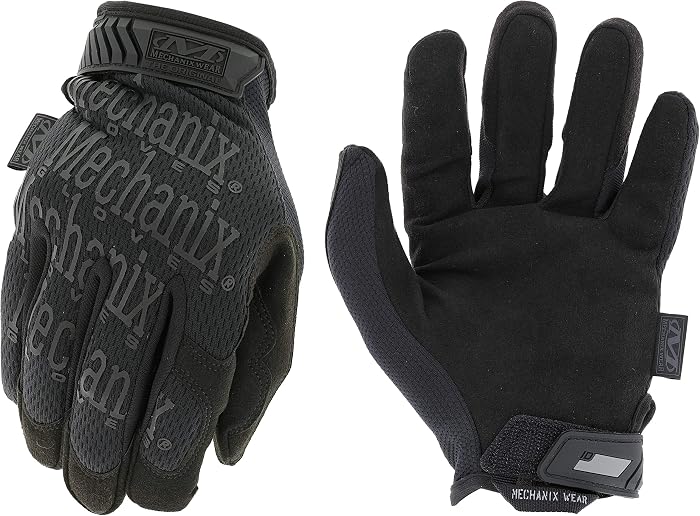
These are the opposite of the cowhide pair: thin, close-fitting, and built around feel rather than armor. The palm is 0.8 mm synthetic leather, thin enough to work a touchscreen through and to pick a washer out of a tray, and the back is a stretch woven panel with vented padding at the heel of the hand.

This is the glove we put on when the job needs fingers — running a ratchet, threading a nut, loading a magazine, riding. A welded panel at the base of the thumb is the detail we appreciate most, because that's where a glove usually splits first, right where you squeeze hardest on a wrench. The hook-and-loop cuff cinches and stays, and the whole thing goes in the washing machine when it gets greasy.

The cut is slim through the fingers, so go up a size if your hands run wide; the cuff adjusts enough to take up the slack. It's also the glove we leave in the truck, because it's the one you can answer a phone in without pulling it off.

Worth Noting

  • Fingertips wear through on abrasive jobs
Our Verdict

The one to buy for feel: a thin touchscreen palm for wrenching, small parts, and range days, with less armor than the leather picks.

Check Latest Price
3

Ironclad Ranchworx RWG2 Best Heavy-Duty Leather

Ironclad Ranchworx Work Gloves RWG2

Rope and wire

Field Score 95/100
Palm
Goatskin leather
Weight
4.8 oz
Fingertips
Seamless rolltop
Reinforcement
Kevlar at wear points
View on Amazon

Ironclad builds the Ranchworx around two ideas: goatskin for feel and Kevlar for the places that wear out. The palm is 100 percent goatskin, the shell blends nylon and spandex for stretch, and Kevlar is laid into the high-wear zones. The fingertips are rolltop and seamless, so there's no seam running across the pad — and no seam to rub, then split, right where you grip.

On the hand it's the nicest leather in the group. Goatskin is softer than the split cowhide on our top pick and stays soft in the heat, the TPR puller at the cuff lets you yank them on with one wet hand, and at 4.8 ounces a pair they don't feel like a leather glove at all until you look down.

Where they give ground is the fingertip. The same thin goatskin that lets you feel a knot in a rope is the first thing to go, so treat these as rope, wire, cable, and chain gloves rather than concrete and gravel gloves. The terry patch on the back of the thumb is the detail we keep coming back to — it's there to wipe a sweaty face with, and on a hot day you'll use it every ten minutes.

Worth Noting

  • Hand wash only, no machine cycle
  • Pricier than the split-cowhide leather pick
Our Verdict

These are the rope-and-wire gloves: soft goatskin with Kevlar in the wear zones, for hands that live on chain, cable, and knots.

Check Latest Price
4

SHOWA Atlas 300 Best Wet-Grip

SHOWA Atlas 300 Original 1994 Crinkle Grip Work Gloves

Wet, muddy grip

Field Score 94/100
Coating
Crinkle rubber
Washable
Yes
Protection
Abrasion-resistant coating
View on Amazon

Wet work is a different problem, and the Atlas 300 solves it better than anything else here. A smooth leather palm turns slick on a wet rope; this one answers with a crinkle rubber coating that keeps texture between your hand and whatever you're holding. It pulls on like a knit, breathes through the back, and stays grippy when everything in the bucket is soaked.

This is the pair for concrete block, wet rope, muddy handles, and a pail of trowels. The coating resists cracking and glazing, the grip doesn't fade as the glove wears in, and a pair lasts long enough that buying them by the pack makes sense — one in the bucket, one in the truck, one drying on the porch.

They wash and come back soft rather than stiff, which is more than most coated gloves manage, and that's the real argument for the pack: rotate, wash, repeat, stop thinking about it.

Worth Noting

  • No insulation or padding on the back
Our Verdict

The wet-work answer: crinkle rubber that holds wet rope, concrete block, and muddy handles, sold by the pack so a dry pair is always next in line.

Check Latest Price
5

MaxiFlex Nitrile Micro-Foam Best for Precision Work

MaxiFlex Seamless Knit Nylon Gloves with Nitrile Coat and Micro Foam Grip on

Precision and assembly

Field Score 93/100
Liner
Seamless knit nylon
Coating
Nitrile micro-foam
Washable
Yes
View on Amazon

This is the thinnest glove here and the one with the least between your hand and the work: a seamless nylon knit with a nitrile micro-foam coating on the palm and fingers. Pull one on and the difference registers in about ten seconds — you can pick a screw out of a bin or find a nut by feel without taking it off.

The coating grips dry metal and clean plastic, and it stays tacky when your hands sweat. The knit back breathes enough to wear through a shift without your hands going pruney, and they machine wash and come back the same size, so a pair that looks finished is usually just dirty.

For assembly, wiring, small parts, and light mechanic work, this is the best glove in the guide. Where it falls down is everything the leather picks are for — thorns, hot metal, sharp edges, cold mornings — because a knit back and a thin nitrile skin will not stop any of them. Buy it as the glove you wear when you need fingers, not when you need armor.

Worth Noting

  • Highest listed price in this guide
Our Verdict

If your work is small parts and wiring, this is the pair: bare-handed feel with a coating that grips, and nothing at all for thorns or cold.

Check Latest Price
6

Ironclad General Utility GUG

Ironclad General Utility Work Gloves GUG

All-around utility

Field Score 92/100
Fit
Performance fit
Pack
1 pair
Washable
Yes
View on Amazon

The GUG is the glove for the person who wants one pair in the truck door and nothing else to think about. Ironclad cuts it as a do-everything utility glove — padded palm, performance fit, machine washable — and it's the one that ends up handling loppers, gas caps, rocks, and moving boxes.

There's a lot to like about a glove this easy. The padding takes the sting out of a shovel handle or a rock, the grip holds on smooth handles and wet stone, and washing them doesn't ruin them. The fit is where the arguments start: the same size reads true on one pair and noticeably tight on the next, so measure around your palm and go with the larger number if you're on the line.

It isn't the glove to buy for a season of hard, abrasive work — that's what the leather picks are for — but as the pair that lives in the garage and gets washed when it's filthy, it's easy to recommend. The black palm is a small mercy: grease and dirt don't show the way they do on tan gloves.

Worth Noting

  • Seams between fingers give out under hard use
Our Verdict

A sensible one-pair answer for the truck or the garage: padded, machine washable, and forgiving of whatever the weekend throws at it.

Check Latest Price
7

Wells Lamont Cowhide Work Gloves

Wells Lamont Work Gloves Men and Women

Small hands, garden

Field Score 91/100
Palm
Cowhide leather
Sizes
Men's and women's
Closure
Adjustable wrist strap
View on Amazon

The detail that separates this pair from the other leather gloves here is the strap. Wells Lamont cuts a supple cowhide glove and closes it with an adjustable wrist strap, which does two jobs: it keeps dirt and chaff from riding up your sleeve, and it stops the glove sliding around when your hands are sweaty.

The leather is the softest of the low-cost pairs. It breaks in within a couple of wearings, breathes well enough for summer gardening, and grips a shovel or a lopper handle without slipping. It's also the pair that works for smaller hands — the sizing runs across men's and women's charts, and the smaller sizes fit hands that swim in a standard large.

Sizing is the catch. This glove runs small and the middle three fingers are cut short, so go up a size, or two if you're at the top of a range, and don't count on the leather making up the difference.

Where it earns its place is as an inexpensive, comfortable leather glove for garden and yard work, especially if you have small hands and a drawer full of gloves that gap at the fingers. Once the work turns abrasive enough to chew leather, the split cowhide on our top pick is the better long-term buy.

Worth Noting

  • Stitching and wrist straps fail early
Our Verdict

The pair to buy for garden and yard work if your hands run small: soft cowhide, an adjustable strap, and a price near the bottom of this group.

Check Latest Price
8

Carhartt A511 Insulated Glove

Carhartt Men's Waterproof Insulated Knit Cuff Glove

Cold, wet weather

Field Score 90/100
Cuff
Knit
Weight
7.2 oz
Insulation
Yes
Waterproof
Yes
View on Amazon

The Carhartt is the only glove here built for cold, and it's built for cold the way a work boot is built for mud: waterproof shell, insulation, knit cuff. The A511 runs about 7.2 ounces a pair, roughly twice the weight of the Mechanix, and you feel that the first time you pull them on.

What the weight buys is warmth and dry hands. The insulation is enough for a morning on a tractor or in a stand, the shell sheds rain and wet snow, and the knit cuff seals against a jacket sleeve so snow doesn't find your wrist. For feeding stock, plowing, or a long cold sit, nothing else here does the job.

The trade-off is breathability, and it's real. There's no venting in an insulated waterproof glove, so hands come out damp after a few hours of hard work and the liner holds that moisture. Dry them out overnight and rotate a second pair if you're in them daily.

Buy these for winter chores and cold-weather hunting, and take them off when the work needs fingers. The bulk costs you most of the dexterity the synthetic pairs give you, and wearing them in July is its own punishment.

Worth Noting

  • Runs small
Our Verdict

Buy these for cold, wet outdoor work — feeding, plowing, a freezing stand — where warmth and a waterproof shell matter more than dexterity.

Check Latest Price

How We Tested 14 Pairs of Work Gloves

We started by pulling the work glove lineups from brands we already trust and reading through customer reviews for complaints about seams splitting, sizing running small, and leather stiffening after a rain. From there we ordered 14 pairs spanning cowhide, coated knit, and insulated waterproof styles, in sizes from small to XXL where available, with the mix spread across budget, mid-range, and heavier-duty leather. Testing ran from late winter into early spring, which meant cold mornings, wet ground, and the first garden work of the year all landed inside the same five months.

Each pair got worn for full work sessions rather than a quick try-on: splitting and stacking firewood, hauling bags of mulch, pruning roses, running a drill, changing the oil, swapping brake pads, and washing the car with a hose. To judge fit, we measured each tester's hand circumference against the maker's size chart, then noted whether fingertips hit the ends, whether material bunched at the palm, and how often we had to pull a glove off to pick up a screw. Warmth and comfort got checked twice per pair, once on a 25-degree morning and again in a warm garage, with notes on cold fingertips and on sweat.

For durability and construction, we checked the thumb crotch and palm seams after every session and logged where stitching frayed first; a few pairs wore through at the fingertips within weeks while others looked untouched. Water resistance was simple: two minutes under a running faucet, a wet car wash, then a look that night at whether the leather had darkened or dried stiff. We ran the machine-washable pairs through three cycles and checked for shrinkage. Versatility came down to whether one pair could go from garden bed to truck bed to a quick repair without being swapped, and value to how many weekends we got out of them before the first real wear showed.

How to Choose Work Gloves

Start With the Palm

Three materials cover almost everything here, and they fail in different ways. Split cowhide and goatskin take abrasion and thorns, shrug off embers, and stiffen when they get wet. Coated knits breathe and grip but offer nothing against a thorn. Thin synthetic leather gives the most feel and the least armor. Abrasion ratings are worth comparing: our top pick carries ANSI level 4, where the synthetic pair carries level 3.

For one pair that handles yard, ranch, and construction work, buy leather. If your days are small parts, wiring, or a phone in your hand, buy synthetic and accept that you're replacing it sooner.

Measure, Then Size Up

Glove sizing is not shoe sizing, and it is the single most common way a good glove turns into a drawer ornament. Measure around the widest part of your palm just below the knuckles and match that to the maker's chart rather than your usual letter. Leather relaxes as it warms but not by a full size, and two of the leather gloves here run snug enough that going up is the safer call. Coated knits and synthetic leathers do not stretch at all.

The cuff is the other half of fit. A knit cuff seals against a jacket sleeve, an elastic slip-on is the fastest on and off, and a strap or hook-and-loop cuff is the only one that keeps chaff out of a loose glove. If you have ever had a glove twist off your hand while pulling on a wrench, that was a cuff problem.

Match the Glove to the Hazard

Thorns, heat, and impact each ask for something different, and the marketing on a glove rarely separates them. Leather stops a blackberry cane; a coated knit does not, so keep a leather pair for brush even if you work in something thinner most days. Heat ratings are real but narrow: the cowhide here is rated to 350°F, which covers embers and a hot stove damper, not a welding arc.

None of these is cut-rated. A chainsaw, a circular saw, or a sheet-metal edge calls for a purpose-built cut-resistant glove, and a leather palm is not a substitute no matter how thick it feels.

Sweat, Water, and the Case for Two Pairs

Waterproofing and breathability pull in opposite directions, and insulated waterproof gloves almost always end damp inside after a few hours of hard work. If you work in rain or cold, buy two pairs and alternate them: one on your hands, one drying.

A thin nitrile-coated utility glove is the coolest thing in this guide and the fastest to dry; leather takes a day and stiffens while it does. Wash the synthetic and coated pairs when they get greasy, because grit left in the fibers is what turns a good grip slick.

Frequently Asked Questions

Final Verdict

If you buy one pair, buy the WZQH split cowhide. It is the most protective glove in this guide for the work most of us actually do — brush, firewood, fence line, hot metal — and it happens to be the least expensive, which is a rare combination and not one we're going to argue with.

Change the pick when the job changes. For wrenching, wiring, or anything that needs fingers, the Mechanix Original is the better glove; for wet rope and muddy block, the SHOWA Atlas; for rope, cable, and chain, the Ranchworx. Buy the Carhartt only if you're working outside in winter, and buy the leather pair first anyway.