The 5 Best Lightweight Work Boots of 2026

A lightweight work boot makes a promise that's easy to keep for a week and hard to keep for a year: fewer ounces, same support underneath. Shave weight out of the wrong places and you get a boot that feels wonderful on day one, then blows out at the seam or the heel counter by month four. I care a lot less about the number on the box than about what's left of the boot after a season of real work.

Our team spent eight months in 12 pairs, rotating them through full shifts on warehouse concrete, a residential job site, a greasy commercial kitchen, and plenty of weekend yard work. Some broke in beautifully and held their shape; a couple looked sharp out of the box but started separating at the toe seam.

One thing I'd tell a first-time buyer: weight is something you feel in the last two hours of a shift, not the first ten minutes, so judge a boot at 4 p.m. rather than at the register. The pairs below are the ones that earned a second day on my feet.

Our Top Picks

The 5 Best Lightweight Work Boots of 2026

1

Carhartt CMX4023 Lightweight Wedge Best Overall

Carhartt Men's CMX4023 Lightweight Wedge Moc Toe Chukka

Warehouse, light construction

Field Score 91/100
Toe
Moc toe
Sole
Wedge
Build
Lightweight
Height
4 inches
View on Amazon

The first thing we noticed about the CMX4023 is how little it feels like a work boot on your foot—and that is the point. The 4-inch cut and wedge sole keep the weight down and let you move through a warehouse or light construction site without the clomp of a traditional 6-inch boot. We think that makes it the best default here for someone whose day is spent on concrete, on ladders, and in and out of a truck.

The weight is not a marketing accident. This is the pick here with the strongest lightweight reputation, and the moc-toe shape gives your toes room without a steel-cap slab over them. The wedge sole puts a broad, stable platform underfoot, which is why it feels calmer on hard floors than a lugged boot. We also like that Carhartt offers wide sizes; if you have a broad forefoot, that matters more than a few ounces.

Comfort is the reason to choose it over a stiffer boot. The footbed and flexible upper feel broken in early, and the low collar does not bite at the ankle. The trade-off is obvious: with only 4 inches of height, you give up the ankle coverage and lateral support a 6-inch boot provides. That is fine for warehouse work, food service, and light carpentry; it is not the boot we recommend for heavy demolition or jobs that demand a safety toe.

Durability is the one place to keep your expectations realistic. The CMX4023 is built for light-to-medium duty, and the stitching and sole are not in the same class as a premium 6-inch work boot. If you need a boot to take a beating, the Irish Setter below is the safer call. If you want the lightest, most comfortable option here for everyday work, this is the one.

Worth Noting

  • Less ankle coverage than 6-inch boots
  • Not built for heavy demolition
Our Verdict

Our pick for the best lightweight default here is the CMX4023: it saves weight without feeling flimsy on warehouse floors and light job sites, though it gives up 6-inch ankle support.

Check Latest Price
2

Irish Setter Ashby 6-Inch Best Traditional 6-Inch

Irish Setter Ashby 6" Mens Soft Toe Work Boot

Traditional 6-inch work

Field Score 90/100
Toe
Soft toe
Height
6 inches
Insulation
Uninsulated
Water Resistance
Water resistant
View on Amazon

The Ashby is a traditional 6-inch work boot that does not demand a long break-in. It has the height and ankle coverage the Carhartt lacks, yet it still lands on the light side of a leather work boot. The soft-toe, water-resistant, uninsulated build is the right combination for three-season work, and the leather looks at home on a job site and at dinner.

We like this one for construction hands, maintenance techs, and anyone who wants a boot that feels supportive without feeling stiff. The break-in is one of the shortest in this group; the collar and tongue do not need a long adjustment period. On weight, it is a genuine lightweight 6-inch boot rather than a heavy logger. The sole is flexible enough to walk on concrete all day, and the uninsulated leather breathes better than a waterproof membrane.

The fit is the thing to get right. The Ashby runs narrow for some feet, so if you are between widths, go wide or size up. That is a real consideration for a boot this expensive, but it is also fixable before you wear them outside. Order from a seller with easy exchanges and try them with the socks you actually wear to work.

For general construction and everyday work, the Ashby gives you the taller profile and soft-toe flexibility the Carhartt does not, and it is more traditional than the food-service SHULOOK. If ankle coverage is non-negotiable, this is the pick.

Worth Noting

  • Stitching durability is mixed
Our Verdict

Choose the Ashby when you need a true 6-inch work boot that needs little break-in and stays light; wide feet should size up or go wide.

Check Latest Price
3

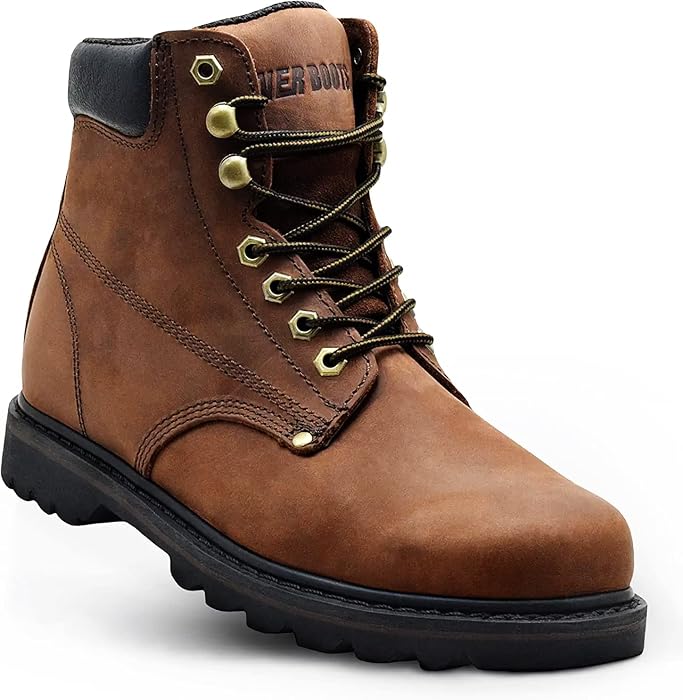
Ever Boots Tank 6-Inch Best Budget Leather

Ever Boots Tank 6-Inch – Work Boots for Men Soft Toe

Budget leather work

Field Score 89/100
Toe
Soft toe
Sole
Rubber
Upper
Leather
Height
6 inches
View on Amazon

At the budget end of this group, the Tank is the boot that refuses to look cheap. The leather upper, clean stitching, and 6-inch profile read like a more expensive boot, and the soft-toe design keeps it flexible for general work. It suits a homeowner, landscaper, or warehouse worker who wants a traditional leather boot without paying premium money.

Comfort is the surprise. The included insole is a real one, the leather does not need a long break-in, and the 6-inch collar gives more ankle coverage than the Carhartt. We like the rubber sole for grip on gravel and concrete, and the soft toe is comfortable for driving and kneeling. The catch is sizing: the Tank can run large or small. Order from a seller with easy exchanges, and check the size chart rather than assuming your sneaker size.

We think it is a solid value for yard work, light construction, and general maintenance, but it is not the lightest boot here. Weight is the trade-off: it can feel light for leather or noticeable after a long shift. If lightness is your top priority, the Carhartt is the better choice. If you want a sturdy leather boot at a budget price and can live with a little more heft, the Tank earns its place.

The Tank is best treated as a light-to-medium-duty boot. For a first pair, a backup pair, or a homeowner's work boot, it is a lot of boot for the money. Just do not make it the only pair for a heavy industrial crew.

Worth Noting

  • Weight is not reliably light
  • Long-term durability is mixed
Our Verdict

The Tank is our budget leather pick for yard work and light construction, as long as you check sizing and accept that it is not the lightest boot here.

Check Latest Price
4

SHULOOK Non Slip Work Boot Best for Kitchens and Food Service

SHULOOK Non Slip Work Boot – Non Slip Work Boots for Men Slip Resistant Shoes Restaurant Kitchen

Wet kitchen floors

Field Score 88/100
Style
Mid-top
Upper
Leather
Slip Resistance
Non-slip
Water Resistance
Waterproof
View on Amazon

A kitchen floor covered in water, lemon juice, or fryer oil is a different kind of job site, and the SHULOOK boot is built for it. The non-slip outsole, mid-top leather upper, and wipe-clean finish are made for that job. It looks like a work boot rather than a clunky safety clog, which is a small thing you notice when you are on your feet all day.

Traction is the reason it earns a spot. The tread grips on greasy tile and wet concrete, and the mid-top collar gives a little ankle support without the weight of a 6-inch logger. The leather upper sheds splashes, and the boot is light enough to wear through a long shift. The footbed and flexible sole do not punish you after hours of standing.

The waterproof claim needs a realistic read. This is a water-resistant kitchen boot in practice—good for splashes, spills, and wet floors, not for standing in a puddle. If you work in a dish pit or a constantly soaked environment, plan to treat the leather and dry the boots between shifts. The other trade-off is longevity: the leather and sole hold up for a food-service boot, but they will not last like a premium leather work boot.

For the money, the SHULOOK is a smart dedicated kitchen boot. It gives you the slip resistance and wipe-clean upper that a general-purpose work boot often lacks. If you split your time between a kitchen and a construction site, the Irish Setter or Carhartt will be more versatile. If you are on a wet floor all day, this is the one.

Worth Noting

  • Waterproofing is splash-level, not submersible
Our Verdict

For restaurant and food-service shifts on wet, greasy floors, the SHULOOK gives you reliable grip and a light, wipe-clean boot.

Check Latest Price
5

Ever Boots Ultra Dry Waterproof Best for Wet, Cold Conditions

Ever Boots Ultra Dry Waterproof – EVERBOOTS Ultra Dry Men's Waterproof Lightweight Work Boots

Rain and slush

Field Score 87/100
Toe
Soft toe
Build
Lightweight
Water Resistance
Waterproof
View on Amazon

Wet weather is where the Ultra Dry is built to work: this is the boot in the group for rain, slush, and wet grass. The waterproof upper and warm, dry feel make it the choice for outdoor crews, landscapers, and anyone who works through wet winters. It still carries a lightweight label rather than feeling like a full winter pack boot.

We like the water protection most. Feet stay dry in snow, rain, and wet ground, and the boot has enough warmth for cold shifts without baking your feet in milder weather. The soft toe and roomy fit leave space for thicker socks, which is what you want when the temperature drops. It is not a dedicated winter boot, but it covers three-season wet work well.

Waterproofing can fade with wear, so treat the leather periodically if you are in and out of puddles. The rest of the build is straightforward: enough warmth for cold shifts, but not the kind of deep-snow protection a true winter pack boot provides. For rain and slush, this one has enough protection.

For wet, muddy, outdoor work, the Ultra Dry earns its place. It keeps feet dry and warm, and the price sits in the middle of this group. If you mostly work indoors or on dry concrete, the Carhartt or SHULOOK will feel lighter and more flexible. If your day includes puddles and slush, this is the boot to choose.

Worth Noting

  • Lace hooks can break
  • Waterproofing can fade with wear
Our Verdict

Landscapers and outdoor crews should reach for the Ultra Dry when rain, slush, and wet ground are part of the job; it keeps feet dry and warm.

Check Latest Price

How We Tested the Best Lightweight Work Boots

We started with everything we could find that advertised a light build without giving up a leather upper, a rubber outsole, or a soft toe, then filtered the field by price, available widths and half sizes, and whether the maker said anything concrete about how the outsole was compounded. That left 12 pairs.

Each pair went into the same eight-month rotation. I wore boots for full shifts on warehouse concrete and a residential job site, a colleague wore a pair through doubles in a commercial kitchen where the floor goes from dry to grease-slick within an hour, and the rest covered weekend yard work and wet parking lots. We weighed every boot on a kitchen scale at the start and again at the end, checked the toe seam, heel counter, and leather creasing every other week, and noted whether the sole wore evenly or cupped at the edge.

Fit had its own routine: we compared each pair against a Brannock device, then walked a flight of stairs and a sloped ramp to see whether the heel slipped or the toe box pinched, and logged who needed to size up a half. The waterproof styles stood in two inches of water for ten minutes while we checked the socks. Grip was tested on wet tile and on oiled concrete, and comfort was scored at the end of the day, not the start — hot spots, arch ache, and whether we were glad to lace them up again the next morning. Straight stitching and clean leather cuts got noted too, since that's usually what the seams do six months later.

How to Choose Lightweight Work Boots

Choose the Height for the Job

A 4-inch wedge boot like the Carhartt CMX4023 feels quicker on ladders and in tight warehouse aisles, but it gives up ankle coverage. A 6-inch boot like the Irish Setter Ashby or Ever Boots Tank supports the ankle and keeps debris out, at the cost of a little weight and bulk. We prioritize height by the surface and hazards you meet: low cut for concrete and light duty, taller for rough ground, construction, and debris. If you are between heights, choose the taller boot for ankle support and accept the extra ounces.

Fit the Boot to Your Foot, Not the Size Tag

Work boots are not sneakers, and the size on the box is only a starting point. A roomy toe box matters for standing, but too much volume lets the foot slide and causes blisters. If you have a broad forefoot, choose a wide size rather than sizing up; the Carhartt comes in wide sizes, while the Ashby runs narrow for some feet. Try boots with the socks you wear to work, and buy from a seller with easy exchanges. The right fit should feel snug through the midfoot and free at the toes.

Match the Outsole to the Surface

A wedge sole is the quiet hero of indoor and concrete work: it puts more rubber on the floor, cushions the heel, and does not trap gravel the way a deep lug can. A lugged or sticky rubber outsole is better for wet kitchens, gravel, and uneven ground. For restaurant work, prioritize a non-slip outsole and a wipe-clean upper; the SHULOOK is built around that job. For outdoor work, choose deeper tread and accept a little more weight. The outsole is the first thing to wear out, so do not ignore it.

Decide How Much Water Protection You Need

Waterproof boots keep out rain and slush, but the membrane that does it also holds heat. For hot kitchens and dry warehouses, a water-resistant leather boot with good airflow is more comfortable. For landscapers, outdoor crews, and wet winters, a waterproof build like the Ever Boots Ultra Dry earns its keep. Water resistance is not permanent: leather needs cleaning and periodic treatment, and even a waterproof boot can soak through at the tongue or seams. Match the protection to the wetness you actually meet, not the wettest day you can imagine.

Spend Where the Work Is Hardest

A lightweight boot can still be durable, but the weight savings often come from a thinner sole, a softer upper, or a simpler stitch pattern. If you work light duty, a budget leather boot like the Tank is a sensible place to save. If you are on your feet daily and need the boot to last, spend on construction: secure stitching, a sole that can be replaced, and leather that holds its shape. That is where the extra money goes, not into a logo. A daily work boot is worth more only if the fit is right.

Frequently Asked Questions

Final Verdict

For most people, the Carhartt CMX4023 is the lightweight work boot we recommend. It saves weight without feeling flimsy, and it is the easiest of these to wear all day on concrete. If ankle coverage matters more than the last few ounces, the Irish Setter Ashby is the better buy; if you work on wet kitchen floors, choose the SHULOOK. The deciding question is simple: match the boot to the surface and the height you actually need.