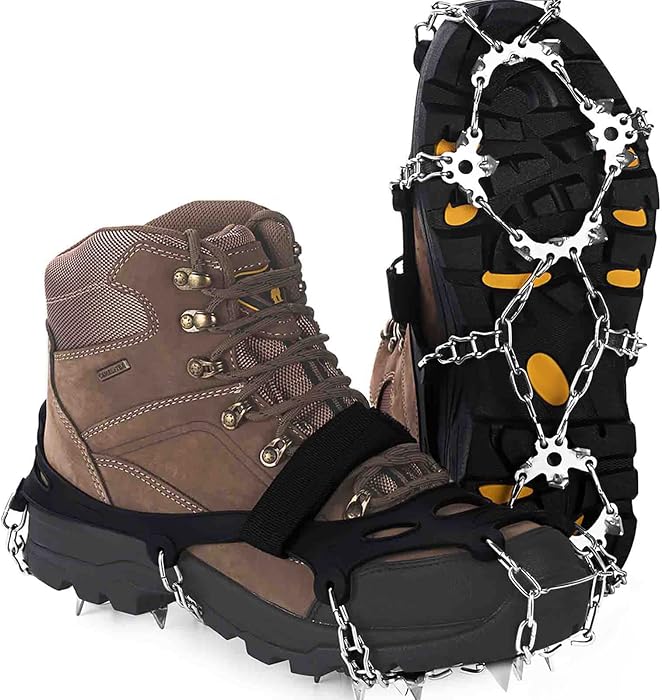
The 7 Best Microspikes for Hiking of 2026

The first time you walk a busy winter trail after a thaw and refreeze, the packed snow has turned into something closer to a hockey rink. Microspikes are what keep that from becoming a story about a bruised tailbone: a few ounces of steel under your boot that let you walk like a person instead of shuffling like a penguin.

What I didn't appreciate until a few seasons in is that spikes are a wear item. Every step across bare rock or a plowed parking lot dulls the points, and a harness that feels snug in the driveway can roll off your heel halfway down a descent. Fit matters more than spike count, especially when you're strapping them over a bulky winter boot.

We've worn 12 pairs through a full winter now, and the differences came down to things a product photo can't show: how a harness behaves when it's cold and whether the points still bite in April. The picks below are the ones that stayed put, gripped on ice, and finished the season sharp.

Our Top Picks

The 7 Best Microspikes for Hiking of 2026

1

Kahtoola MICROspikes Best Overall

Kahtoola MICROspikes Footwear Traction for Winter

Icy trail hiking

Field Score 96/100
Harness
Elastomer, reinforced eyelets
Item Weight
16 oz
Packed Size
5 x 3 x 2 inches (30 in3)
Spikes Per Foot
12 stainless steel
View on Amazon

Welded stainless chains carry twelve spikes per foot, eight under the forefoot and four at the heel, and that layout is why the MICROspikes come out on mornings when the trail has thawed and refrozen into boilerplate. The bite lands where your weight does: at push-off, and on the heel plant of a descent that has you reaching for a tree.

The harness is where the money goes. Kahtoola reinforces the eyelets with TPU inserts at the corners that stretch and sag first on a plain rubber sleeve, and the elastomer stays pliable in cold. That matters more than it sounds, because a harness that loses its shape at the corner rolls off a heel a mile from the car. The cheaper crampons here rely on a plain TPE sleeve, and the difference shows up in exactly those corners.

Packed size is genuinely useful. Kahtoola puts these at 5 x 3 x 2 inches (30 in3) and 16 ounces, small enough to ride in a hipbelt pocket on the bare lower mile and go on when the switchbacks above turn to ice. The welded chains also shed snow instead of balling it under the arch, which is the other thing that quietly ends a winter climb early.

Where the day goes wrong for these is deep, soft snow and long bare-rock stretches. Powder clumps under any spike frame, and rock grinds the points, so the MICROspikes are happiest when ice is the point of the hike rather than an obstacle on the way to a dry summit.

Worth Noting

  • Highest price in this group
  • More traction than a sidewalk walk needs
Our Verdict

Our default for anyone who hikes packed snow and ice more than a couple of times a winter; the price is the only real argument against it.

Check Latest Price
2

Hillsound Trail Crampon Best for Steep, Icy Trails

Hillsound Trail Crampon I Ice Cleat Traction System for Beginner & Experienced

Steep, hard-packed climbs

Field Score 95/100
Plate
Hinged carbon steel
Spikes
11 carbon steel, 17mm
Included
Puncture-proof carry bag
Item Weight
16 oz
View on Amazon

There is a hinged carbon steel plate under the forefoot of the Trail Crampon, and it is the reason this is the pair we pass to someone heading up a steep, hard-packed climb. The hinge lets the plate flex with your boot instead of levering the frame off the ground every time you point a toe.

Eleven carbon steel spikes, 17mm long, run on a double chain, with a toe bar at the front and an adjustable strap across the instep. The strap is the part we appreciate most on soft-soled boots: it cinches the harness down so the plate cannot creep back on a pitch, and it is easy to reach with a glove on. The fit covers rigid and soft-soled hiking boots and insulated winter boots, and a puncture-proof bag comes with it.

On a climb, the difference between this and a stretch harness is easy to feel. The plate keeps the points planted instead of skittering, and it spreads load across the forefoot rather than concentrating it under a handful of points. Those 17mm spikes are the aggressive end of this group, which is exactly what you want on hard ice and exactly what you do not want on a long rock section, where they dull and skate.

Worth Noting

  • Bulkiest of our picks to pack
Our Verdict

We hand this pair to hikers heading up steep, hard-packed climbs where the points need to stay engaged; a flat ice path does not need it.

Check Latest Price
3

Kahtoola EXOspikes Best for Mixed Terrain and Winter Running

Kahtoola EXOspikes Footwear Traction for Winter Hiking & Running in Snow

Mixed terrain, running

Field Score 94/100
Harness
Elastomer with reinforced eyelets
Item Weight
9.6 oz
Spikes Per Foot
12 (tungsten carbide, aluminum, TPU)
View on Amazon

At 9.6 ounces, the EXOspikes are the pair that disappears on your feet. They are light enough to run in, which is not something we say about anything else here, and the open harness sheds snow instead of packing it under the arch.

Three different contact surfaces get them there: tungsten carbide tips for ice, aluminum steps for uneven ground, and TPU lugs that bite into packed snow. On a trail that alternates ice, frozen dirt, and bare rock, that mix keeps you moving without the stutter you get when steel spikes strike stone.

Sheer, glassy ice is where they give ground. The tips are small, and on a refrozen seep or a sloped driveway they skate where the MICROspikes hold, a difference we noticed most on a descent that had glazed over. Everything else about the day argues for them: the lightness on the climbs, the way they fold into a jacket pocket, the fact that a rockier trail never has you stopping to take them off.

Worth Noting

  • Harness runs tight over bulky winter boots
Our Verdict

Choose these for winter running and trails that mix rock with ice; on glare ice alone, our top pick bites harder.

Check Latest Price
4

ICETRAX V3 Best Value

ICETRAX V3 Tungsten Crampons

Icy sidewalks, trails

Field Score 93/100
Fit
Shoes and boots
Heel Detail
Reflective
Spike Material
Tungsten
View on Amazon

The ICETRAX V3 is what we hand someone who wants real grip without premium money: tungsten points, a stretch harness that goes on over whichever boots are by the door, and a reflective heel that earns its keep on dark commutes.

What sold us is how little fuss there is. They pull on over hiking shoes and winter boots, they stay where you put them, and snow does not pack under the foot the way it can on an open chain frame. For an icy sidewalk, a frozen driveway, and a packed trail, that is most of what anyone needs.

Tungsten is why these keep their bite on glazed pavement, and the simple harness is why they go on in seconds with gloves on: no straps, no plate, nothing to thread. Nothing to adjust also means nothing to fiddle with when you are standing in a cold parking lot.

Worth Noting

  • Points scratch wood decks and smooth floors
Our Verdict

The best grip for the money here: tungsten points and easy on-off for icy sidewalks, driveways, and packed trails.

Check Latest Price
5

Win.MAX Crampons Best Budget

Win.MAX Crampons for Shoes

Budget trail grip

Field Score 92/100
Spikes
19 stainless steel
Harness
TPE, 5.49 mm
Included
Velcro straps
Item Weight
15.5 oz
View on Amazon

Order up. The Win.MAX crampons run small: a large over a size 11 boot is snug, and working a pair onto a size 13 is a genuine sweat. Once the size is right, though, this is a lot of grip for budget money, with 19 stainless spikes and a harness thicker than the other budget pairs here.

The TPE harness is listed at 5.49 mm, and the spikes ride a double chain rather than a single wire. Velcro straps come in the box and are worth using on soft-soled boots that a plain harness slides around on. The orange colorway is a small thing we came to like: easy to spot in a pack, easier to see on a boot at dusk.

On packed trail and icy driveways they do the job without drama. Nineteen points spread the load on a slope instead of concentrating it under three or four, and on a long flight of frozen steps we felt the difference under the midfoot, where a twelve-spike frame leaves a gap.

Worth Noting

  • Heavier than the other 19-spike budget pairs
Our Verdict

Buy these if you want 19 spikes and a thick harness on a budget; order a size up and they will handle most packed trails.

Check Latest Price
6

Cimkiz Crampons

Cimkiz Crampons – Crampons Ice Cleats Traction Snow Grips for Boots Shoes Women Men Anti Slip 19

Light budget option

Field Score 91/100
Size
Large
Spikes
19 stainless steel
Warranty
1 year
Item Weight
9.44 oz
View on Amazon

Same money as the Win.MAX pair and roughly four ounces lighter, the Cimkiz crampons make a plain case for themselves: 19 stainless steel spikes on a chain frame over a TPE harness rated to -45°C.

Flat, packed trails and frozen driveways are where these earn their keep. Full-sole coverage means you are not hunting for the one spot with grip, they pull on over a winter boot in seconds, and the adjustable strap takes up the slack on a bulky boot. At 9.44 ounces they disappear in a daypack until you need them.

It is the pair we leave in the truck for the driveway and the rail trail, where a problem costs you a walk back to the garage rather than a long, cold hobble. That role is exactly the one this design is best at.

Worth Noting

  • Chain links can snap mid-hike
Our Verdict

A light, inexpensive 19-spike pair for driveway ice and flat packed trails, where low weight and full coverage make it an easy budget choice.

Check Latest Price
7

EnergeticSky Crampons

EnergeticSky Crampons – Upgraded Version of Walk Traction Ice Cleat Spikes Crampons

Wide boots, cold

Field Score 90/100
Spikes
19 stainless steel
Harness
Silicone
Included
Nylon webbing straps and carry bag
Item Weight
11.2 oz
View on Amazon

Silicone rather than the usual TPR rubber is what sets this pair apart: it stretches without the pale stress marks that show up on stiffer harnesses, and it is rated flexible to minus 60 degrees Fahrenheit, the lowest cold rating among the budget crampons here.

Around the silicone sit 19 stainless steel spikes on a welded chain, plus nylon webbing straps and a carry bag in the box. The straps do more than the instructions suggest: cinched over the instep, they stop a soft-soled boot from sliding back inside the harness. At 11.2 ounces the whole thing disappears in a daypack.

Sizing is the wrinkle. The harness runs small, and a large over a size 9 boot is snug rather than roomy, so measure the boot you will actually wear and go up if you are between sizes.

Among the budget pairs, this is the one with the stretchiest harness and the most hardware in the box: spikes, welds, webbing, bag. The cold rating is the clincher for us. Silicone rated to minus 60 degrees Fahrenheit keeps the fit predictable on a January morning instead of turning the harness into a wrestling match at the trailhead.

Worth Noting

  • Chain links can come apart under hard use
Our Verdict

Worth it if your boots run wide or you want a silicone harness that keeps its stretch in deep cold; measure the boot and go up a size.

Check Latest Price

How We Tested Microspikes on Ice, Rock, and Slush

We started by reading spec sheets and sizing charts for roughly 30 pairs sold for winter trail use, then cut the field to 12 based on spike material, harness design, and the boot sizes each maker actually covers — a few of them top out before a men's 13.

Testing ran from November through April, about five months, and every pair went to the same four places: an early trailhead with a frozen creek crossing, a local hill that thawed and refroze into glare ice, my sloped driveway on black-ice mornings, and one memorable spring hike through knee-deep slush. We wore each pair over two boots — a low hiking shoe and an insulated winter boot — and passed them among testers with different foot sizes so fit wasn't judged on one person's feet.

Grip was judged on feel: whether the points bit on the first step onto glare ice or skated, whether they held on a steep descent, and how badly snow packed up underfoot in wet slush. For ease of use, I pulled each pair on and off with gloves on and counted the seconds. Fit came down to whether a harness stayed centered, crept up the heel, or stretched far enough for a bulky mountaineering boot. For durability, we walked deliberate stretches of bare rock and gravel, then checked the points for rounding and the rubber for cracks after a night in a cold car.

By April, the pairs that survived still had edges, and the ones that didn't were obvious. We'll keep wearing the finalists through another winter and update this list if anything changes.

How to Choose Microspikes for Hiking

Point Count, Point Length, and Placement

Nineteen spikes reads better on a box than twelve, but the total matters less than where the points sit and how long they are. Heel coverage is what keeps a descent steady, and a heat-treated or tungsten point holds an edge far longer than soft steel. Most of what's sold as ice cleats falls into two camps: a stretchy full-sole frame with short studs, or a chain or plate design with fewer, longer points placed where your weight actually lands.

We put more stock in heel coverage and point quality than in the count. For steep, hard-packed trails, favor the longer points and a frame that flexes with the boot; for driveways, sidewalks, and flat rail trails, a full-sole stud pattern is plenty and easier to walk in.

The Harness Fails Before the Spikes Do

Most failures on a winter traction device happen at the rubber, not the metal. The corners where the harness meets the chain carry the load, and that is where a plain sleeve stretches, sags, and eventually lets go of the boot. Reinforced eyelets, a thicker TPE, or a silicone harness are the upgrades worth paying for, and a cold-weather flexibility rating tells you whether the material stiffens at the temperatures you actually hike in.

Check the corners and the warranty before you check the spike count. It is also the reason a premium pair can be the cheaper decision over several winters.

Size to the Boot, Not the Shoe

Every brand's chart is its own, and the harness has to stretch over the boot you will actually wear; an insulated winter boot can add a full size over your street shoe. The common mistake is ordering your sneaker size and then fighting the pair on at the trailhead in mittens.

Measure the boot's length, check the maker's chart against that number, and go up when you are between sizes or wearing pac boots. An instep strap takes up slack on a bulky boot; it cannot rescue a harness that is genuinely too small.

Match the Points to the Ground You Walk

Microspikes are built for packed snow and ice, and that is a narrower brief than the listings suggest. In deep, soft powder the frames clump and you are better off without them, and on long stretches of bare rock or pavement the points dull and skate.

The useful question is what your trail mixes. Ice from the trailhead up calls for aggressive points and a plate or chain frame; rock, frozen dirt, and ice in the same afternoon calls for a lighter mixed-terrain pair with abrasion-resistant lugs.

Frequently Asked Questions

Final Verdict

The Kahtoola MICROspikes are the pair we point most hikers toward, because the welded chain and the reinforced harness solve the two failures that end a winter hike: rolled harnesses and snapped links. If your trails are steeper and harder than most, the Hillsound Trail Crampon's hinged plate is worth the switch, and if your winter miles mix rock, frozen dirt, and ice in the same afternoon, the EXOspikes are the lighter, more forgiving choice.

For driveway ice and a packed rail trail, the budget pairs do the job, and the Win.MAX crampons give you the most coverage for that money as long as you size up.