The 5 Best Pac Boots of 2026

For years my winter boots were the pretty kind — leather, a small heel, warmth implied. One January dog walk with numb toes ended that. Pac boots are the fix: a waterproof rubber shell, a thick removable felt liner, and a lugged sole built for snow rather than sidewalks.

My team and I have put 12 pairs through six months of shoveling, slush commuting, and weekend snowshoeing, and the differences rarely show up in a product photo. Warmth varies wildly even among boots stamped with the same temperature rating, and how a pair feels going on over thick socks at 6 a.m. matters as much as any spec.

Here's what nobody tells a first-time buyer: the liner is the boot. A felt liner that pulls out to dry overnight beats any insulation claim on the box, and lacing a pair tight over heavy socks makes feet colder, not warmer. What survived a season of road salt was built plainly and stitched honestly, and a couple look sharp enough for the office. The picks below are the ones we kept wearing afterward.

Our Top Picks

The 5 Best Pac Boots of 2026

1

Sorel Caribou Best Overall

Sorel Men's Caribou Snow Boot

Deep winter wear

Field Score 93/100
Liner
Thick felt
Cold Rating
-40°F
Listed Weight
2.34 lb
View on Amazon

A thick felt liner is the reason the Caribou has stayed the default pac boot for so long. It holds warmth close to the foot without the clammy feel of a thin synthetic, and the boot is rated for the kind of cold that makes errands feel like an expedition. That combination is why we put it at the top of this guide. The listed weight is 2.34 pounds, which is substantial but still manageable for a boot with this much insulation.

Where the Caribou earns its keep is in wet, packed snow and long stretches of standing around. The waterproof build kept our feet dry in slush, and the tall shape keeps snow from spilling over the collar. It is not a technical hiking boot; on a long, fast walk the stiffness and bulk make themselves known. For shoveling, errands, and cold-weather commutes, that trade-off makes sense.

The fit is the one thing to flag. It runs roomy for some feet and narrow across the toe for others, so try your usual size with the winter socks you plan to wear and check for heel lift before you commit. That is the main compromise in an otherwise straightforward winter boot.

Worth Noting

  • Rubber shell can crack with hard use
Our Verdict

We recommend the Caribou as the default pac boot: warm, waterproof, and built for deep winter, with a fit worth dialing in.

Check Latest Price
2

Kamik Canuck Best Budget

Kamik Men's Canuck Snow Boot

Budget snow duty

Field Score 92/100
Liner
Removable HEAT-MX 145
Upper
Seam-sealed nylon
Outsole
SNOWTREAD
Cold Rating
-40°F
View on Amazon

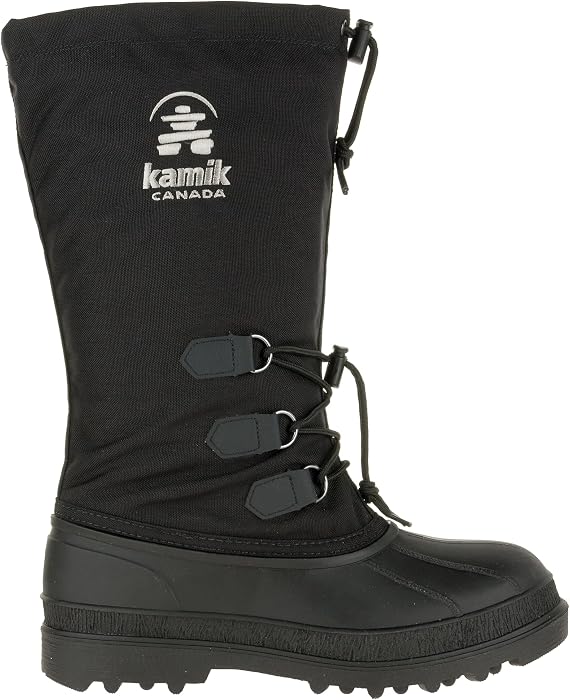
The budget question with pac boots is whether a lower price means a thin shell, a skimpy liner, or a boot that quits after one season. The Canuck starts with the right pieces: -40°F Zylex insulation, a seam-sealed nylon upper, a rubber shell, and a removable liner that makes drying easier after a wet day.

We think it is the value pick in this group. The dual drawcord is the detail we appreciated most: you can snug the ankle and the collar separately, so snow stays out without clamping the whole foot. It is warm enough for shoveling, ice fishing, and snowmobiling, and the rubber shell handles slush better than a leather-only boot. It is not the lightest boot here, but the trade-off is easy to live with for slow, cold work.

The Canuck is not trying to be a town boot. It has a tall, purposeful shape and a stiff rubber bottom that feels at home in a snowbank, not on a polished floor. For the money, that focus is the point: it spends the budget on warmth and wet-weather protection rather than styling.

Worth Noting

  • Fit runs large for some feet
Our Verdict

We think the Canuck is the best pac boot for the money: a -40°F-rated rubber shell, removable liner, and easy on/off.

Check Latest Price
3

Carhartt Yukon Pac Best for Work

Carhartt Men's Yukon Pac 10-Inch Work Boots

Cold work sites

Field Score 91/100
Height
10 in
Listed Weight
4.5 lb
Water Resistance
Waterproof
View on Amazon

At 4.5 pounds, the Yukon Pac is the heaviest boot here, and that is the point. The 10-inch shaft and stiff upper are built for standing on concrete, slogging through a job site, and staying put in cold that sends a lighter boot running for the truck. If your winter involves work rather than a walk around the block, the heft buys support.

We found the boot warm and genuinely waterproof in standing water, with a firm footbed that holds up through a long shift. The laces are the weak spot: they drag through the eyelets and take patience with gloves on. Neither flaw is a surprise in a work boot, but they are the reason we do not recommend it for quick errands.

For the right buyer, the support is worth the work. The boot feels planted underfoot, and the tall shaft keeps snow and slush away from the ankle. It is a specialist, not a daily driver, and that is exactly how we judge it.

Worth Noting

  • Stiff upper needs break-in
Our Verdict

We recommend the Yukon Pac for cold-weather work: a warm, waterproof 10-inch boot that trades light weight for support.

Check Latest Price
4

Baffin Wolf Best Lightweight

Baffin Wolf Men's Snow Boots

Hunting and ice

Field Score 90/100
Closure
Straps, no laces
Traction
Deep tread
Listed Weight
2.3 lb
View on Amazon

A hunting blind or an ice shack is where the Wolf makes sense. It is light at 2.3 pounds, warm enough for a long sit in cold weather, and the strap-and-toggle closure opens wide enough to get in and out without taking your gloves off. That last detail is why we kept reaching for it on quick winter trips.

The boot is soft and comfortable in a way that feels closer to a slipper than a mountaineering boot, and the tread bites on packed snow and ice. It is not a technical hiking boot. For cold, dry snow and a lot of standing or slow walking, it is an easy boot to like.

What we like most is how little fuss it adds to a cold morning. Pull them on, tighten the strap, and go. For a dedicated hunting or ice-fishing boot, that simplicity is worth more than another layer of padding.

Worth Noting

  • Can leak in wet slush
Our Verdict

We like the Wolf for cold-weather hunters and ice anglers: light, warm, and easy to pull on with gloves.

Check Latest Price
5

Baffin Impact Best for Extreme Cold

Baffin Impact Men's Boots

Extreme cold

Field Score 89/100
Height
Mid-calf
Cold Rating
-148°F
Listed Weight
3.1 lb
Snowshoe Compatible
Yes
View on Amazon

Compared with the lighter picks here, the Impact is a different class of boot: tall, stiff, snowshoe compatible, and rated to -148°F.

The tall shaft and buckle closure are built for deep snow and quick cinching, and the boot stays warm through long standing sessions on ice. The buckle is quick to work with gloves, and the tall collar keeps snow from packing in around the ankle. The sole is stiff enough for snowshoe bindings, which is not true of every pac boot here. It is not a driving boot or a city boot; the bulk and stiffness make that clear.

We recommend it for the person who needs a dedicated extreme-cold boot, not a do-everything winter boot. The Impact is at its best when the day is long, the temperature is brutal, and the ground is snow or ice. For everyone else, a lighter pick will be easier to live with.

Worth Noting

  • Fit runs large or narrow for some
Our Verdict

We recommend the Impact for deep cold and snowshoe duty: a tall, ultra-warm boot that is more purpose-built than most need.

Check Latest Price

How We Tested Pac Boots Through One Long Winter

We started with more than 40 styles from makers with a real cold-weather track record, then filtered for the things that separate a pac boot from a fashion boot: a rubber shell that comes up at least to the ankle, a liner you can pull out, and a lug pattern with some actual depth. That left 12 pairs, which we wore for six months, November through April, across driveways, train platforms, plowed sidewalks, and one very cold snowshoe trail.

Every pair got the same rotation: shoveling at dawn, dog walks through slush, and a standing-still test in single-digit cold to see how fast warmth faded once we stopped moving. Fit got checked twice, once with a medium sock and once with a heavy one, since the liner eats up a lot of volume. We weighed each boot and then walked a mile in it — the kitchen scale didn't always predict which pair left our legs fresh, which says plenty about how a shell flexes at the ball of the foot.

After each wear we pulled the liners, felt how damp they were, and timed how long they took to dry by the door. We noted how the collars cinched with gloves on and whether a heel caught when we kicked the boot off. Durability was judged over the long haul: road salt, curb scuffs, and a seam check in March. For appearance, we wore pairs to the office and the grocery store; for value, we weighed what each one cost against how many winters the materials looked likely to survive.

How to Choose Pac Boots

Start With the Rubber Shell

The rubber lower is what separates a pac boot from a fashion snow boot. It is the part that handles slush, puddles, and wet snow, so look for a shell that wraps well up the foot and a seam-sealed upper where the rubber meets fabric or leather. A boot can be labeled waterproof and still leak at the seams after a season of flexing.

For a driveway or a wet city curb, prioritize rubber coverage. If you mostly walk in dry, packed snow, a seam-sealed nylon upper like the one on the Kamik Canuck is enough, and it keeps the boot lighter. Match the shell to the wetness you actually meet, not to a wading boot you never need.

Match Warmth to How You Move

A -40°F rating sounds like the only number that matters, but warmth is not a contest. A heavily insulated boot that keeps you comfortable while standing on ice can turn clammy when you snowshoe or hike. Active hunters and anglers often do better with a lighter, more breathable boot and a wool sock than with the warmest shell on the shelf.

Start with your coldest typical activity. If you stand still for hours, a high rating and a thick liner earn their keep. If you move continuously, step down in insulation and let your socks do part of the work. The Baffin Impact is built for the first job; the Baffin Wolf is the easier choice for the second.

Get the Fit Right With Winter Socks

Pac boots are roomy by design, but roomy is not the same as sloppy. You want enough space to wiggle your toes and wear a medium-weight sock, and no heel lift when you walk. Half sizes are often missing, so the decision usually comes down to whether you plan to wear thick socks or a single medium pair.

Try boots on late in the day with the socks you will actually use. If your heel lifts, tighten the drawcord or lace system; if the toe box pinches, go up a size or look for a wider model. Do not size up just because a boot has a cold rating. A bigger boot with a sloshing heel is colder, not warmer.

Look at Closure, Liner, and Drying

Laces give the most precise fit, but they are slow with gloves and can ice up. Straps and drawcords are faster, and a dual drawcord lets you snug the ankle and collar separately. A removable liner is the other feature worth seeking if your winters are wet: you can pull it out and let it dry instead of leaving moisture against the boot.

The trap is assuming a removable liner dries itself. It only helps if you take it out and air it. For quick trips and glove-friendly use, the strap closure on the Baffin Wolf is more practical than laces. For long, cold workdays, the extra control of a lace or dual drawcord is worth the fuss.

Traction and Height Follow the Terrain

A tall shaft keeps snow from spilling over the collar, but it also adds bulk and warmth. If you walk through drifts or stand in deep snow, height is a benefit. If you are mostly on cleared sidewalks and getting in and out of a truck, a shorter boot is easier to live with.

Tread matters more than the number of lugs suggests. Look for a sole that bites on ice and clears snow rather than packing it. Snowshoeing adds another requirement: the sole needs to be stiff enough for the binding. The Baffin Impact is the one here that is explicitly snowshoe compatible; do not assume every pac boot is.

Frequently Asked Questions

Final Verdict

We recommend the Sorel Caribou as the default pac boot. Its thick felt liner and waterproof build handle deep winter without turning every walk into a gear decision, and the fit is easy enough to dial in with the socks you actually wear.

If your winter is a job site rather than a driveway, the Carhartt Yukon Pac's stiffness and height earn their weight. Budget shoppers should start with the Kamik Canuck.