The 7 Best Winter Hiking Boots of 2026

Winter boots usually force a tradeoff: the warm pair that feels like walking in ski boots, or the light, nimble pair that leaves your toes aching by mile two. The best ones blur that line — a boot you can wear on a cold commute and still trust on a snowy trail, with a dry sock waiting at the end of both.

I've spent enough frozen mornings second-guessing my footwear to be picky. Over the past six months we put 11 pairs through late fall, a full winter, and the slushy weeks after — from insulated snow boots to lightweight hikers with a waterproof membrane. Fit mattered as much as anything: several of these come in wide sizes, which changes the game if you've been squeezing into a standard width.

Worth knowing before you shop: waterproofing is printed on nearly every box, but a membrane only does its job when the fit is right — too roomy and your heel lifts and rubs, too snug and your toes go cold anyway. Below is what stayed dry, what stayed comfortable, and what I'd lace up again.

Our Top Picks

The 7 Best Winter Hiking Boots of 2026

1

Columbia Transverse Hike Waterproof Best Overall
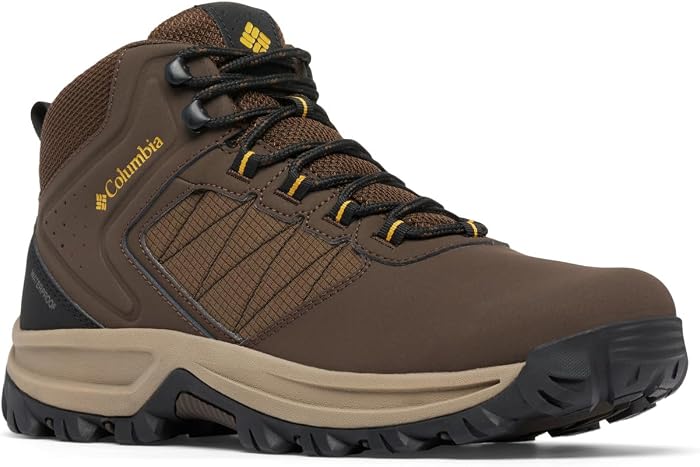
Columbia Men's Transverse Hike Waterproof

Most winter hikers

Field Score 93/100
Fit
Men's, wide available
Traction
High traction
Waterproofing
Fully waterproof
View on Amazon

Winter is where a cheap waterproof boot gets found out: wet snow at the trailhead, slush in the lot, standing water in the low spots on the trail. This is the pair we point most people toward. The upper is fully sealed and the tongue sits high enough that wet gravel and damp rock don't soak through, and it's the boot here where waterproofing, durability, and comfort all hold up at once instead of one carrying the others.

It's a light hiker, so you aren't hauling wet leather up a hill, and there's room in the toe without the fit going sloppy. Sizing is where to slow down: with thin socks it feels generous, and with heavy wool socks the toe box tightens up, so try them on with the socks you'll actually wear in February. A wide version exists, which takes care of most of that.

Durability is where the price shows least. The sole has held through a twelve-day backcountry trek, the kind of trip where a failing sole ends the walk early, and the upper shrugs off rock, mud, and wet brush. It isn't insulated, and that's the right call for active winter hiking: an unlined boot and a wool sock stay warmer than a padded one once you're climbing, because there's nothing soaked in sweat to chill you on the way down.

Worth Noting

  • Uninsulated, so warmth depends on your socks
Our Verdict

We recommend this one to most winter hikers: fully waterproof, light enough for a long day, and durable where the cheaper boots here aren't.

Check Latest Price
2

Merrell Moab 3 Mid Waterproof Best for Women

Merrell Women's Moab 3 Mid Waterproof Hiking Boots

Women, rough trails

Field Score 92/100
Fit
Women's
Ankle Height
Mid
Listed Weight
1.5 lb
Waterproofing
Waterproof
View on Amazon

Compacted snow and frozen ruts roll an ankle faster than dry dirt does, so ankle support is the first thing we judge in a winter boot. The Moab 3 is the strongest here on that count. The collar sits above the ankle bone and holds without rubbing it, the arch support is real rather than a foam suggestion, and the boot stays planted when the ground tilts.

What we like most is that the support doesn't cost you comfort. It's soft from the first mile, with a generous toe box and a wide width that takes an orthotic without a fight, and the waterproofing handles snow, mud, and a wet December trail rather than just drizzle. On a long cold day that combination matters more than any single figure on the box.

The catch is money: this is the most expensive boot on the list, by a clear margin over our top pick. What you get for it is longevity. The sole is sturdy, the upper cleans up and keeps its shape, and the ankle support outlasts the season instead of softening by February. If you hike through winter rather than around it, that's a fair trade.

Worth Noting

  • The highest price in this group
Our Verdict

The most supportive boot we tested here, comfortable from the first mile and waterproof through snow, and worth the premium if you hike all winter.

Check Latest Price
3

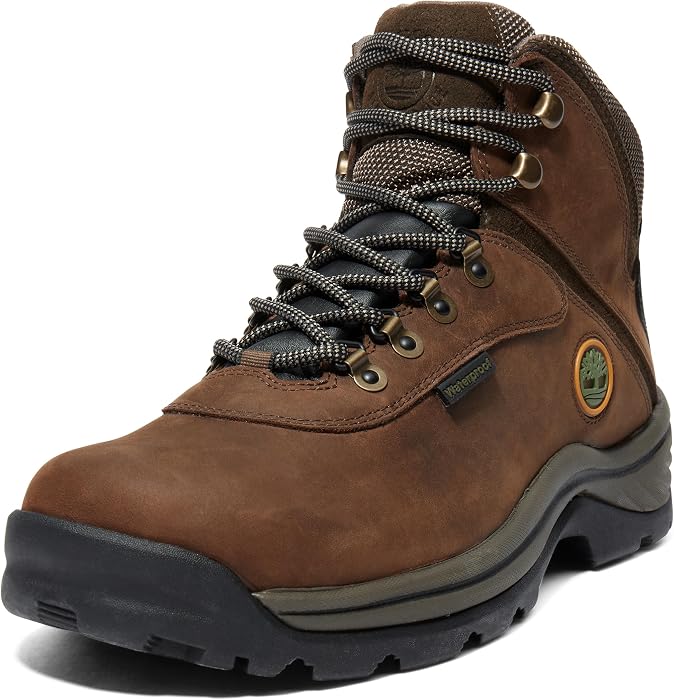
Timberland White Ledge Mid Waterproof Best Lightweight

Timberland Men's White Ledge Mid Waterproof Hiking Boots

Long wet walks

Field Score 91/100
Fit
Men's
Ankle Height
Mid
Listed Weight
1.1 lb
Waterproofing
Waterproof
View on Amazon

The White Ledge is the lightest boot on this list, and it wears that way: a few miles into a wet walk you stop thinking about your feet, which isn't something we can say about the leather boots here. That's rarer than it sounds in a winter boot, because most cold-weather pairs are built heavy on the theory that heavy reads as warm.

Water stays out of it. Wet snow, slush, shallow puddles, and the cold drizzle that soaks a trail all stay on the outside, and the collar gives more ankle support than the weight suggests. Break-in runs about a week of ordinary wear, and the insole lifts out for an orthotic, which we appreciate at any price.

Set against our top pick, the White Ledge trades some long-term toughness for a lighter, softer ride. If you cover more distance than you abuse the boot, that's the right trade; if the boot lives in wet mud five days a week, the Columbia will outlast it. Both keep your feet dry. Only one of them feels like a sneaker.

Worth Noting

  • Sole can separate at the toe with daily wear
Our Verdict

If light weight matters most, this is the men's boot we hand people: real waterproofing, a quick break-in, and a soft, easy ride on long wet walks.

Check Latest Price
4

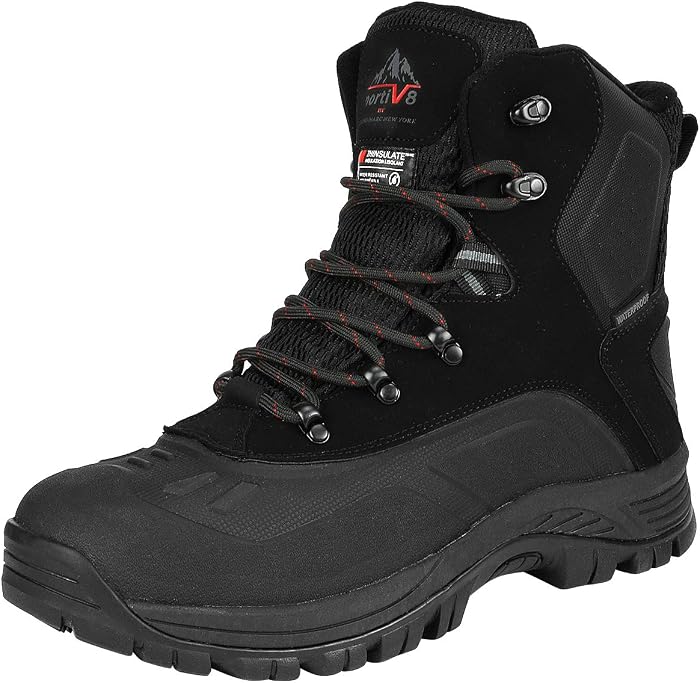
NORTIV 8 Tundra Snow Boot Best Insulated

NORTIV 8 Men's Waterproof Hiking Winter Snow Boots

Deep cold, standing

Field Score 90/100
Fit
Men's
Insulation
Insulated construction
Waterproofing
Waterproof
View on Amazon

Pull these on in a cold lot and the difference is immediate: the lining is thick and soft, the kind of warm that arrives before your foot is all the way in. Warmth is the whole point of this boot and it delivers. Feet stay warm and dry through snow and slush, and the deep chill that creeps through an unlined hiker never gets started.

It's also the least expensive way into a winter boot on this list, and that's the part we keep coming back to. For the money you get a roomy toe box that takes thick socks, a sole that handles ankle-deep water and mud on a snowy walk, and enough support for a few hours out in it.

The build is where the budget shows. The back of the boot is the weak point, and it's what can come apart when these are worn every day in wet conditions. Treated as the pair by the door for snowy mornings rather than your only boot from November to March, they last and they earn their money.

Worth Noting

  • Snow-boot build, not a rocky-trail boot
Our Verdict

Deep cold and standing around are where we send people with this boot: insulated, roomy, and the least expensive pick on the list.

Check Latest Price
5

Columbia Newton Ridge Plus II Best Leather Boot

Columbia Men's Newton Ridge Plus II Waterproof

Town and trail

Field Score 89/100
Fit
Men's, wide available
Traction
High traction
Listed Weight
4.94 lb
Waterproofing
Fully waterproof
View on Amazon

Most winter boots look like winter boots. This one looks like a hiking boot from thirty years ago in the good way: brown leather, metal eyelets, a shape that reads sharp with jeans and doesn't look ridiculous in a diner after a hike. That's the reason it's here, and it's not a small one, because the boot you're happy to wear is the boot you actually wear.

Comfort is close behind. The leather is soft from the first wear, there's no break-in worth mentioning, and long days on rough ground don't leave pressure points. Waterproofing holds through snow, mud, and rain on a day out. Keep the leather conditioned each fall and it stays that way, since wet snow eventually finds untreated seams.

Fit is where to pay attention. The Newton Ridge runs narrow, and the same snugness that feels precise on trail pinches if you have wide feet or heavy socks. Order the wide version if you're between widths, and size for the sock rather than for the shoe you wear in July.

We recommend it as the boot that does two jobs: a cold Saturday hike and a Monday shift outdoors. It isn't the warmest pick here and it isn't the most technical, and it doesn't pretend to be. What it is, is a comfortable, dry hiker that gets worn because it's easy rather than because it's the most capable thing in the closet.

Worth Noting

  • Less sure-footed on smooth ice
Our Verdict

We like it as the leather boot of the group: dry in snow and rain, comfortable from day one, and the one here you can wear into town without a change of shoes.

Check Latest Price
6

ANJOUFEMME Waterproof Hiking Boots Best Budget for Women

ANJOUFEMME Outdoor Hiking Boots for Women Waterproof

Budget weekend walks

Field Score 88/100
Fit
Women's
Ankle Height
Ankle
Waterproofing
Waterproof
View on Amazon

The toe box is the first thing worth mentioning: wide and roomy, with space for thick wool socks and a little toe wiggle, which is not a given in a women's boot at this price. That room is what makes it work in winter, because the sock you need in February needs somewhere to go.

Warmth is the second surprise. The lining handles cold days, and the waterproofing holds up in puddles, mud, and light snow. Standing in water above the ankle it gives up, as any ankle boot will, but for the school run, the dog, and a snowy trail on a weekend, your feet stay dry.

What you give up is refinement. Sizing runs generous, so if you're between sizes, go down, and these are town-and-trail boots rather than something to take up a mountain. For occasional winter walks, errands, and a snowy weekend away, that's a trade worth making; for a full winter of trail miles, spend more.

Worth Noting

  • Can squeak loudly with each step
Our Verdict

For women on a budget, we haven't found a warmer, drier boot at this end of the price range — just expect a squeak and go down a size.

Check Latest Price
7

SHULOOK Mid Top Hiking Boots Best for Cold, Dry Days

SHULOOK Mid Top Hiking Boots – Men's Waterproof Hiking Boots Non-Slip Lightweight Mid Top Ankle Boot

Cold, dry days

Field Score 87/100
Fit
Men's
Traction
Non-slip
Ankle Height
Mid
Waterproofing
Waterproof
View on Amazon

Start with the honest limit, because it's the reason this boot sits at the bottom of the list: the waterproofing is the weak part. Wet grass and a puddle crossing are fine when the boot is new. A long walk in wet snow or a soaked trail is where water starts getting through.

Everywhere else it punches above its price. It's light, closer to a trail sneaker than to the leather boots here, with a cushioned midsole and an upper that needs no break-in at all, and it's comfortable for hours on a cold, dry day. As a second pair for travel, dry winter walks, and knocking around town, we think it's a smart buy. As an only pair for a wet February, it isn't.

The tread grips dry dirt and cold rock well, and the fit runs true with room for a midweight sock. Lace it to the top and you may feel it rub just above the ankle, so keep the upper laces a little looser than you would on a leather boot. For the money, that's a short list of complaints.

Worth Noting

  • Rubs above the ankle when laced high
  • Not trustworthy on ice
Our Verdict

Light, cushioned, and cheap, and we like it as a second pair for cold dry days — just don't expect it to stay dry through a wet snow day.

Check Latest Price

How We Tested Winter Hiking Boots

We started with a long list of waterproof mid-cut hikers and insulated snow boots, then filtered it by what the listings actually promised — insulation, lug depth, width options, weight — and by what reviewers kept repeating about sizing and long-term durability. That narrowed things to 11 pairs, which we wore from the first frost in late fall through the muddy thaw.

Testing happened where these boots actually live: pre-dawn dog walks on icy sidewalks, a slushy train-platform commute, weekend climbs with a loaded pack, and one long, cold afternoon standing around a trailhead parking lot. For water resistance, we stood in a shallow stream for two minutes and waded through ankle-deep slush, then checked our socks. For traction, we walked a packed-snow incline and a wet rock slab and noted who slipped.

Comfort and fit got the most attention, since that's what people write about. We wore each pair with thin liners and with thick wool socks, logged how many miles passed before a hot spot showed up, and recorded heel lift, toe box room, and whether sizing up a half was necessary. We also weighed each boot on a kitchen scale, listened for squeaks on a tile floor, scuffed the toes against rock to check durability, and wore them into town with jeans to see how they looked.

How to Choose Winter Hiking Boots

Waterproofing: Where It Actually Fails

Every boot here claims waterproofing, and the difference shows up at the tongue, the collar, and the seams, which is where water arrives first. A gusseted tongue that stays attached to the upper and a collar that clears the slush line do more for dry feet than any label. Mid-height is the practical floor for winter; a low shoe lets slush straight over the top no matter what the membrane says.

Leather and synthetic uppers both work, but they need different care. Leather keeps water out well and wants a clean and a treatment every fall; synthetics need less upkeep and dry faster overnight. Either way, read waterproof as a wet hike rather than a wade, since no ankle boot keeps a creek out once the water is above the collar.

Insulation: Match It to How Much You Move

This is where winter boot shopping goes wrong most often. More padding feels safer, but insulation holds the heat you generate and the sweat that comes with it. Climb a hill in a heavily lined boot and you'll be damp at the top and cold on the descent, because wet insulation stops insulating.

If you keep moving — hiking, snowshoeing, hunting on foot — an unlined waterproof boot with a thick wool sock is the better setup, which is why our top pick and the Merrell are both uninsulated. Insulated boots earn their place when you stop moving: stands, ice fishing, shoveling, long cold stretches. The NORTIV 8 Tundra is the one here built for that.

Traction: Snow Is Easy, Ice Is Not

Deep lugs move slush and bite packed snow, but the limiting factor on a cold morning is rubber hardness. The colder a sole gets, the less it conforms to the ground, and a soft summer compound stiffens right where you want grip. For mixed wet rock, frozen mud, and packed trail, nearly any boot here is fine.

Smooth ice is a different problem. On a driveway or a shaded switchback, no rubber sole is trustworthy, so carry traction devices or take short, deliberate steps. If your winter trails are mostly ice, buy the spikes before you spend more on the boot.

Fit and Socks: Size for January, Not July

Fit is the one thing you can't fix later. Try boots on with the socks you plan to wear in January, because a thick wool sock can take up half a size of volume, and walk on a slope if the shop allows it, since toes slide forward downhill and a boot that fits on the flat can bruise on the descent.

Ankle hold matters as much as length. A boot that lets your heel lift will rub on the climb and feel vague on rough ground. Both Columbias come in wide widths, the simplest fix if thick socks and a wide forefoot leave you pinched. Between sizes, go up and lace the ankle snug.

Weight and Wear: What You Pay For

Listed weights here run from about one pound to five, though they aren't measured the same way — some are product weights, others shipping weights — so treat them as a rough sort into light and substantial rather than a precise comparison. Lighter boots are easier over distance; heavier leather takes more punishment and keeps its shape longer.

The failure to watch for across this category is the bond between sole and upper, which is what lifts at the toe on several boots here when they stay wet and get worn day after day. Dry them at room temperature between outings, keep them off the radiator, and they'll last noticeably longer.

Frequently Asked Questions

Final Verdict

For one boot that handles wet winter trails, we recommend the Columbia Transverse Hike: fully waterproof, light enough for a long day, and durable in a way most of this list isn't. It isn't insulated, so pair it with wool socks and keep moving, since that combination beats a padded boot for anything active.

Shopping for a woman, start with the Merrell Moab 3; nothing else here supports an ankle like it. If warmth and standing around matter more than mileage, the NORTIV 8 Tundra insulates like a proper snow boot for less than the rest. And if light weight is the priority, the Timberland White Ledge is the easiest boot on this list to wear.