The 6 Best Women's Insulated Hunting Boots of 2026

Opening morning two seasons ago, I spent four hours in a duck blind in borrowed leather boots, and the last hour was all about my feet. Everything else can be right — the wind, the decoys, the dog — and cold toes still end the day early. Insulated boots fix that, holding warmth against frozen ground and keeping you dry when the field turns to soup. The catch is that rubber and neoprene don't breathe, so the wrong pair leaves your feet warm and sweaty at the same time.

My team and I have worn 12 pairs over the past eight months, from early archery season through a stretch of single-digit January mornings. The surprise was fit: these are pull-on boots, so you can't lace them tighter, and a pair that swims at the heel will rub you raw by the second mile. Shaft height and how much of the lining is neoprene matter as much as the insulation number on the tag.

Below are the pairs that stayed warm, stayed dry, and still felt good after a long walk in.

Our Top Picks

The 6 Best Women's Insulated Hunting Boots of 2026

1

TIDEWE Neoprene Hunting Boot Best Overall

TIDEWE Neoprene Hunting Boot

Cold, wet hunting

Field Score 91/100
Insulation
6mm neoprene
Shaft Height
Mid-calf
Comfort Rating
-4°F/-20°C to 50°F/10°C
Shaft Circumference
13 inches
View on Amazon

TIDEWE puts a number on its warmth instead of a vague promise: a comfort range of -4°F to 50°F, which is the honest shape of this boot. It's built for the cold end of a season, with 6mm of neoprene under a rubber shell that holds body heat in and keeps water out. The top of that range is the part to take seriously. This is not a September boot.

We put it first because it does the category's core job — warm, dry feet in freezing slop — without asking premium money for it. The shell is flexible enough that there's essentially no break-in, the reinforced toe shrugs off logs and rock, and the lug molded into the heel means you can step out of them without bending over or levering one off with the other foot.

Ordering is the one place it asks for attention. The size chart runs men's and women's numbers side by side, and the men's sizes are the big ones — the model number stamped on the pair reads M6/W7 for a reason, so women should buy from the women's column. The shell also runs generous, which means that if you're between sizes and planning on a heavy wool sock, you take the smaller of the two rather than the larger.

Check your calf against the listed 13-inch shaft if you're near the top of the size range. That measurement decides whether these slide on in a doorway or turn into a wrestling match, and it's the one thing about this boot a photograph won't tell you. Get that right and they're a workhorse: mud, slush, wet snow, a mile in and a mile out.

Worth Noting

  • Upper-to-sole bond can separate over time
Our Verdict

This is the pair we hand most women heading out in freezing, wet conditions: genuinely cold-rated, genuinely waterproof, and priced so you can still afford good socks.

Check Latest Price
2

Muck Arctic Sport II Tall Best for Ice and Snow

MUCK Women's Arctic Sport II Tall Boot

Ice and deep snow

Field Score 90/100
Height
Tall
Sizing
Women's
Weight
4.5 lb
Waterproof
Yes
View on Amazon

Ice is a different problem from cold, and this is the boot in the group built for it. The sole is thick, with a deep, blocky tread that bites on frozen ruts and greasy mud, and the shaft runs tall enough that drifted snow stays on the outside. The top grips the calf, which is exactly what stops snow pouring in when you post-hole through a crust.

That height cuts both ways. On a taller wearer the boot tops out just below the knee; on a shorter one it climbs higher up the leg, which changes how it walks. These are also a sit-down, two-handed boot to remove — the top clings, and the cling that keeps snow out is the same cling that makes you work to get them off. You take the good with the annoying.

The warmth and the cushioning are what make the height worth it. Feet stay at temperature in below-zero weather, the footbed is soft enough for a long sit and a long walk on the same day, and the shell stays dry through wet snow, rain, and standing water. Of the boots here, this is the one that behaves most like winter equipment and least like a rubber boot.

The premium price is the part to weigh. You're paying for traction and shaft height the mid-calf boots here can't match, in a women's-specific build with a real size run. If your season is mostly mud and forty-degree rain, it's more boot than you need.

Worth Noting

  • Toe seams can split under hard use
  • Clumsy to drive in
Our Verdict

If your season runs into hard freeze and ice, these are the pair to buy: the most traction-focused sole and the tallest shaft in this group, at a premium price.

Check Latest Price
3

Muck Arctic Adventure Tall Best Tall Boot for the Barn

MUCK Women's Arctic Adventure Tall Boot

Barn and stirrups

Field Score 89/100
Height
Tall
Sizing
Women's
Closure
Pull-on
Waterproof
Yes
View on Amazon

A stripe runs up the front of these and makes them read, from a few feet away, like a riding boot rather than a rubber one. That's a hard thing to get right in a category full of boots that look like they came off a pallet, and it's why this pair gets worn to the feed store and not just to the barn.

Underneath it's the same idea as the rest of the Muck line: a soft shell that pulls on over whatever socks you have on and hugs the leg at the top. The footbed is cushioned, the boot flexes as you walk instead of clomping, and wet grass, slush, and puddled gateways don't get through. Warmth is the strongest thing about them — feet stay comfortable through a cold morning of standing around and a long walk after it.

We recommend this one for the person whose winter is mixed rather than single-purpose: paddock mud, a snowy driveway, a cold sit in the treeline, then back in the truck. The look is the reason to choose it over the Arctic Sport II. When the ground is frozen solid and the walk is long, the Sport II is the boot to take.

Off is harder than on. These are tall and the top clings, so plan on sitting down and hooking a heel rather than kicking them off in a doorway with your hands full.

Worth Noting

  • Sole-to-upper bond can let go over time
  • Runs a little roomy
Our Verdict

For muddy paddocks, snowy driveways, and cold mornings in the field, these are the tall boots we point to — and they look the part in town.

Check Latest Price
4

Trudave Mid Calf Boot Best Women's-Specific Fit

Trudave Rubber Boots for Women

Wet barn chores

Field Score 88/100
Height
Mid-calf
Sizing
Women's 5-11
Handles
Molded on both sides
Waterproof
Yes
View on Amazon

The Trudave is sized for women from 5 to 11 and cut roomy, with space for a wide forefoot and a thick sock at the same time. That combination is harder to find than it should be, and it's the reason this boot keeps coming up for women who have been buying men's sizes to get the width they need.

The handles molded into both sides of the shaft are the detail that earns it a place here. You can pull them on standing up, in the dark, with one hand already holding a bucket. Mid-calf height keeps the shaft out of the deep mud and makes them easy to step out of, and the sole holds on wet grass and a slick barn floor.

They're warm enough for a wet, cold morning and dry through snow and rain, with the neoprene upper doing the sealing at the top of the shaft. What they don't come with is a temperature rating, so if your season includes genuinely deep cold, plan on these as a shoulder-season and barn boot rather than your sit-in-the-stand pair.

The shaft stops at mid-calf, which is the right height for mud and a wet walk to the barn, and a little short for deep snow — gaiters or a taller sock cover the gap. That's the honest shape of this boot: a wet-weather work boot that hunts perfectly well, not a deep-winter one.

Worth Noting

  • Whole sizes only, and the fit runs generous
Our Verdict

These are the women's-sized pair we point to for barn chores, wet mornings, and mild-winter hunting — roomy, easy to pull on, and not precious about mud.

Check Latest Price
5

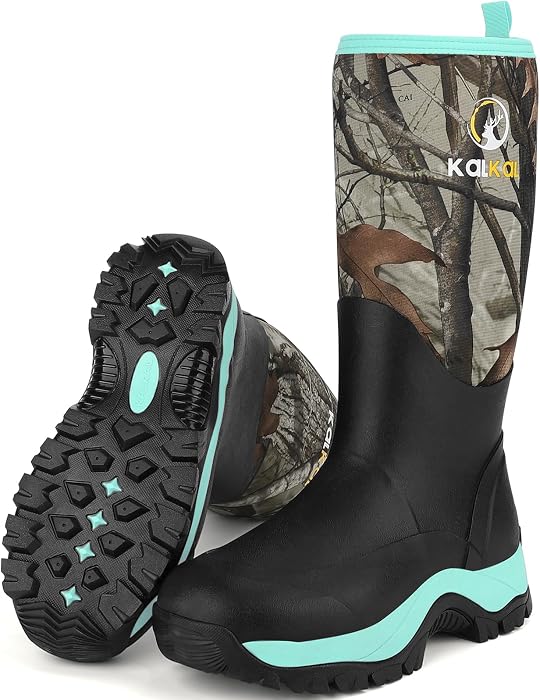
Kalkal 6mm Neoprene Boot

Kalkal 6mm Neoprene Boot – Rubber Boots for Women

Tall camo coverage

Field Score 87/100
Height
Tall
Sizing
Women's 5-11
Insulation
6mm neoprene
Waterproof
Yes
View on Amazon

If the tall camo silhouette is what you want and the premium price isn't, this is the closest thing here: a 6mm neoprene boot in the same general shape, with the same pull-on shell and a shaft that reaches high enough to keep snow and brush off your calves.

The details that matter are present. The neoprene top seals against water instead of wicking it, the sole grips wet rock and clay rather than sliding across them, and mud rinses off with a hose at the end of the day. It's also the best-looking of the tall boots in this group if camo is the point.

Our reservation is fit. These run big, so sizing down is the usual move, and the shaft is on the narrow side for a full calf — meaning the boot that fits your foot may not be the one that fits your leg. Buy somewhere the return is easy and try them on with the socks you'll hunt in.

The shaft height is the reason to choose it over a mid-calf boot: deep snow, tall grass, and a wet walk in all stay outside the boot rather than soaking your socks at the ankle.

Worth Noting

  • Seams can split with heavy use
Our Verdict

Pick these if you want the tall camo look and a neoprene shell at a mid-range price, and you're willing to size down and keep an eye on the seams.

Check Latest Price
6

WTW Mid Calf Rain Boot

WTW Mid Calf Rain Boots for Women

Budget second pair

Field Score 86/100
Height
Mid-calf
Sizing
Women's
Insulation
Neoprene
Waterproof
Yes
View on Amazon

The cheapest way into this category is also the one that asks the most of you. These boots are warm, easy to pull on, and dry through rain and slush for a stretch of the season — and then the sides can start to crack, which turns a bargain into a yearly purchase.

What you get for the money is real. The neoprene upper is warm on a cold, wet morning, the shell pulls on and off without hands, and they handle puddles, muck, and slush the way a rubber boot should. They're comfortable enough to wear all day without your feet cooking.

Fit is the other gamble. The sizing isn't consistent enough to order blind — one pair runs roomy and the next runs narrow — so try them on with the socks you'll actually wear and keep the receipt until you have.

Where these make sense is the second pair: the ones by the back door for the driveway, the dog, and the quick walk to a stand on a wet November morning. They're also the pair you hand to a friend who forgot theirs. For the hunt you've planned for months, spend the money.

Worth Noting

  • Sides can crack within a season
  • Inconsistent fit, roomy on some pairs
Our Verdict

Buy these as a knock-around pair for wet chores and short hunts, and expect to replace them sooner than the boots above.

Check Latest Price

How We Tested Women's Insulated Hunting Boots

We started with more than 30 pairs from brands known for rubber and neoprene field boots, then narrowed by construction: neoprene thickness, shaft height, whether the boot was built on a true women's last or a scaled-down men's, and price. That left 12 pairs, worn over eight months, from September scouting through the last of the late-winter season.

Testing happened where these boots actually live. I wore each pair scouting in September mud, sitting in a blind for four hours on mornings between 15 and 30 degrees, crossing shin-deep creeks, walking a half mile to a stand, and doing barn chores afterward. To judge warmth, I noted when my toes first went cold during a sit and whether feeling came back on the walk out. To check water resistance, I stood in moving water up to the top of the shaft for five minutes, then felt for dampness at the sock.

Fit and sizing got the most attention. I wore every pair with thin liner socks and again with heavyweight wool, checked heel slip with a thumb behind the heel, and logged where each one rubbed on a two-mile walk. For comfort, I tracked whether the pull-on handles dug into my calves and whether the footbed packed out. For durability and value, we inspected seams and sole flex and checked heel wear at the end of the eight months, then weighed that against what each pair cost. The boots that survived all of it are below.

How to Choose Women's Insulated Hunting Boots

Start With the Cold Rating, Not the Camo

Insulation thickness on its own tells you very little. What you want is a stated comfort range, and you should read it as the temperature where the boot works while you're moving and wearing a proper sock. Sitting still is colder than walking, so buy for the coldest sit on your calendar rather than the average day. A boot rated down to -4°F, like the TIDEWE, gives you margin for a long stand sit. A boot with no rating at all is a wet-morning boot — useful, but not your January pair.

Fit for a Woman's Foot and a Full Calf

Most insulated mud boots in this category run large, and several here come in whole sizes only. Size for the sock: a heavy wool sock adds real volume, and a boot tight enough to press on your instep will leave your feet cold no matter how much insulation is in the shell. Calf room matters as much as foot length. Where a shaft circumference is listed — 13 inches on the TIDEWE — measure your calf at its fullest and compare before you order, because a shaft that fights your leg is a boot you stop wearing.

Tall Shaft or Mid-Calf

Height is a trade between protection and convenience. A tall boot keeps deep snow, tall grass, and brush off your legs, and a top that hugs the calf stops snow pouring in when you break through a crust. The cost is heat and hassle: tall boots are warmer than you want in October and much harder to pull off, which you notice every time you get into a truck. Mid-calf boots clear mud and puddles, drive better, and fit standard stirrups. If your season is mostly wet rather than deep, mid-calf is the more useful height.

Soles, Seams, and What Actually Wears Out

Rubber and neoprene boots rarely wear through at the tread. They fail where the upper meets the sole and along the seams, which is why a deep lug matters less than a bond that holds. Check that bond line when the boots arrive and again at the end of each season. Rinse the mud off rather than letting it dry in the creases, and keep them out of a hot truck bed — heat finishes off a bond that is already tired. Traction helps on ice and clay, but only while the sole is still attached to the boot.

Frequently Asked Questions

Final Verdict

Warm, dry feet in freezing slop are worth more than any camo pattern, and the TIDEWE gets you there for less than the premium boots here: an actual comfort rating, room for wool socks, and a shell that shrugs off creek water and mud.

If your season runs into hard ice and drifted snow, spend the extra on the Muck Arctic Sport II — the tread and the tall, calf-hugging shaft are the difference on a frozen morning. And if you want a women's cut without the premium price, start with the Trudave.